
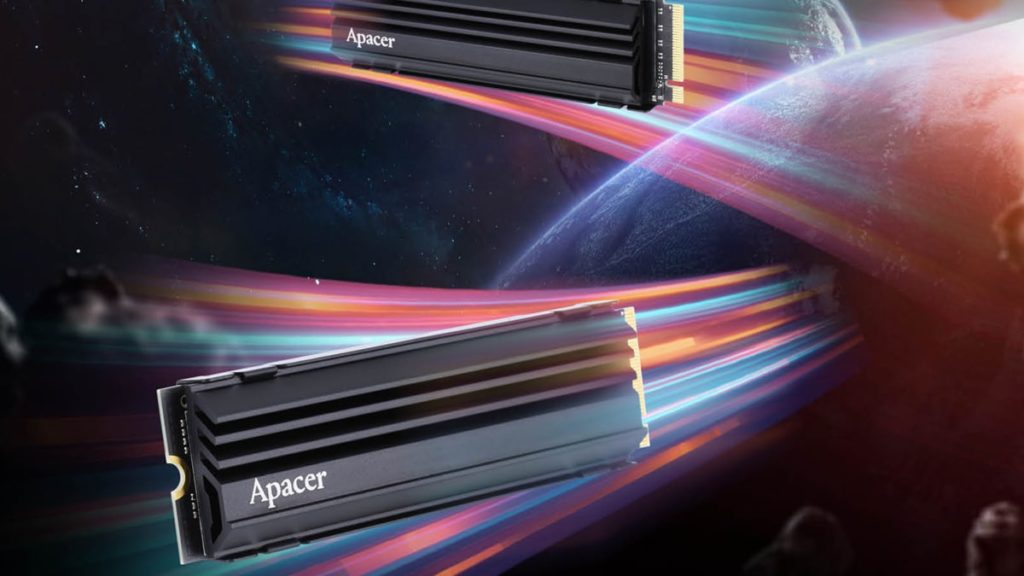
Apacer has teased the next generation of storage and the blisteringly fast speeds that they will be capable of with its latest SSD announcements, the Apacer AS2280F5 and ZADAK TWSG5. Both are M.2 PCIe Gen 5 SSDs that boast stunning read and write speeds of up to 13,000 MB/s and 12,000 MB/s, respectively. The Apacer AS2280F5 features a heat sink designed with high-quality metal cooling fins, while the ZADAK TWSG5 comes with two heat sink options in the form of aluminum and ultra-thin graphene. Both SSDs will come with a five-year global warranty.
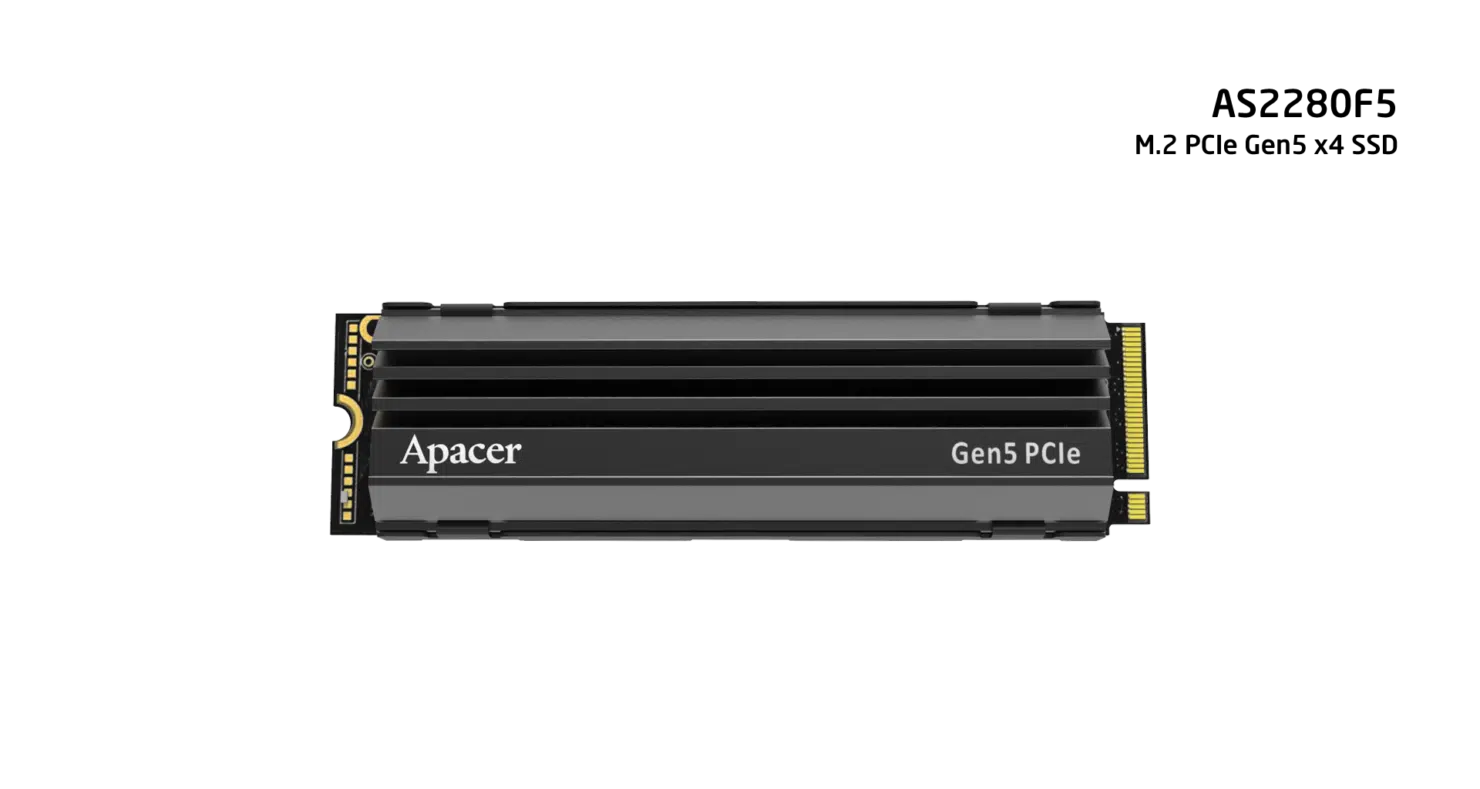
AS2280F5 M.2 PCIe Gen5 x4 SSD
- Equipped with PCIe Gen5 x4 latest high-speed interface supports the latest NVMe 2.0 standard
- Read and write performance up to 13,000 / 12,000 MB/s
- Backwards compatible with PCIe Gen4, but doubles the performance
- Designed with exclusive high-quality metal cooling fins
- Built-in multiple protection technologies to ensure the correctness and stability of data reading and writing
- Comes with a 5-year global warranty
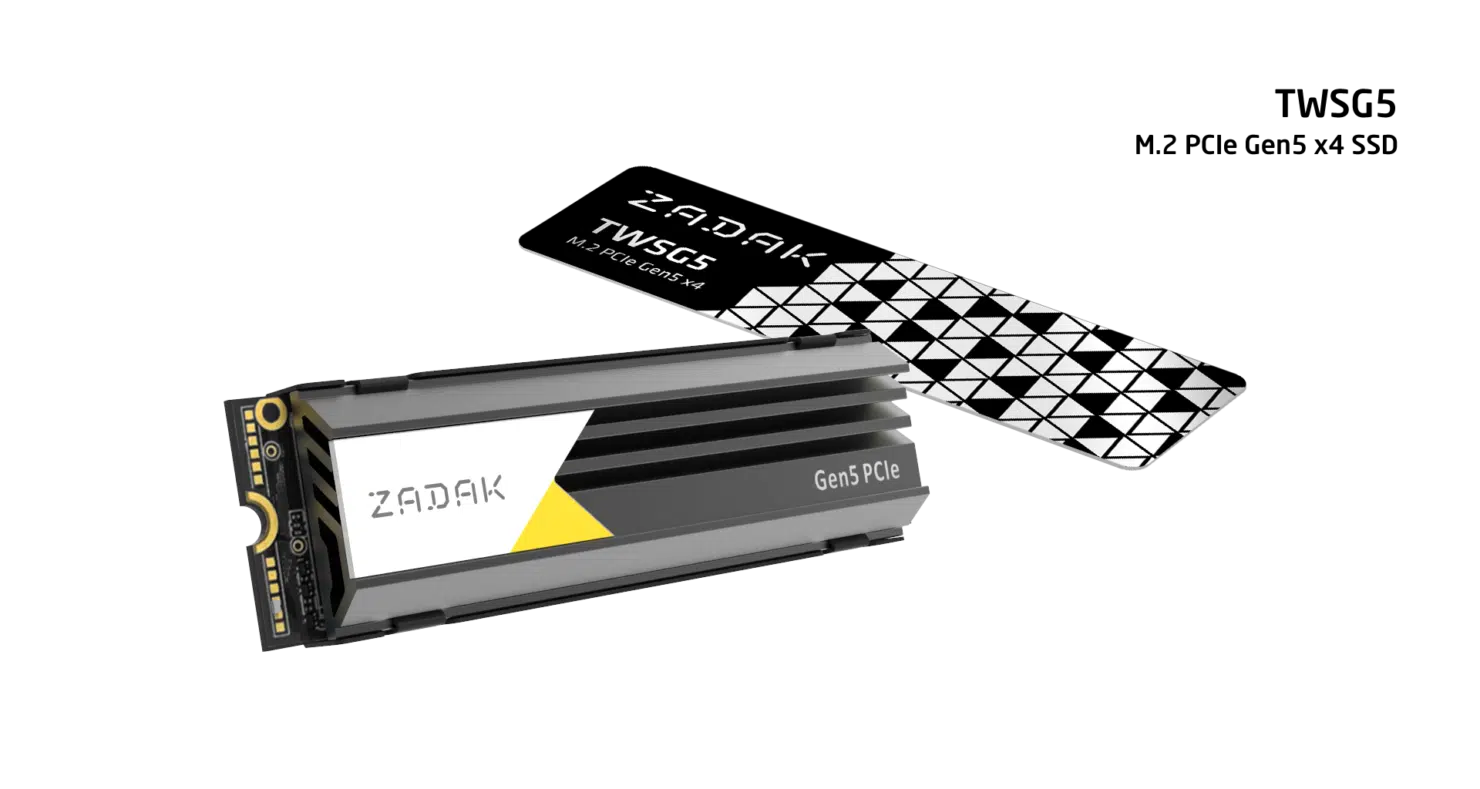
ZADAK TWSG5 Gen5 x4 SSD
- Adopts PCIe Gen5 latest high-speed interface supports the latest NVMe 2.0 standard
- Read and write performance up to 13,000 / 12,000 MB/s
- Comes with two types of heat sinks, ultra-thin graphene, and aluminum
- Comes with a 5-year global warranty
One of the main features of the next-generation Intel and AMD platform will be support for PCIe Gen 5 NVMe SSDs. Currently, Phison is working with various brands and companies, including AMD, as revealed yesterday, on the creation of their Gen 5 ecosystems. Now at Computex 2022, we are getting a first look at consumer PCIe Gen 5 NVMe SSDs which will be coming to the market later this year.
Source: Wccftech
Discussion (4 replies)
Join Discussion →While those transfer rates are... insane... some questions.
1. Controller... that controller better be beefy.
2. Seek time... while the transfer rates are awesome... I suspect the seek time at this phase should be sub MS. Into nanosecond range.
3. Performance at peek time. Those are peek numbers to be sure but how sustainable are these. For normal workloads on desktops it won't matter but for Workstation and Server performance you don't want to see big drop offs in performance once cache is expended.
I still can’t tell the difference between my SATA3 and NVMe SSDs in my build under regular conditions
Really? Really truly? Because I could tell a big difference going to SATA3 SSD to NVME PCIE 3 x4, to NVME PCIE 4x4... though to be VERY clear... the 4x4 was less.. "Hey I boot faster" Because faster is relative and I just rebuilt a system and changed a bunch of parts. So I would have to attribute the storage performance to something else. Not sure what.
And honestly with the track record I've established I'll wait for the Samsung version. ;) I've had amazing luck with them.
Really truly.
I guess if I sat with a stopwatch maybe. But for me, booting in 4 seconds versus 6 seconds (not that I've timed it, just off-the-cuff numbers)... dunno that I'd see it unless I was trying.
In games, they all load fast - I can tell when I have one on my HDD, but between the two SSDs, I can't really tell the difference.
I definitely notice the difference going from an HDD to SSD. I very rarely do any type of sustained data transfer that would let a drive really stretch those higher transfer speeds - it's all about IOPs, and to a lesser degree, latency. And on paper, yeah, NVMe is faster than SATA in both of those -- but not orders of magnitude faster like going from HDD to SSD is.