
Introduction
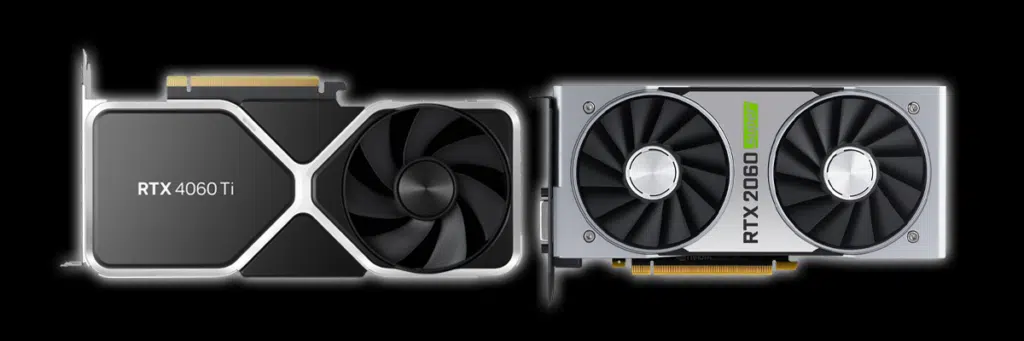
Let’s say you purchased a $399 MSRP GeForce RTX 2060 SUPER in 2019, and you want to purchase a new upgrade in 2023 for around the same MSRP. That new upgrade would be the $399 MSRP GeForce RTX 4060 Ti 8GB in 2023. You are probably asking yourself, what kind of a performance upgrade are you actually going to get after four years if you upgrade straight from a GeForce RTX 2060 SUPER to the new GeForce RTX 4060 Ti?
In this performance comparison review today, we are going to directly review the GeForce RTX 2060 SUPER versus GeForce RTX 4060 Ti and find out how 2019’s midrange compares to 2023’s midrange at the same price point. Let’s find out how much of an upgrade the GeForce RTX 4060 Ti really brings versus the GeForce RTX 2060 SUPER. If you want to know how the GeForce RTX 4060 Ti compares to the previous generation GeForce RTX 3060 Ti, be sure to check out our full review on that as well. All benchmarks today are freshly updated in August of 2023 on both video cards, with the latest drivers, and game versions.
GeForce RTX 4060 Ti vs GeForce RTX 2060 SUPER Specs
| GeForce RTX 4060 Ti | GeForce RTX 2060 SUPER | |
|---|---|---|
| Architecture | Ada Lovelace | Turing |
| Fab Processes | 4nm TSMC 4N | 12nm |
| CUDA Cores | 4352 | 2176 |
| RT Cores | 34 (3rd Gen) | 32 |
| Tensor Cores | 136 (4th Gen) | 272 |
| ROPs | 64 | 64 |
| TMUs | 136 | 136 |
| Base Clock | 2310MHz | 1470MHz |
| Boost Clock | 2535MHz | 1650MHz |
| VRAM | 8GB GDDR6 | 8GB GDDR6 |
| VRAM Clock | 18GHz | 14GHz |
| VRAM Bus | 128-bit / 288GB/s | 256-bit / 448GB/s |
| Interface | PCIe 4.0 x8 | PCIe 3.0 x16 |
| TDP/TBP | 160W | 175W |
| Launch MSRP | $399 | $399 |
| Launch Date | 5/24/2023 | 7/9/2019 |
The NVIDIA GeForce RTX 2060 SUPER was announced on July 2nd, 2019, and launched on July 9th, 2019 as a refresh to the then-current GeForce RTX 20 series of GPUs based on the Turing architecture. The GeForce RTX 2060 SUPER launched at $399, the same as the new GeForce RTX 4060 Ti 8GB video card in 2023. It is important to note, the Turing architecture was NVIDIA’s first consumer GPU to support Ray Tracing and have Tensor Cores. This is the generation of GPU that introduced these technologies to gamers, thus they have the first generation Ray Tracing cores, and the first consumer Tensor Core generation with DLSS support.
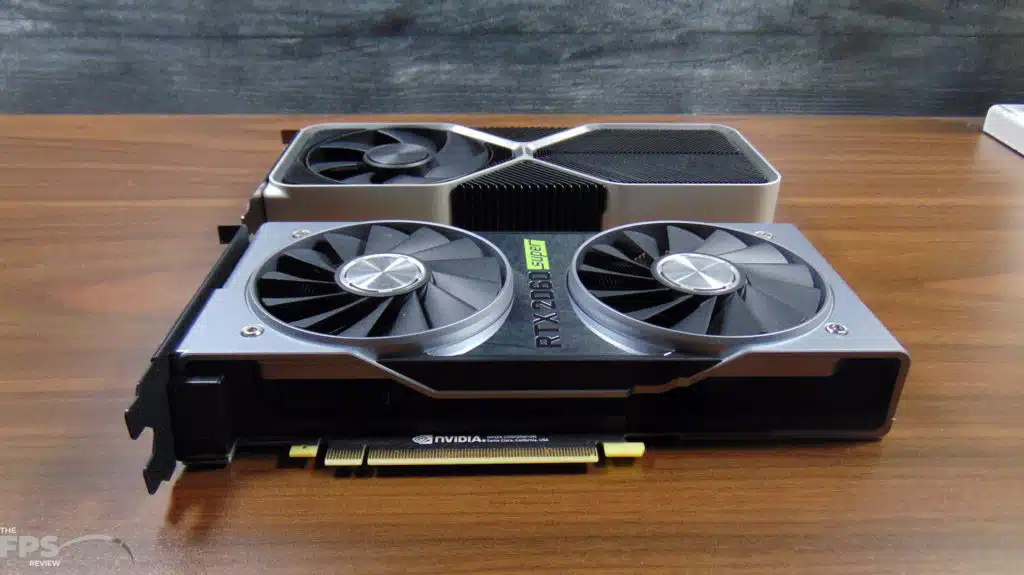
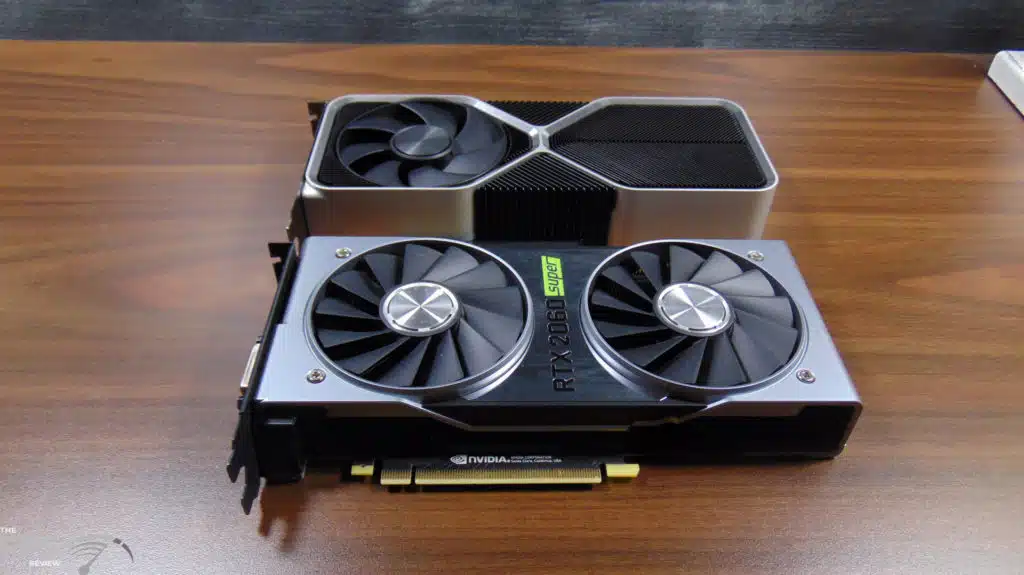
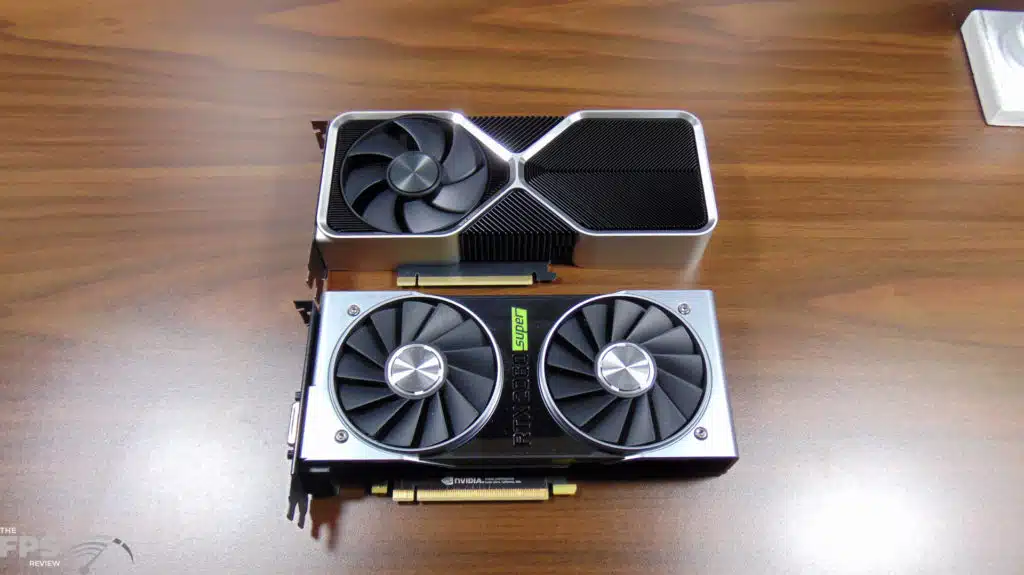
The GeForce RTX 2060 SUPER was built on the 12nm TSMC process and has 2,176 CUDA Cores, 32 RT Cores, 272 Tensor Cores, 64 ROPs, and 136 TMUs with 4MB of L2 cache. It operates with a Boost Clock of 1650MHz and has 8GB of GDDR6 at 14GHz on a 256-bit bus providing 448GB/s of memory bandwidth. It has a PCIe 3.0 x16 interface and 175W TDP.
By contrast, the new NVIDIA GeForce RTX 4060 Ti was launched on May 24th, 2023 continuing the new GeForce RTX 40 series of GPUs based on the Ada Lovelace architecture. The GeForce RTX 4060 Ti launched at $399 MSRP, the same as the GeForce RTX 2060 SUPER did back in 2019. With the new Ada Lovelace architecture, the GeForce RTX 4060 Ti uses Ray Tracing and Tensor cores two generations ahead of where the GeForce RTX 2060 SUPER was. The GeForce RTX 4060 Ti uses 3rd generation RT Cores and 4th generation Tensor Cores. Due to this fact, the performance per core is higher, and thus it can utilize less, yet provide more performance. The GeForce RTX 4060 Ti also adds faster and more accurate Tensor Cores that allow better optical flow acceleration enabling DLSS 3 Frame Generation.
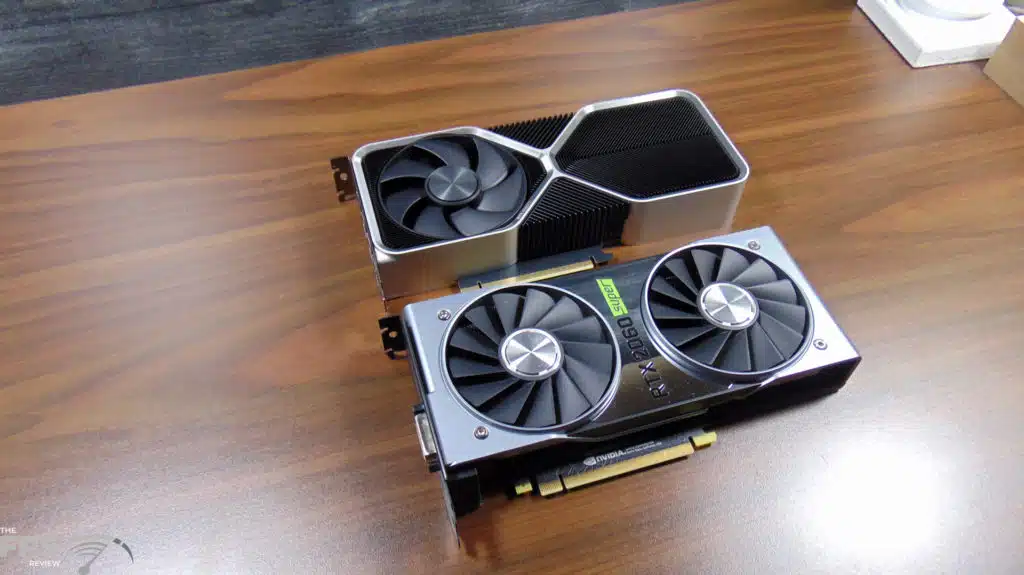
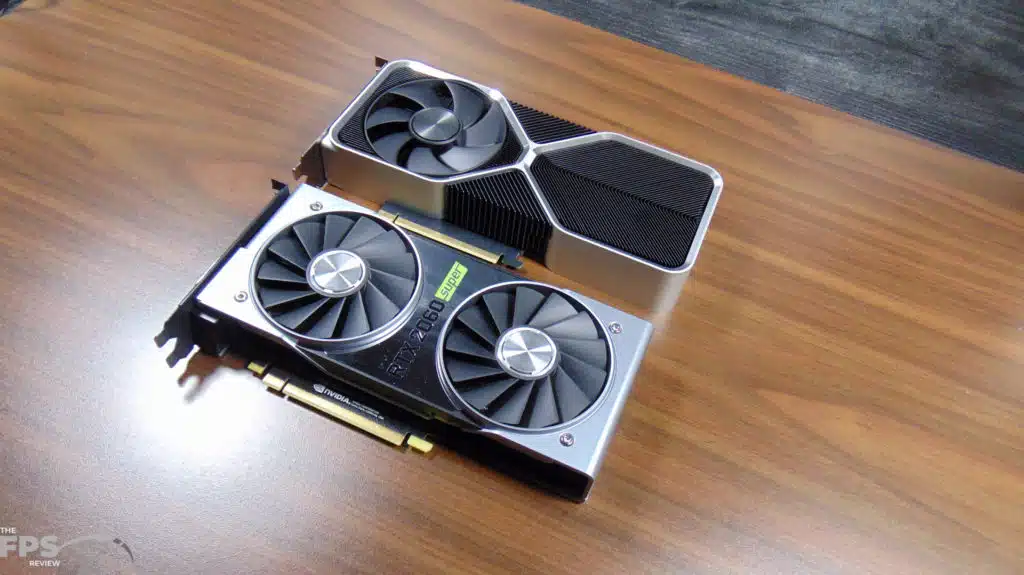
The GeForce RTX 4060 Ti is built on TSMC 4N process and has 4,352 CUDA Cores, 34 3rd Generation RT Cores, 136 4th Gen Tensor Cores, 64 ROPs, and 136 TMUs with a much larger 32MB L2 cache size. It operates with a Boost Clock of 2535MHz and has 8GB of GDDR6 at 18GHz on a 128-bit bus providing 288GB/s of memory bandwidth. The memory bandwidth is quite cut down, though the L2 cache has increased quite a bit. It has a PCIe 4.0 x8 interface, which puts it as the same PCIe bandwidth as the RTX 2060 SUPER, and a lower 160W TDP.
Discussion (6 replies)
Join Discussion →Love the review and thank you.
Doing some numbers something stood out to me and it REALLY shows when you compare the target max MHZ between the two cards.
the 4060 is pushing 2535 and the 2070 is pushing 1650, This is a raw difference clock per clock of 53.6.
When we are NOT doing RT work the % of improvement for games at 1080p averages out to 45.3%. This leads me to believe most actual improvement to performance and efficiency is through process node efficiency and not redesign or IPC improvement of the actual rasterization cores. But when you take into account that they ALSO doubled the cuda cores to reach that number... is even more interesting.
This is weird... They doubled the cuda core count
Increased peak MHZ by 53.6%
Nicely brought down the power envelope.
But for DOUBLE the cuda cores running at just over 50% the mhz rating... if the IPC remained the same I would have expected a more linear progression in performance.
So it seems like they DID make some changes to the cuda cores themselves, for efficiency but had to claw back performance through more cores and more mhz taking away some of that efficiency gain. Actually theoretically 100% of the potential gain considering the real performance improvement is more in line with the MHZ as opposed to the DOUBLED cuda core count.
Something does not smell right here with these numbers. We're missing a part of the story. The end user is getting lesser performant cores core to core... if the had left the core counts equal and counted on only generational improvements (not including DLSS I didn't crunch those numbers) a 2070 to 4060 would have been a rasterization downgrade.
I need to run similar numbers for AMD's cards in a generational comparison.
Would have been interesting to include these 3 cards also in the comparison & make it a 5 way battle
2060 12gb
3060 12gb
4060 ti 16gb
Idea is to identify bottlenecks with 8gb vram
For example in Ratchet & Clank in 1080p ultra (RT off) the 2060 12gb almost matches the 8gb 4060 ti !!!
Search engine optimization rules the day - will probably focus on more 1:1 matchups for now. The aim here is to look at upgrade scenarios....
Great writeup!
Grim brings up a good point - the 4060 shows about a 50% improvement in performance, but that 50% increase in clock speed ~and~ core count - the math doesn't seem to add up without drawing the conclusion that you just need to pack more slower (yet more efficient) cores to make Turing work. It's an interesting thing to note, if nothing else. Maybe that's why JSH is saying Moore's law is dead...?
Also - for ~most~ people (not enthusiasts here who chase the absolute top of the performance curve) - I usually recommend they upgrade to something that doubles their existing GPU performance. In the past that was every 2-3 generations, at roughly the same tier/price they had previously paid. Now, starting with RTX, that has been thrown out the window.
nVidia obviously wants you to pay a premium for Raytracing performance. I've never thought it was worth it, but to those that do - it's your money, buy what you like. But for folks that have cards from Pascal and newer, it's been hard to recommend anything to upgrade to without utterly blowing through budgets or accepting much smaller (rasterizing) performance gains.
Thanks, @Brent_Justice for the great comparative write-up. It's bummer about the PCIe and VRAM details but otherwise a solid upgrade in keeping at the exact same price point.
I had gotten a 2080 SUPER back then as a slight upgrade to a 1080 Ti and also so I could enjoy using G-Sync with an LG C9. While mostly a sideways move it had some impressive improvements for the day with RT and DLSS when gaming at 1440p. It even cost me somewhere around $50-100 less than what I paid for the 1080 Ti and only needed 2x 8-pin connectors vs 3x 8-pin for the 1080 Ti. I always cringed at the "SUPER" name but otherwise really had a good experience with that card.
Very nice review, thank you. I've been looking to get a lower tier card at some point for a back up rig again, and this review does help.