
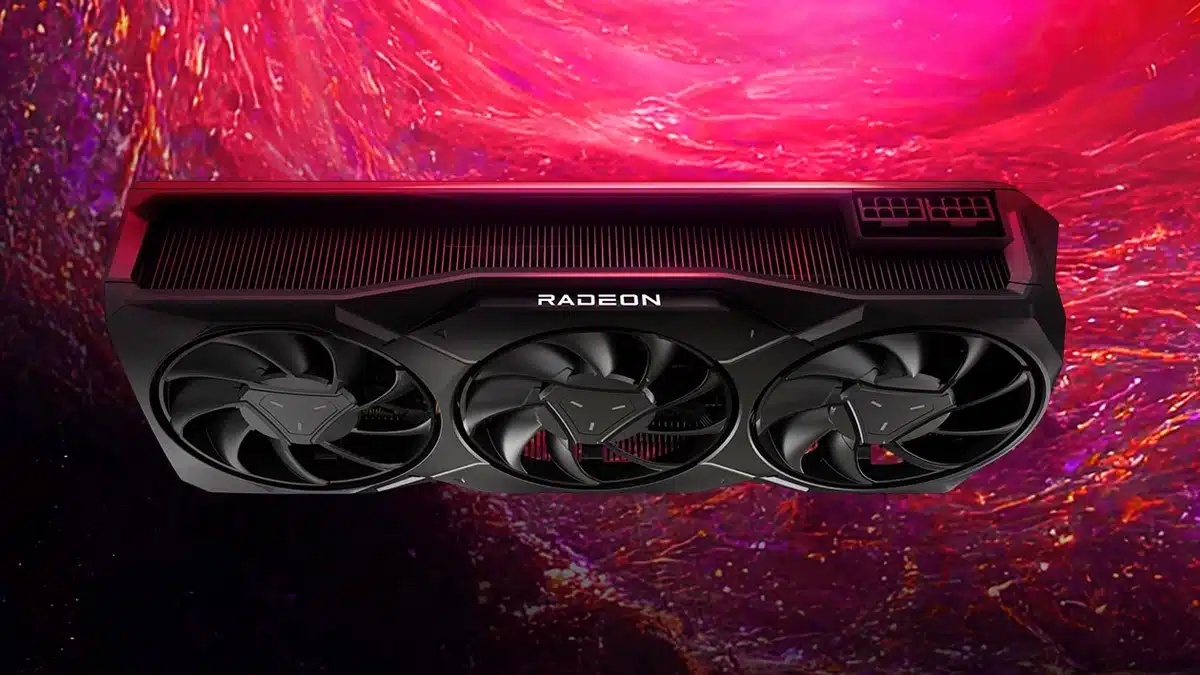
The Radeon RX 8900 XTX, a new flagship graphics card that many enthusiasts had assumed would be leading AMD’s upcoming generation of RDNA 4 graphics cards, probably won’t be happening any time soon, if ever, according to new comments that Jack Huynh, AMD’s senior vice president and general manager of the Computing and Graphics Business Group, shared at IFA 2024 in Berlin, Germany. Huynh, who was pressed for information about AMD’s future plans amid whispers of the company having canceled its upper-tier Radeon RX 8000 Series GPUs, seemingly confirmed those rumors, admitting that it will no longer go after the flagship market and, instead, focus on lower-range products to grow its market share and appeal among developers in the consumer space.
Huynh said:
- “Do I want to go after 10% of the TAM [Total Addressable Market] or 80%? I’m an 80% kind of guy because I don’t want AMD to be the company that only people who can afford Porsches and Ferraris can buy. We want to build gaming systems for millions of users.”
- “…we tried that strategy [King of the Hill] — it hasn’t really grown. ATI has tried this King of the Hill strategy, and the market share has kind of been…the market share. I want to build the best products at the right system price point. So, think about price point-wise; we’ll have leadership.”
- “One day, we may [go after the flagship market]. But my priority right now is to build scale for AMD. Because without scale right now, I can’t get the developers. If I tell developers, ‘I’m just going for 10 percent of the market share,’ they just say, ‘Jack, I wish you well, but we have to go with Nvidia.’”
- “Of course, [for the data center we’re still planning for King of the Hill] because that’s performance-per-dollar. Even Microsoft said Chat GPT4 runs the fastest on MI300. Here’s the thing: In the server space, when we have absolute leadership, we gain share because it is very TCO-based [Total Cost of Ownership].”
- “In the client space, even when we have a better product, we may or may not gain share because there’s a go-to-market side, and a developer side; that’s the difference.”
A look at the Radeon RX 7000 Series, which includes several flagship models:
| Name | Compute Units | Ray Accelerators | AI Accelerators | Game Frequency | AMD Infinity Cache Technology | Max Memory Size |
|---|---|---|---|---|---|---|
| AMD Radeon RX 7900 XTX | 96 | 96 | 192 | 2300 MHz | 96 MB | 24 GB |
| AMD Radeon RX 7900 XT | 84 | 84 | 168 | 2000 MHz | 80 MB | 20 GB |
| AMD Radeon RX 7900 GRE | 80 | 80 | 160 | 1880 MHz | 64 MB | 16 GB |
| AMD Radeon RX 7800 XT | 60 | 60 | 120 | 2124 MHz | 64 MB | 16 GB |
| AMD Radeon RX 7700 XT | 54 | 54 | 108 | 2171 MHz | 48 MB | 12 GB |
| AMD Radeon RX 7600 XT | 32 | 32 | 64 | 2470 MHz | 32 MB | 16 GB |
| AMD Radeon RX 7600 | 32 | 32 | 64 | 2250 MHz | 32 MB | 8 GB |
From a report:
…Nvidia has a stranglehold on discrete gaming GPUs with performance leadership and 88% of the market share, while AMD holds just 12% of the market.
We won’t know the final verdict on AMD’s decisions for its next-gen RDNA 4 Radeon RX 8000 lineup until launch, which is expected to come later this year or early next year. However, given the typical long lead times for chip design and final production, it’s a safe bet that AMD’s decision is already set in stone.
Discussion (19 replies)
Join Discussion →How many times do we need this said? This is what... 3 threads stating the same thing now? At least their messaging is on point.
Cross talk, I guess ?
My bet is an NVidia written presser. =)
Note that the headline show AMD in a bad light and goes out of the way to mention NVidia in a good light.
I'll take credit for at least not doing the same. I also added some more background on AMD's other moving parts and the industry in general.
[URL unfurl="true"]https://www.thefpsreview.com/2024/09/09/amd-is-not-currently-focusing-on-a-flagship-gpu-with-its-radeon-rx-8000-series-according-to-its-senior-vice-president-and-general-manager/[/URL]
And for that we thank you.
☺️
Given they're still going to manufacture high-end parts for AI, to me this is clearly just putting their production capacity where it will make the most money. Wouldn't be surprised to see Nvidia follow.
What nvidia, amd & intel are saying is:
We can give budget cards for gamers but big cards are dual purpose (AI first, gaming next. Because that is where the money is )
It never mattered to me whether someone has the top spot. All that matters is whether they have the best offer in the slot I'm looking in.
They need to lift the low end for the right value, they wont though.
By "They" you mean everyone right?
If AMD said we're going to release competitive cards at reasonable prices and cut our profit margin on them by a considerable % it would lead to more of their mid tier cards selling. (or mid tier cards price reductions across the board.)
as they grew in market share their ability to expand the teirs they compete at would grow. Nvidia would have to cut costs to compete. Maybe....
Nvidia would just lower prices. AMD would sell less and make less.
Not if their mid tier cards were faster than Nvidias.
Nah - nVidia has been able to outsell in markets even when their products were slower.
The old “drivers”
Or “raytracing performance matters”
Or “gsync”
Or “physx performance”
Or … name whatever it was that generation
NVidia has amazing marketing
The difference is if AMD competes with Nvidia their stock dumps billions in value. If AMD looses just barely to Nvidia AMD stock increases in value...
Because Nvidia has grown so large all AMD has to do is jostle the cart and Nvidia damn near dumps value equal to AMD"s entire market cap. Enough of that and Nvidia will have to get serious about pricing to prevent that.
IT's not about winning... it's about perception.