
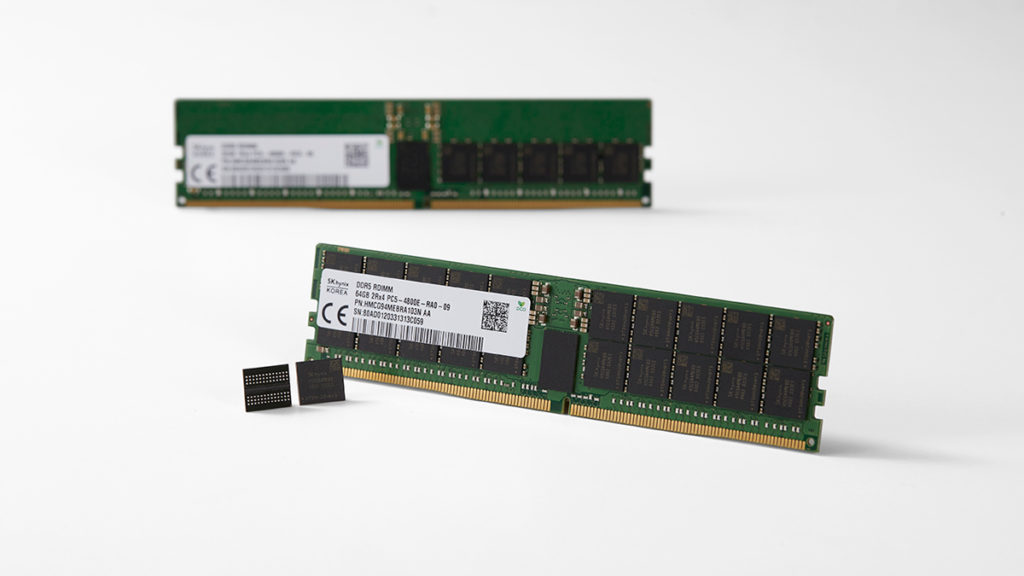
If you were hoping the current DDR5 price situation would stabilize in the near term, the CEO of one of the world’s largest memory producers has a message for you: it is about to get worse.
SK Hynix Chief Executive Kwak Noh-jung told Reuters on July 10 that 2027 will be the worst year in the memory industry’s history from a supply perspective, and that customer demand will continue to exceed production capacity beyond 2030. “We forecast that next year will be the worst year in the industry’s history from the supply perspective,” Kwak said in the interview. “Our customer demand continues to go up, while our capacity has limitations.” The comments came on the day SK Hynix began trading on Nasdaq after raising $26.5 billion in what is reported to be the largest US IPO by a foreign company in history.
The remarks are consistent with what Samsung and Micron executives have said separately in recent months. Micron has characterized the current shortage as only the first innings of a multi-year supply gap, with estimates suggesting it can only meet 40 to 50% of total market demand in the coming years. UBS expects the global DRAM industry to remain undersupplied until at least Q2 2028. NVIDIA CEO Jensen Huang confirmed last month that SK Hynix will remain NVIDIA’s largest memory supplier going forward, and that memory shortages would continue for years.
Samsung, SK Hynix, and Micron have all redirected fabrication capacity toward high-bandwidth memory (HBM) for AI accelerators, which commands a significant price premium over conventional DRAM. Retooling fabs to pivot back toward consumer DDR5 cannot happen overnight, and the AI infrastructure buildout is consuming capacity faster than new fabs can be completed. SK Hynix is building a new facility in Yongin, South Korea, expanding to the US with a packaging plant in Indiana, and is part of a $266 billion South Korean government initiative to double memory production within five years.
DDR5 kits that were under $100 for 32 GB a year ago are now sitting at $375 and climbing. A 14-core Intel processor at $179 sounds attractive until the memory to run it is priced like GPU VRAM. We noted earlier this year that continued memory price hikes are expected to become the new normal, and the SK Hynix CEO’s remarks add the most authoritative name yet to that forecast.
Discussion (3 replies)
Join Discussion →LOL, You wish.
I can't think of a better reason to dig deeper into my backlog of older unplayed (and under played) games. Maybe by the time I've cleared the list, this whole memory shortage thing and need for a state-of-the-art system will have passed over. The tech paradigm will have changed significantly by then and everyone will be chasing something new. Did I mention I have a huge backlog?
Doing the same right now. I was fortunate enough to obtain the parts I wanted at, under, or very close to MSRP right before this all happened so counting my blessings and enjoying some older things in 4K 60+ FPS, HDR and auto HDR. It's impressive how some old stuff can look with modern tech.