
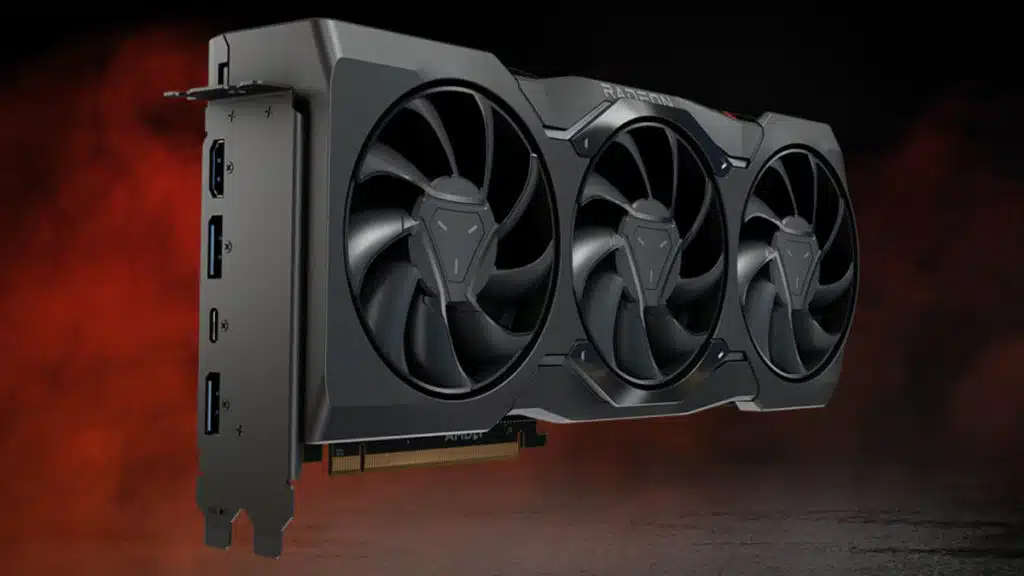
Alleged AMD RX 7900 XTX Geekbench scores have been spotted online showing it besting the GeForce RTX 4080 in Vulkan. While we are still a week away from the official launch of AMD’s latest flagship graphics card, PC enthusiasts are anxiously awaiting reviews for it and verified comparison tests between the two and this could be a taste of things to come.
The NVIDIA GeForce RTX 4080 has experienced controversy with its price vs performance metrics and is said to be getting a price reduction soon. Meanwhile, AMD has already stated that the RX 7900 XTX will have an MSRP of $999, which is $200 lower than the current US price of the GeForce RTX 4080. Although NVIDIA did drop its price in Europe by five percent (~$60) and other regions could see price reductions in the coming weeks. However, will that be enough to entice customers to buy the card that has remained readily available since its launch, despite a reportedly small amount (30,000) of shipped units, and even left scalpers scrambling to sell their inventory or face restocking fees?
Geekbench Scores

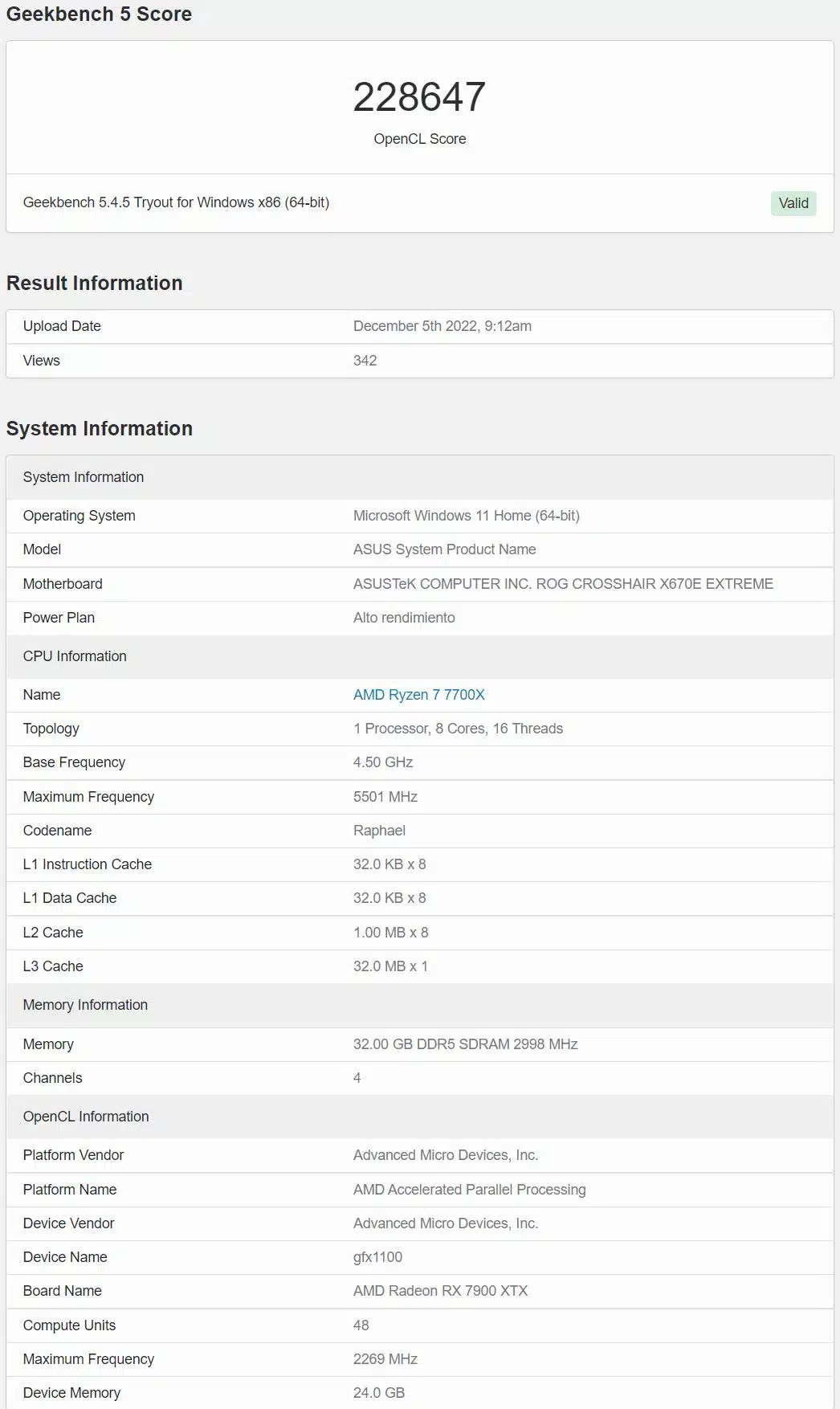
These AMD RX 7900 XTX Geekbench scores, if accurate, paint an interesting picture. VideoCardz notes that it outperforms the GeForce RTX 4080 by ~15% in Vulkan but then falls short by an almost equal amount of ~14% in OpenCL. The disparity in OpenCL makes sense as the AMD RX 7900 XTX does not support CUDA while the GeForce RTX 4080 does. An ASUS ROG Crosshair X670E Extreme, paired with an AMD Ryzen 7 7700X and 32 GB DDR5 memory was also used, assuming none of the IDs were faked but such a setup does make sense for a potential hardware reviewer.
At the end of the day, most gamers are not going to use synthetic benchmarks as deciding factors in purchasing a new graphics card. If the AMD RX 7900 XTX does manage to trade blows within near equal, or better, metrics than the GeForce RTX 4080 at gaming, and at a lesser price, many could seek it out instead. If this happens NVIDIA may be forced to lower the price of its card even more in order to be more competitive. This too could affect price points for the forthcoming GeForce RTX 4070 Ti and anything below it that could be in the pipeline.
Discussion (4 replies)
Join Discussion →We already know that the RTX 40 series are very stupidly overpriced but for AMD to tax close to NVIDIA's already gouged price tag, the flagship (@ $1000) doesn't just need to trade blows with the 4080, it needs to OUTPERFORM the 4080 in all metrics (not a few titles here and not so many there fake news) by a minimum of 15%+ vs the 4080 to earn its place as the 2nd most powerful GPU on the market.
I don't think the 7900XTX will completely beat the RTX4080 on all fronts, specially if you consider DLSS3.0, but I'm sure it will beat it an rasterization and compute.
But even if its not a RTX4080 killer it will still force nvidia to lower its price.
Those are exactly my thoughts as well. I did a story not too long ago about the guy who convinced AMD to move to a chiplet design with these cards.
https://www.thefpsreview.com/2022/11/22/amd-lead-engineer-sam-naffziger-explains-advantages-of-rdna3-chiplet-design/
If these XT and XTX cards do well it will be a good sign of things to come with them being the first out of the gate. It could be the answer AMD needs to get around the DLSS option w/o creating their own proprietary solution and having to get developers onboard. In turn that might not just get around DLSS hardware but also sink it.
It seems like the best they can ever do each gen is 2nd or 3rd place for GPUs but I admit there are other things to consider as well like price, power draw, size, and heat since NVIDIA has gone full-on bonkers with all of the above (but I give team green props for making a heatsink the size of a house to tame the ADA beast).
I have my perks on the so called chiplet design, I mean everyone was expecting a MultiGPU chiplet, instead we got basically a single GPU with separate cache modules.
By the same token, Fury would have been the first chiplet, maybe even more deservedly so.
On the DLSS front, its here to stay. Even FSR2.1 is not up to the same IQ as DLSS 2.x. Also its officially suported in much less games than DLSS despite being open source. And no, hacks and mods don't count. To be fair most new games support both, but still...