
UEFI BIOS Screenshots
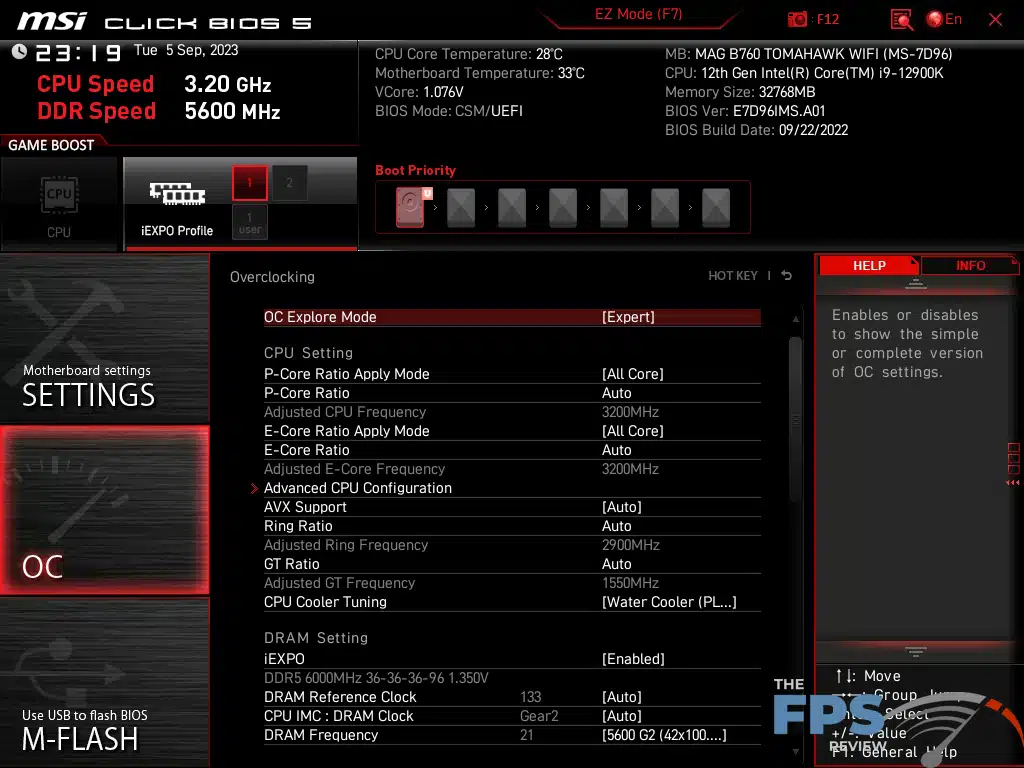
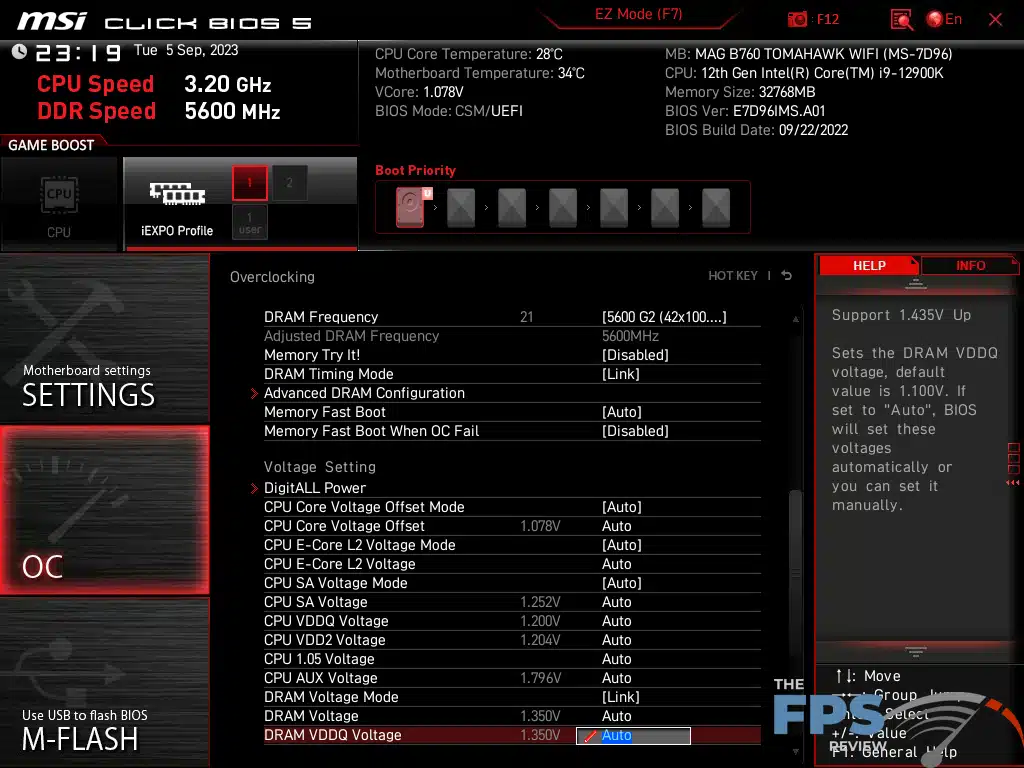
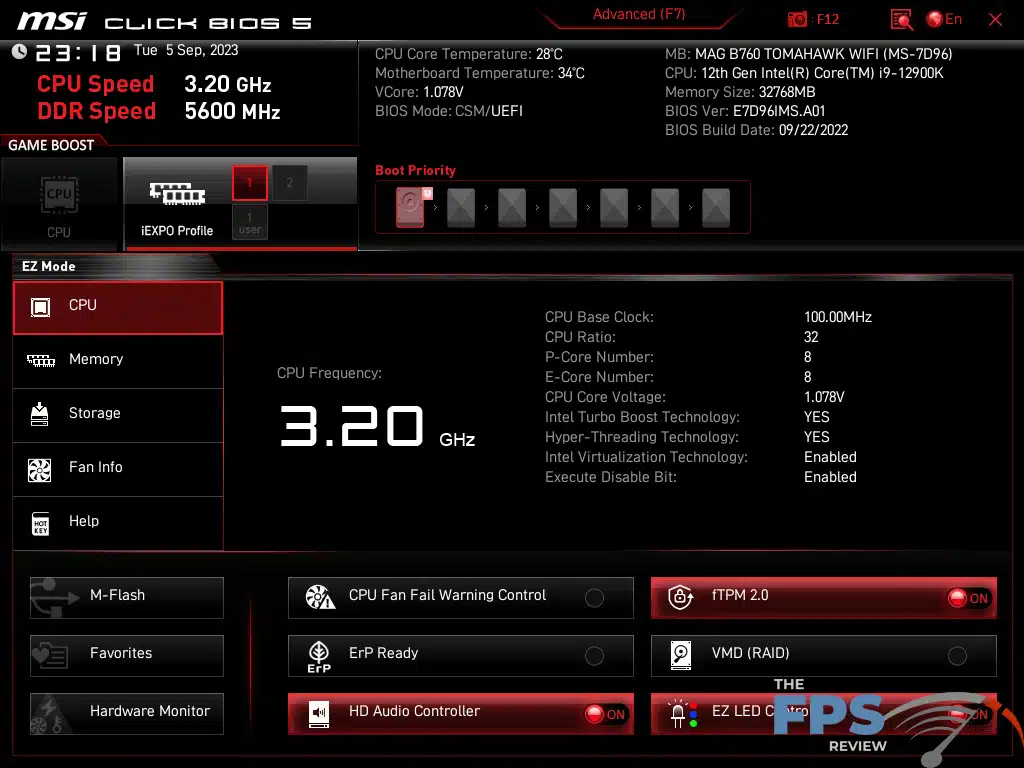
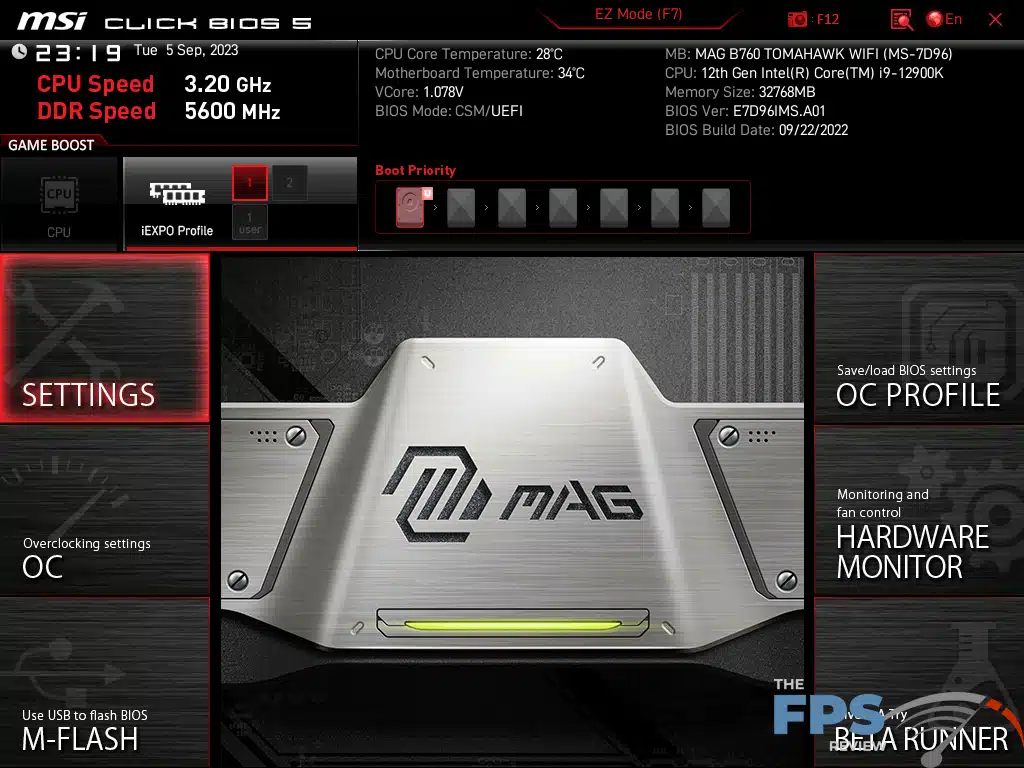
The MSI MAG B760 TOMAHAWK WIFI utilizes an American Megatrends Inc. licensed UEFI BIOS. Unfortunately, MSI gives no real specs on the BIOs beyond that. However, the MSI MAG B760 Tomahawk WiFi utilizes MSI’s Click BIOS 5 implementation. Click BIOS 5 has been around for a few years now and it’s broadly similar to its predecessors going all the way back to the Click BIOS 2. You’d have to go back to the original Click BIOS to find something that’s aesthetically and functionally different on MSI motherboards.
MSI’s Click BIOS 5 is a different approach to the same things that the other motherboard makers are doing. The interface at its core is broadly similar to the BIOS of old when you get down to it. It has the same features for hardware monitoring, fan tuning, overclocking, memory tuning, overclocking, and so on that every other board maker offers. In some respects, MSI does things better and worse than its competition.
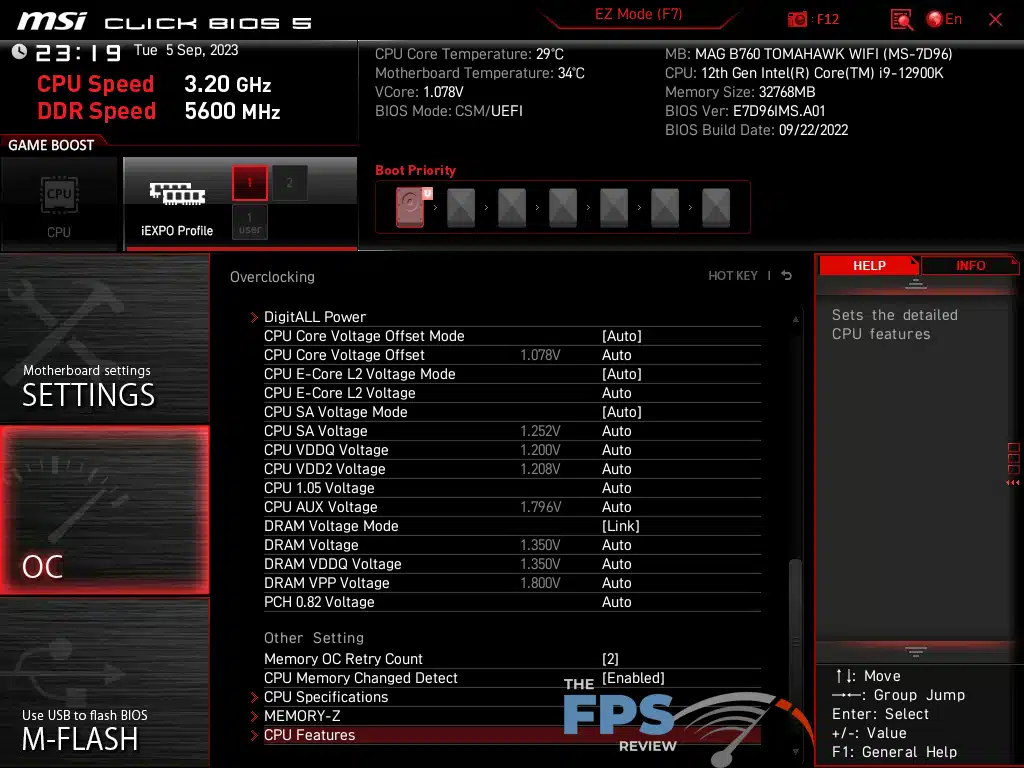
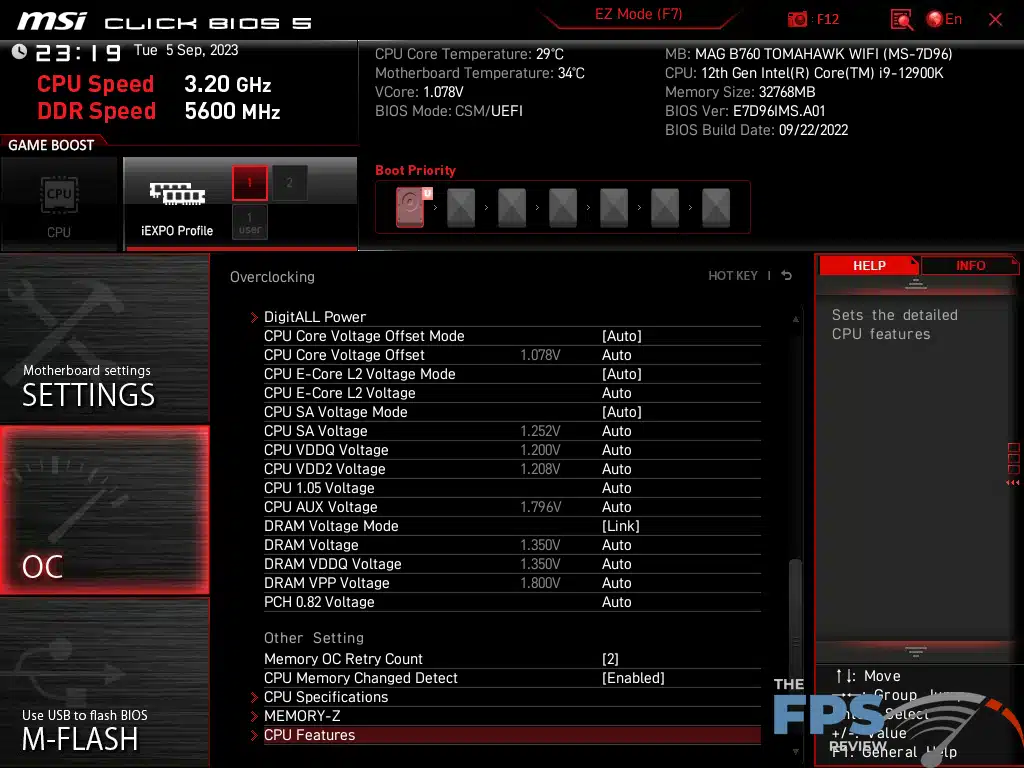
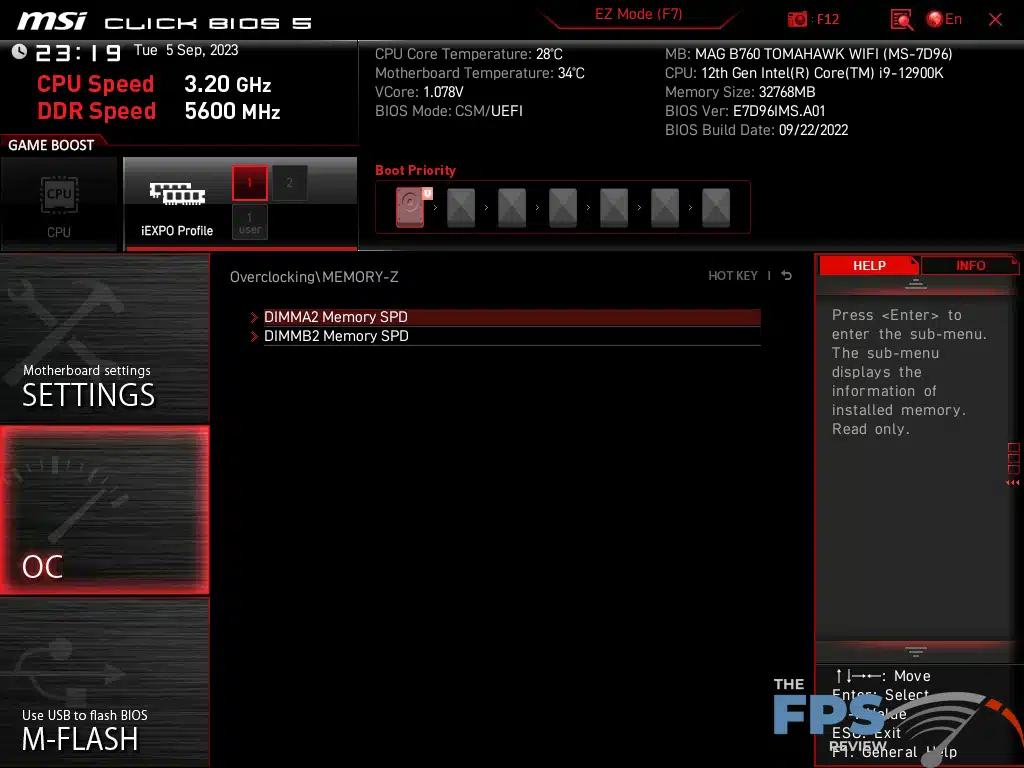
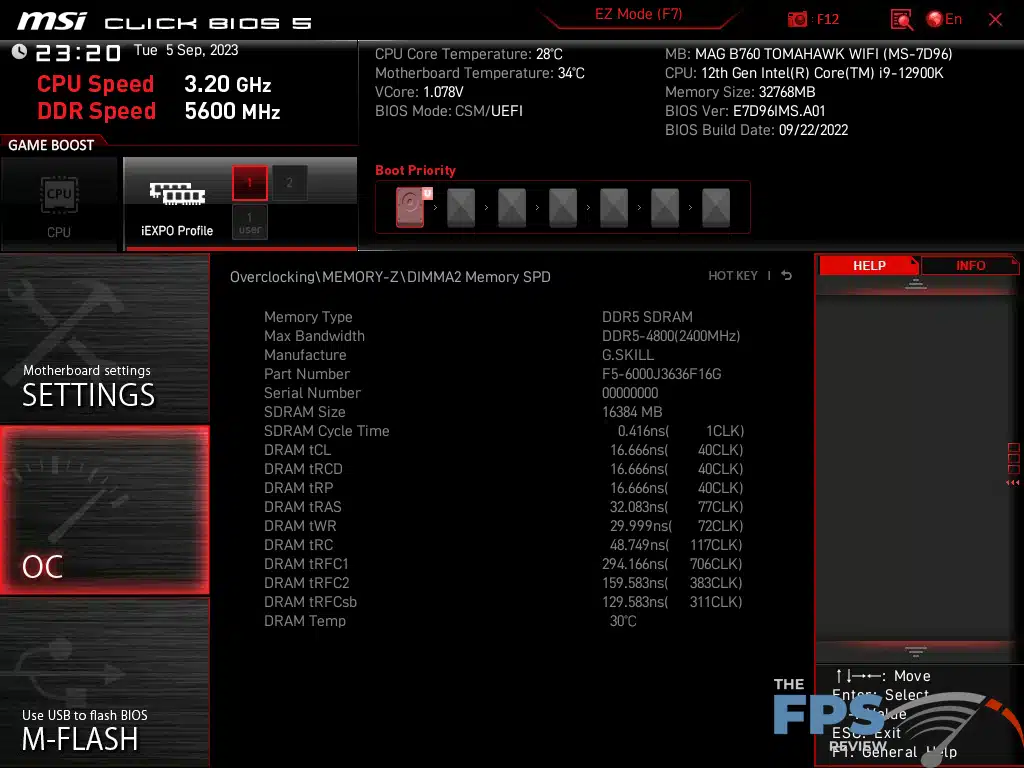
There are two things that differentiate a UEFI in the market. 1.) The interface and 2.) the tools included in the UEFI itself. On the subject of the interface, I find a certain dichotomy with MSI’s implementation. On one hand, it’s intuitive enough to do what you need it to do and is aesthetically pleasing. The settings offered are deep enough that you’ll never find yourself unable to achieve a specific overclock for lack of having access to certain settings.
That being said, I find the interface somewhat annoying at times. The actual workspace in the BIOS for settings is only about a third of the total screen real estate which baffles me. This is due to the giant header at the top that’s supposed to provide some reference information such as time, date, and some clock speed and configuration data. It tends to use this space inefficiently and devotes way too much screen real estate to things like the system’s boot device ordering.
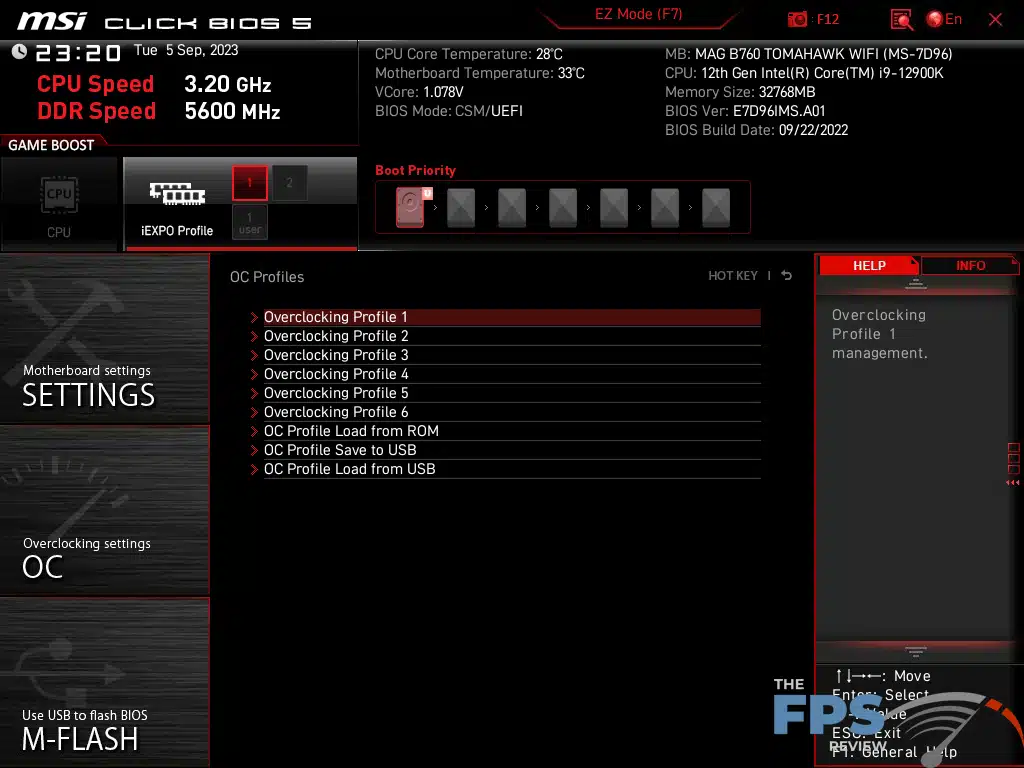
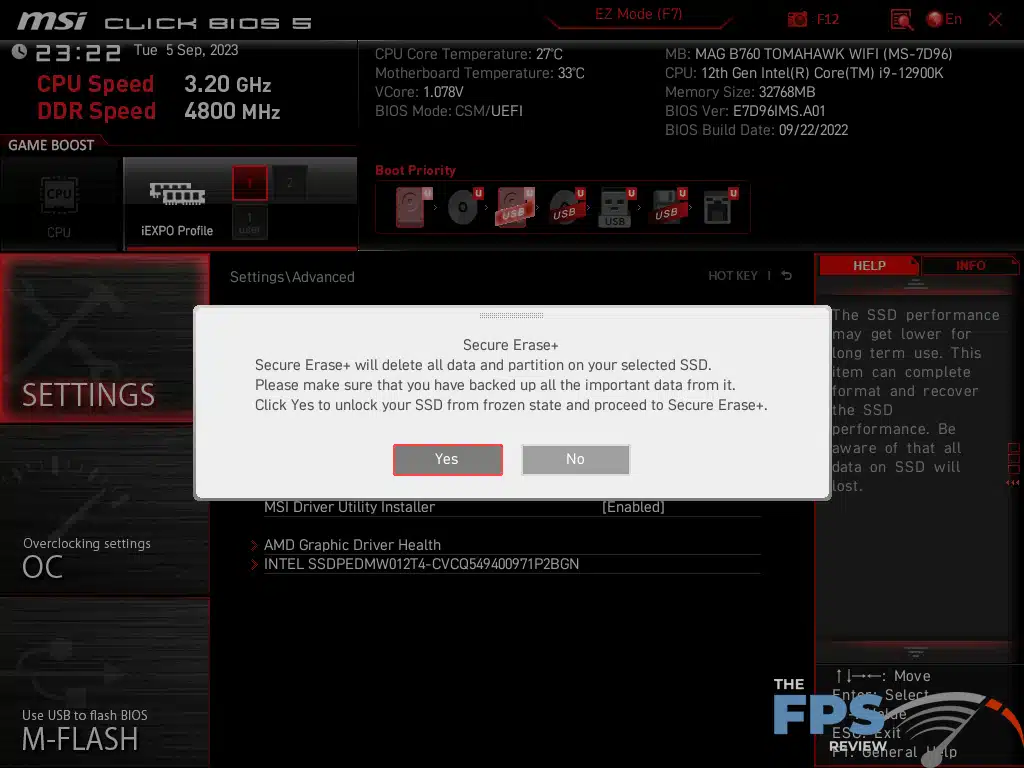
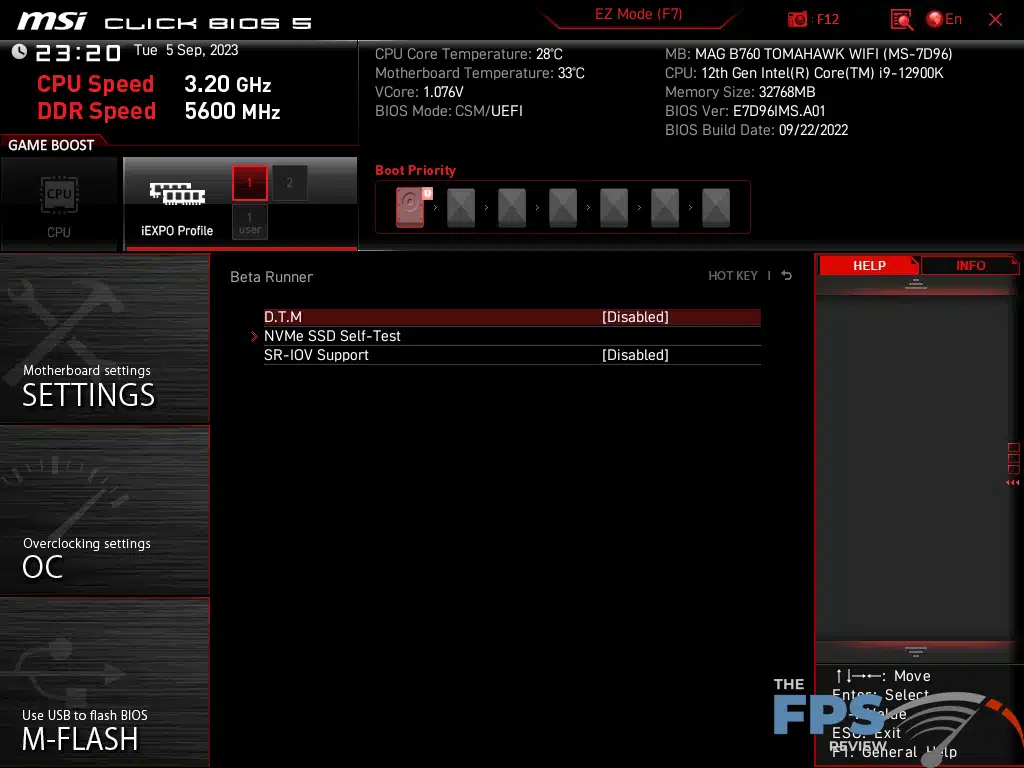
There are huge navigation tiles to select various settings categories and while they are easy to find, this type of design went out with Windows 8. MSI does falter slightly by using more submenus than they need to. Often, you’ll find you have to traverse two or three menus without much of anything in them to find an option buried deep in another menu that doesn’t have many options. They could all have been consolidated easily. Other times MSI tends to not use enough submenus or present a really long menu to the user and expect them to sort through it all.
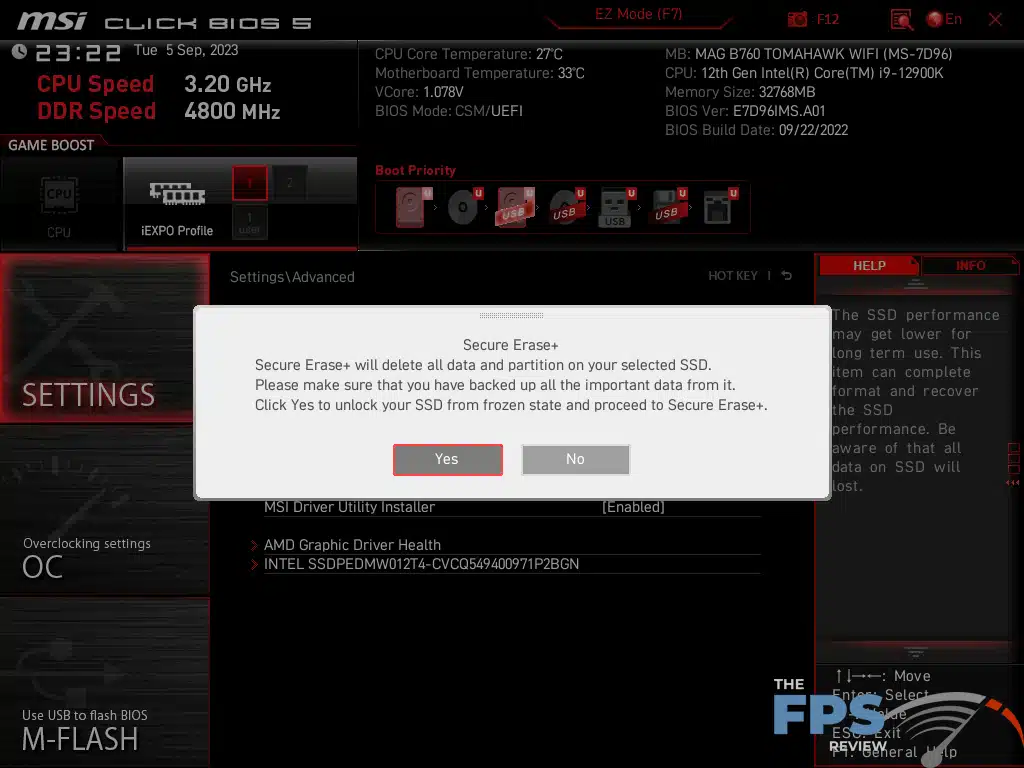
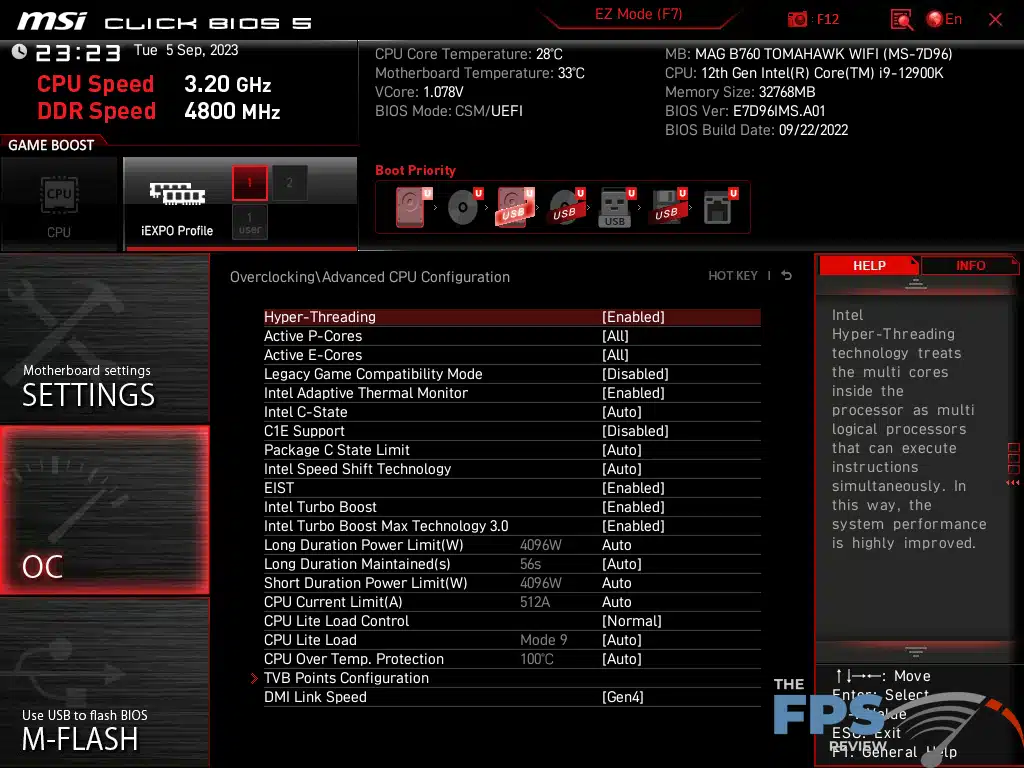
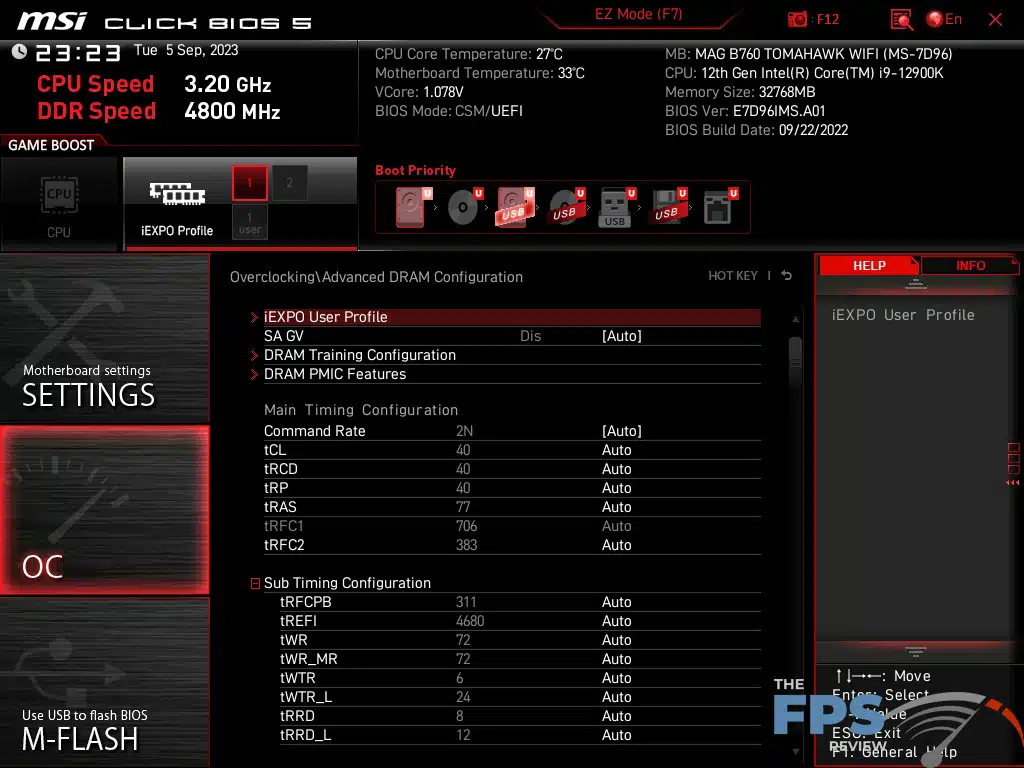
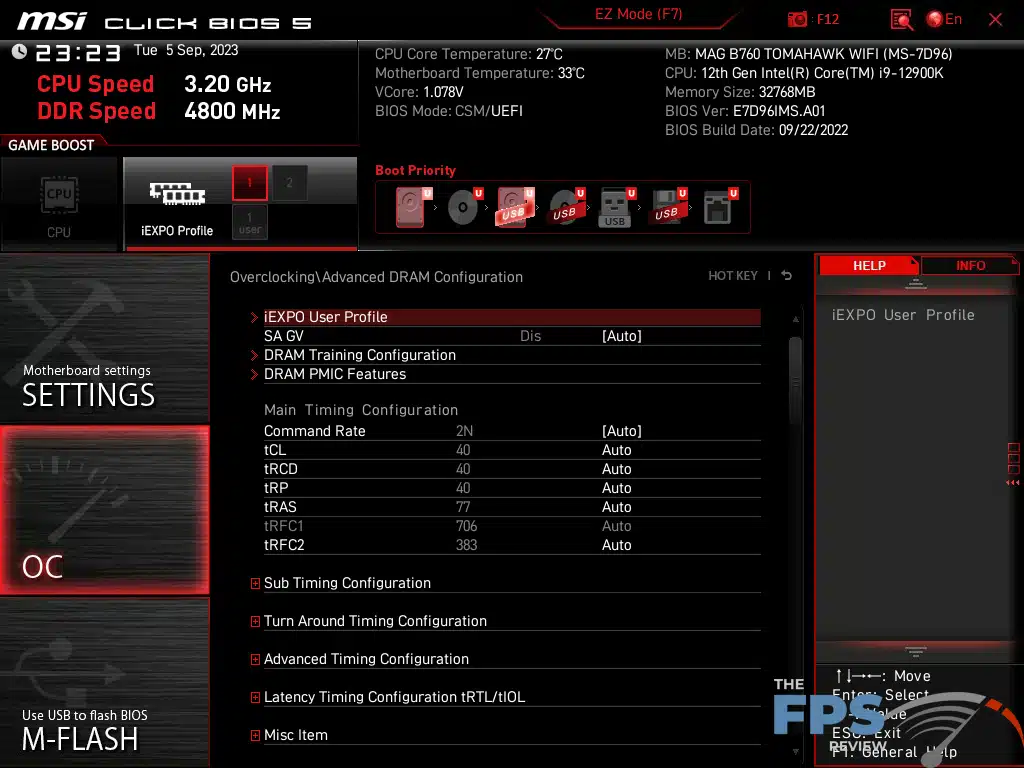
In other words, the user interface is a bit of a mixed bag but it does work well enough to get the job done.
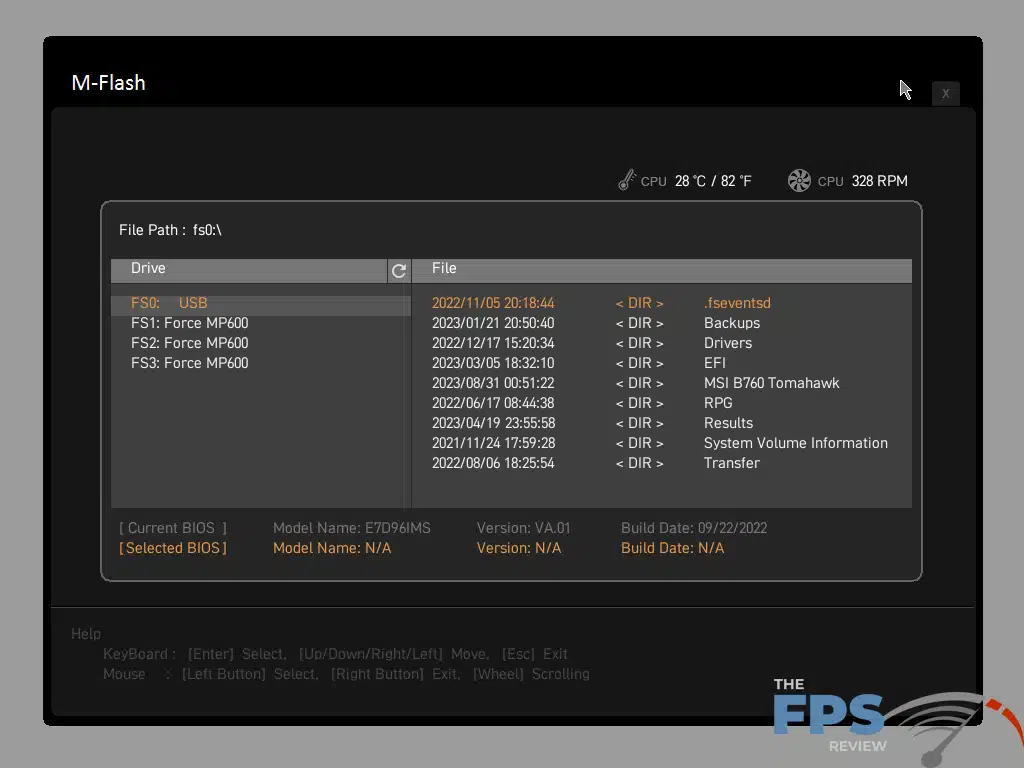
On a final positive note, while it doesn’t have any unique tools, the MSI MAG B760 TOMAHAWK WIFI offers overclocking profiles, an SPD reader, solid fan tuning and temperature monitoring options, and lastly, a good BIOS flashing utility. It’s Memory-Z feature allows you to look at the SPD tables in BIOS which is handy. MSI’s M-Flash is pretty simple and reliable though it requires a reboot before you can access it for some reason. You will not find a secure SSD erasure tool or anything like that.
At the end of the day, you get what you need and perhaps more given the price point and that’s nothing to scoff at. I just think there are opportunities here to improve the end-user experience with the interface. Though on a purely technical level, you get everything you need.
Discussion (6 replies)
Join Discussion →Thanks for the review and also good to know about the budget 2.5G NICs.
They have to cut the costs somewhere. To be fair, this isn't normally going to be an issue. I think Realtek NICs are fine most of the time. Most people aren't running 16+ port managed switches in their homes like I do.
The Realtek 2.5Gbit NICs might even be more reliable for some folks than the Intel ones, if going by internet complaints. I know I've seen some weird behavior off and on myself with the i225 and i226 NICs that are very atypical of Intel network controllers.
Yeah. I was kinda taken-aback at the level of complaints made against the current Intel i225/i226 solutions. Intel used to have rock solid adapters, and was what you'd strive for getting.
I'm just surprised it's been going on this long. You don't hear those complaints from the Linux community really, and on the Windows side it seems to be a driver / firmware thing.
Main symptom I've seen personally is that the interface just drops its connection and ceases passing traffic, seemingly at random, but regularly enough to be annoying. Fixing it is as simple as disabling and re-enabling the interface in Control Panel, or unplugging and replugging the cable.
Either way, complaints have largely died down, but Intel is likely going to have to get another spin with another name ("Odd-Windows-Release-Syndrome") to regain consumer faith. Could be that they just move up to producing 5Gbit controllers.
The i225v and i226v's are indeed problematic. I've had my share of issues with those as well. Though more recently, I've had fewer issues with them as the firmware problems have been pretty well ironed out.
More recently, I've had good luck with Aquantia, Marvell, and newer Realtek adapters. This adapter, as I recall is an older one.