
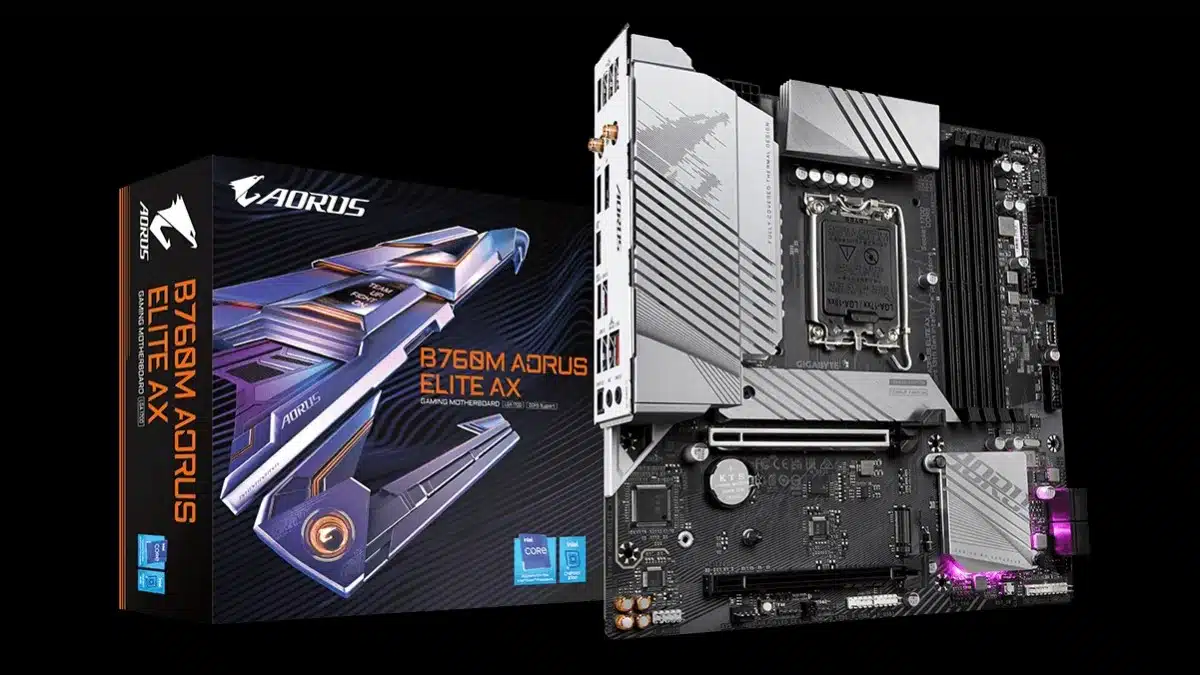
The GIGABYTE BETA BIOS for Z790/B760 motherboards with Intel’s Baseline Profile are now available to download for optimal stability. The Intel Baseline Profile first appeared recently when ASUS released its own BIOS update. These BIOS updates aim to address CPU instability issues reported by users while gaming with Intel’s 13th and 14th gen core processors. The new profile locks in motherboard settings to Intel factory defaults. GIGABYTE has said that enabling the baseline profile will disable its PerfDrive settings which provides “premier” performance for its motherboards.
Press Release (via GIGABYTE news page):
Superior Stability by GIGABYTE BETA BIOS with Intel Baseline on Z790/B760 Motherboards
April 26th, 2024 –GIGABYTE TECHNOLOGY Co. Ltd, a leading manufacturer of motherboards, graphics cards, and hardware solutions, released the latest beta BIOS with Intel Baseline feature on Z790, B760 series motherboards for enhanced stability, regarding the feedback from Intel that high power consumption settings may cause system instability with 13/14th generation CPUs.
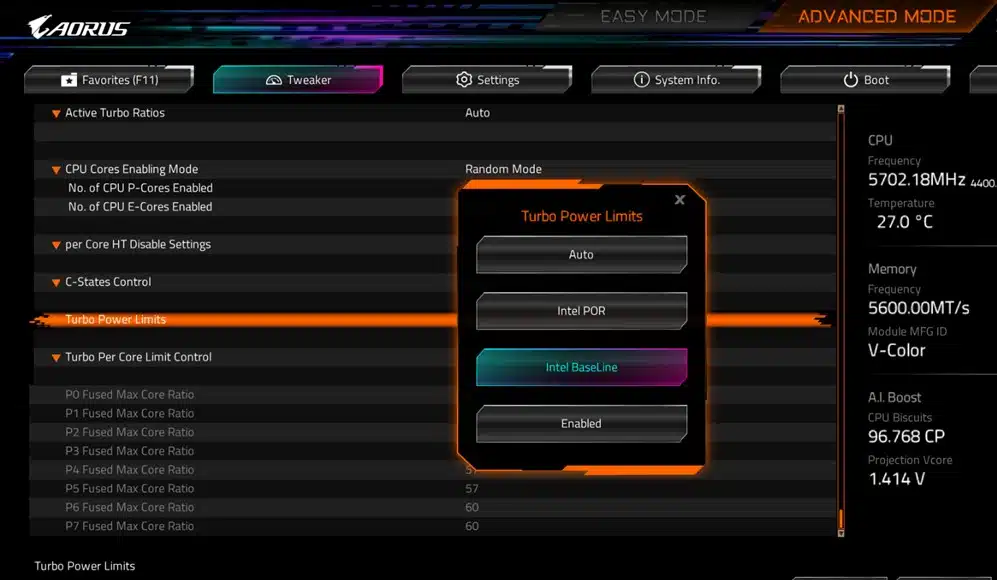
GIGABYTE always prioritizes user experience, focusing on both performance and stability. Additionally, as a close ally of Intel, we promptly introduced the Intel Baseline feature with the latest beta BIOS. When using 13th and 14th generation K-SKU CPUs, the Intel Baseline setting will appear in the “Turbo Power Limits” option under “Advanced CPU Settings”. After enabling Intel Baseline, the performance will be expected to be limited due to the power setting adjustments.
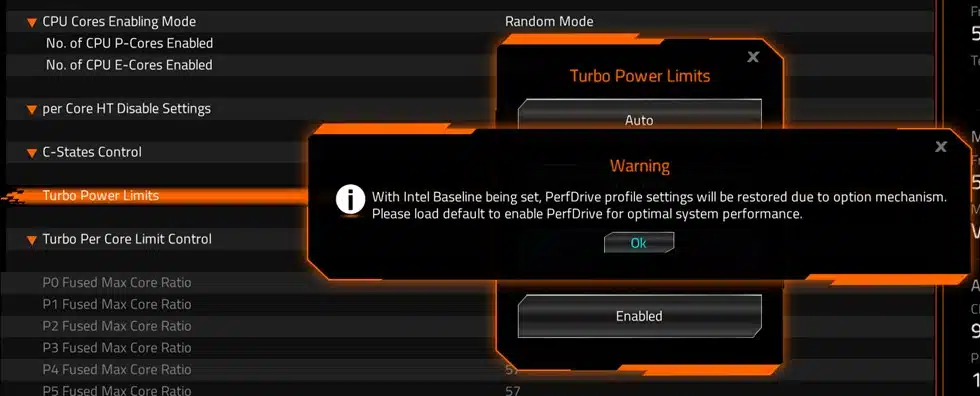
If users aim for enhanced and optimized performance, we also provide the GIGABYTE PerfDrive feature tailored for each GIGABYTE motherboard to allow users enjoy premier system performance. Please note that when enabling Intel Baseline, the PerfDrive settings will revert to default and be grayed out due to option linkage.
The beta BIOS with Intel Baseline feature for Z790 and B760 motherboards is available now. Please visit GIGABYTE official site to download for the best user experience and stability.
Discussion (6 replies)
Join Discussion →Good, but... shouldn't it be the other way around, Intel Baseline should be the 'default' and then an OC profile to go beyond that
This issue, at its core, is one that's been building over time. Hasn't been a big problem since Intel CPUs had some headroom, but now that they are being pushed to the edge, now it's starting to be a problem.
It was a problem a little while ago, remember, on AMD with the whole voltage issue being too high.
So this isn't intrinsic to Intel, it's an inherent design choice from motherboard manufacturers, and it is not a new issue really.
I think best we can hope for right now is that more manufacturers will provide 'Intel/AMD Default Spec' profiles in the BIOS.
So far I've seen ASUS and Gigabyte step up to the plate, I hope others follow.
Seen MSI released a similar non beta bios for my Z790 board recently.
Igor has a good writeup on this as well.
[URL unfurl="true"]https://www.igorslab.de/en/intel-releases-the-13th-and-14th-generation-k-sku-processor-instability-issue-update/[/URL]
Steve puts the blame more on Intel for this, and I can't say I don't disagree with him. Good watch.
[embedded media]
This is basically the same thing that AMD/Asus did a little while ago with their chips IMO. Yes Intel has been letting this go a while longer and should have "corralled" it a while ago before its 14th Gen chips that were dangerously close to their limits reared its ugly head. All manufacturers are out to beat the other just like always, but now we seem to be reaching the limits of just how hard hardware can be pushed. The margin for error has narrowed considerably.
I didn't see any mention of voltage here - it's going to be voltage along with heat that causes real degradation, so if that's what people are seeing, then the higher and higher duration power limits are resulting in temperature tracking at the throttling temperature, and that being driven partially by very high voltage.
That's cooking CPUs 101.
The fix is the real problem; limiting power will address the issue, but if high voltages remain, that means that there's no margin left for additional performance. I'm not seeing a solid way forward here outside of users carefully and methodically testing lower voltages to see if defaults are tracking too high. Problem there being that having voltage too low will lead to the same instability problems.