
Conclusion
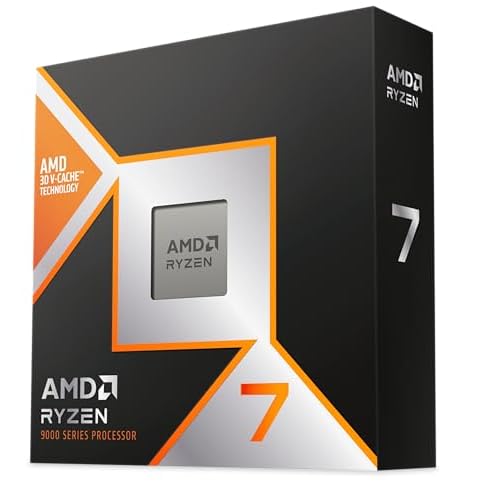
In our introduction, we said a picture would be painted from our benchmarks today. Indeed, the AMD Ryzen 7 9800X3D is simply the go-to CPU for gamers, let’s just get that out of the way quickly. However, we want to stress from our data, that it is also more.
Oftentimes, the previous generation Ryzen 7 7800X3D provided great game performance, but at the sacrifice of everything else productivity speaking. For everyday work, it wasn’t the best at multi-threading performance, or single-threading performance, suffering from clock speed deficiencies for those workloads. We want to stress that the AMD Ryzen 7 9800X3D fixes all that, it not only offers a great gaming experience but also delivers a productivity uplift that makes a big difference.
Our review today was to provide a wide scope of benchmarks, to see what the AMD Ryzen 7 9800X3D is capable of for, well, many PC tasks, gaming included of course. We wanted to see if the new Zen 5 architecture and faster clock speeds actually made a difference in using your computer to do all your needs compared to the previous generation Ryzen 7 7800X3D. We ran synthetic system benchmarks and looked at multi-thread and single-thread improvements that make a difference when doing more than gaming but also affect gaming.
Performance
I think it is safe to say, we were highly impressed with the results. The AMD Ryzen 7 9800X3D gave us an impressive multi-threaded performance uplift over the Ryzen 7 7800X3D, and also a single-threaded performance uplift. Even though it has the same core count at 8-cores/16-threads, it can provide performance in the range of 20%+ over the Ryzen 7 7800X3D.
We saw ranges in multi-threading from 9%-35%, with an overall average of 22% multi-threading performance uplift over the Ryzen 7 7800X3D! In single-threading, we saw a range of 15%-26% with an overall average of 20% single-threading performance uplift over the Ryzen 7 7800X3D!
Even more exciting is the performance uplift over the AMD Ryzen 7 9700X, which is based on the same Zen 5 architecture and 8-core/16-thread configuration. We saw ranges in multi-threading from 11%-20%, with an overall average of 15% multi-threading performance uplift over the Ryzen 7 9700X.
The AMD Ryzen 7 9800X3D was also phenomenal in gaming performance, providing a real uplift over the previous generation Ryzen 7 7800X3D. We saw between 6%-25% faster game performance over the Ryzen 7 7800X3D with an overall average of 12% if we don’t include Black Myth Wukong, or 10% average if we do include Black Myth Wukong. Some games will benefit more than others, we saw some large 14%, 15%, and 25% advantages, but most were right under 10%.
Again, when you look at performance compared to the Ryzen 7 9700X, the Ryzen 7 9800X3D looks very impressive for gaming. Over the 9700X, the 9800X3D experienced between 18%-53% performance improvement for an overall average of 33% faster than the Ryzen 7 9700X!
I think we can truly say that the AMD Ryzen 7 9800X3D quantifies its name of being a “9800X” CPU compared to the “9700X”. It’s faster than the Ryzen 7 9700X in all workloads and circumstances as an 8-core/16-thread CPU and a gaming CPU. If you want the fastest 8-core CPU from AMD, get the Ryzen 7 9800X3D for all productivity needs as well.
Final Points
We found the missing Zen 5 performance ya’ll, it’s in the Ryzen 7 9800X3D! The Ryzen 7 9800X3D is the generational improvement we were looking for with Zen 5. It offers a substantial and noticeable improvement in both multi-threaded and single-threaded performance, as well as improving gaming performance compared to its predecessor the Ryzen 7 7800X3D, and even the Ryzen 7 9700X.
To say the AMD Ryzen 7 9800X3D is impressive is an understatement. AMD did everything right with this CPU, providing a real generational improvement with results. The AMD Ryzen 7 9800X3D is hands down THE, definitive gaming CPU, but also much more. It gives a substantial boost to productivity performance, allowing you to game, and not sacrifice everything else you do on your computer. Did not think AMD could make X3D better, but that is exactly what AMD has done with 2nd Generation 3D V-Cache.
AMD is demolishing Intel right now in gaming performance and the gaming experience. It offers more performance, is more energy efficient while gaming, and simply wins. The only downside is the MSRP increase of $30. Be on the lookout for deals and discounts, or falling prices over time. If you are a holdout initially, this is the type of CPU that will age well for gaming, so check back in a few months and see where prices are if you choose to wait. That said, even at this price point it still offers value for the money for PC gaming and improved productivity from the previous generation. This is shaping up to be another G.O.A.T. CPU from AMD.


Discussion (19 replies)
Join Discussion →Great review and the 9800X3D looks like a beast.
Yep, keeping my eye on this one and can't wait for the 9900X3D/9950X3D reviews to make my final decision for my 1st AM5 build.
After this review I am more excited about this gen than I have been before. The extra die space from these X3d's is having some add on benefit for performance that is hard to quantify (more space for heat?) but I don't care. This is kind of awaesome.
Just curious, what are you referencing here?
For pure gaming I'd still go with the 7800X3d, but the 9800X3D is better than the 9700X in every way. I don't really think we'll ever see a 9800X.
Hopefully we'll eventually see a 9700X3d or even a 7700X3d that's I would get myself.
I wonder what OC will bring to the table.
If going by recent rumors, anything from 200-400 MHz but so far as to how that will translate, added power draw, heat, etc., haven't heard anything credible yet.
I think he means this from Brent's review.
"In the 2nd Generation 3D V-Cache, AMD has re-designed the cache so that it is the same size as the CCD itself, eliminating the need for structural silicon."
@Brent_Justice
"In subsequent follow-ups, we will deep dive into gaming performance a lot more, with a very gaming-focused review with a lot more games, so stay tuned." - I bet you'll have a lot of fun doing this, very jealous!
Sorry if I missed mention of it, is there a separate review for that Trident mem kit coming up? I was doing some research on it this weekend as I prepare for the new build.
AMD is still using the same IOD - so 6000 C30 is basically it without tempting fate, same as at Zen 4 launch.
Some folks in the OC communities have been working on faster memory speeds but I haven't seen any real evidence of gains in effective performance.
Don't have one planned, but I've been using a similar kit since Zen 4 launched, it's my standard RAM kit for the AM5 platform, and I've been using it for every GPU review. Solid kit, no complaints, works perfectly great, it's the right configuration for the best Ryzen performance.
To be honest, I am quite looking forward to a 20 game performance roundup!
Done it before: https://www.thefpsreview.com/2023/11/20/intel-core-i9-14900k-vs-amd-ryzen-7-7800x3d-gaming-performance-in-20-games/
Basically in the review it was noted that the 3dvcache space is the same as the die space. Meaning that there is heat dissipation that can come downward into the 3dvcache layer. Allowing the actual processors to be pushed further.
nice work guys!
It would appear that placing the 3D cache on the bottom is allowing it to boost closer to it's full potential. This is good news. Now I can only hope even more than the 9950X has dual 3D cache on both of it's CCDs.
That makes a little bit of sense; still, it isn't likely to have near as much of an effect as having just gotten the 3D V-cache out of the way of the heatspreader IMO.
Disappointed in the lack of 2560x1440 and 3840x2160 numbers. I've done a lot of this type of testing over the years and 1080P just doesn't tell the whole story. Conventional wisdom says that when your GPU bound the CPU doesn't really matter, but I found that wasn't always the case. Often you'd get averages that seemed pretty close but the lows were lower and the highs higher on some CPU's.
On games like Cyberpunk 2077 where a few frames can make the difference between a playable frame rates and not, (even on a 4090) the CPU might make a difference. It sure did with earlier Ryzen family CPU's I tested.