
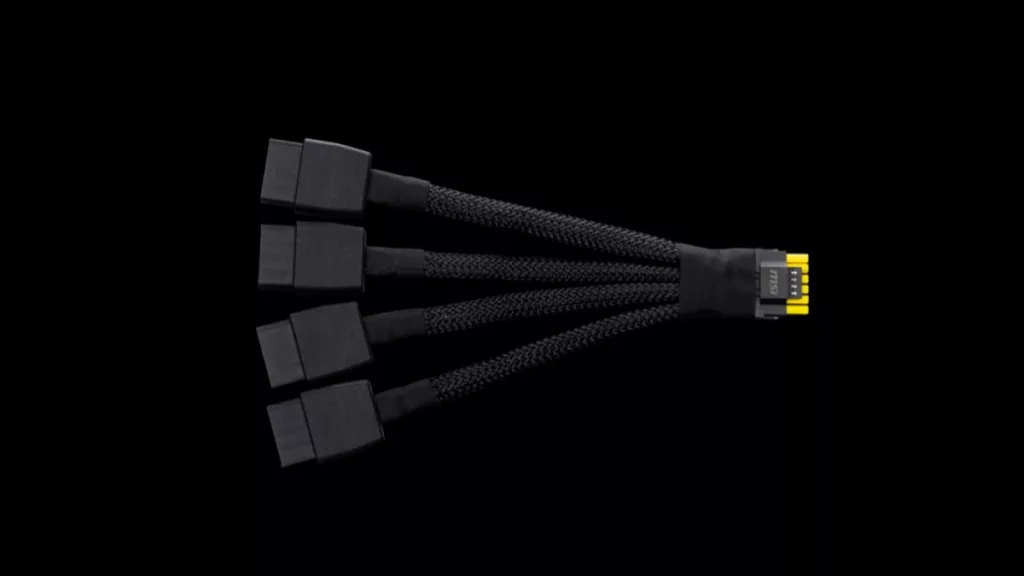
Multiple hardware manufacturers were asked which is better: using an adapter or the included PSU cable, and not all gave the same answer. It goes without saying that the 12VHPWR/12V-2×6 connector has a spotty reputation; however, one thing is certain: owners of graphics cards with this connector do not have clear guidance on which cable to use. Well, someone has at long last had the notion to ask multiple manufacturers just that question, and unfortunately, there’s still no clear indication for the right choice, but their answers might surprise some.
“When it comes to 12vhpwr, should you use a native PSU cable, or the included GPU adapter? I spoke to 9 different tech companies, and done a bunch of research, to give you an answer to that question.
Of course, as with many things, the answer can vary a lot depending on your exact setup and circumstances.”
– Tech Overwrite
Tech Overwrite (via VideoCardz) asked the question in its video, “Which Is Safest: Native 12VHPWR vs The GPU Adapter?” to nine different PC hardware manufacturers. Those asked included ASUS, MSI, GIGABYTE, SilverStone, ZOTAC, SAPPHIRE, Thermaltake, and Gainward/Palit. While there are a number of other popular brands missing, their inclusion probably wouldn’t make much difference, given the three types of answers given from the aforementioned, although it could be interesting to see where the percentages ended up. It should be noted that Tech Overwrite said it did email 11 companies, but only 9 replied.
It doesn’t matter
- SAPPHIRE – Didn’t specify on either being better.
- Thermaltake – Basically, use what you prefer or what fits your needs.
- Gainward/Palit – Essentially, whatever works for you, but the included adapter is provided for those who have an older PSU that doesn’t include a native 12VHPWR cable.
Use the native PSU cable
- SilverStone – Use native 12VPWR cable when possible
- ZOTAC – Use the native PSU cable when possible, as their provided adapter cable is more intended for older PSUs lacking the newer connector.
Use the “squid” adapter included with the graphics card
- ASUS – The included adapter should be used.
- GIGABYTE – Use their included adapter because it has been tested more.
- MSI – Use their included adapter.
There are many theories abound as to why so many folks get lucky and haven’t encountered melted cables/connectors, whereas so many others have, and given all the factors involved, we may never know for sure what caused them, but it is interesting to see some manufacturers take on what cable to use.
Discussion (19 replies)
Join Discussion →I'm using the PSU cables that came with my units. Aftermarket ones seem to be less than average IMO.
I always figured the adapter was for people using an older power supply lacking the correct PSU cable.
That's correct. My 5080 came with an adapter to use 3 or 4 PCIe cables. My PSU came with the correct 12VHPWR so I'm using that.
The main issue is the connector with really thin pins. They can't handle current so high. Simple physics.
Interesting.....GPU manufacturer: (except Zotac): use our adapter.
PSU manufacturer: use the cable we gave you.
The logical answer would be less connections means less points of failure. But there is more to it. Due to the fragility and lack of safety margin in this stupid connector I think it is better to use the adapter that came with the GPU, because it will probably be made by the same supplier as the connector on the card. Meaning it will hopefully fit better than the cable that came with the PSU that can be sourced from a completely different supplier with different tolerances.
Along with the safety margin issue, the power is also not evenly distrubted amongst the wires, so it's unbalanced, and can create too much load on one wire, basically. It's a flawed system.
I'm just so glad that I have zero desire for any GPU consuming more than 350W.
Did anyone test a bunch of PSU's to see if this holds true?
Funny if it does - that would be an easy thing to fix on the card
It was either GN or De8auer that tested that. Found that some wires were pulling an unusually high amount of current while others almost nothing.
I agree, flawed design.
This should've been builtin on the PCBs from day 1 and might've prevented any meltdowns.
[URL unfurl="true"]https://www.thefpsreview.com/2025/10/04/new-12v-2x6-device-featuring-load-balancing-technology-could-be-the-cure-all-for-16-pin-connector-meltdowns/[/URL]
So I did some minor digging. Can anyone post a link to where this device can actually be ordered?
[embedded media]
I wondered about it as well. I sent them an email this morning asking about availability. I'll update once I know more.