
Introduction
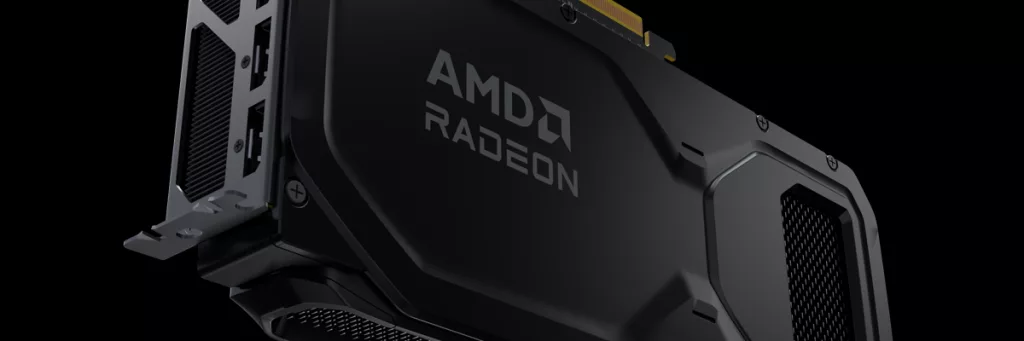
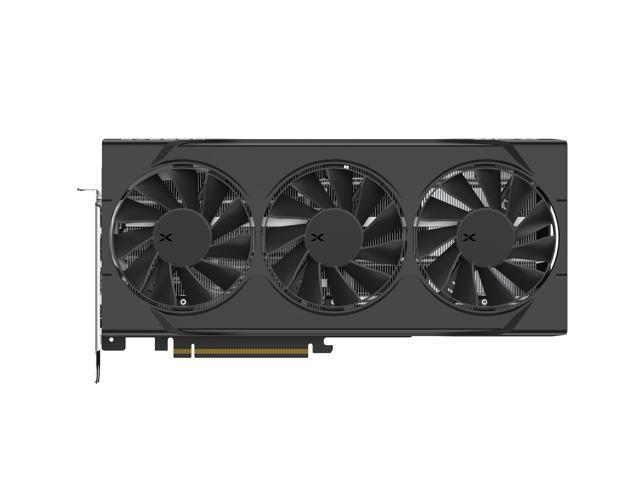
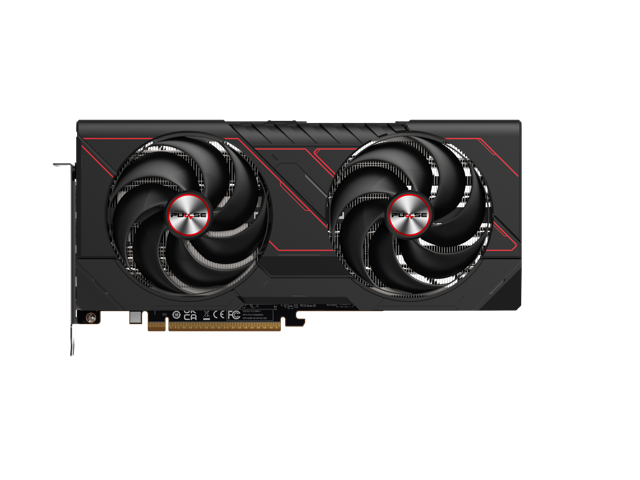
In this AMD Radeon RX 9070 GRE review, we will dive into the average and 1% Low gaming performance of this 12GB video card at 1440p on the PC. At launch, on June 1st, 2026, we reviewed the XFX Swift Radeon RX 9070 GRE Triple Fan Gaming Edition video card and the SAPPHIRE PULSE Radeon RX 9070 GRE GAMING OC video card. In those two reviews, we tested the average framerate, but did not cover the 1% Lows. Now it is time to dive deep into performance and look at both the average framerates, 1% Lows, as well as adding a fourth GPU for comparison, which will help flesh out the performance of the Radeon RX 9070 GRE at native resolution, upscaling, and ray tracing.
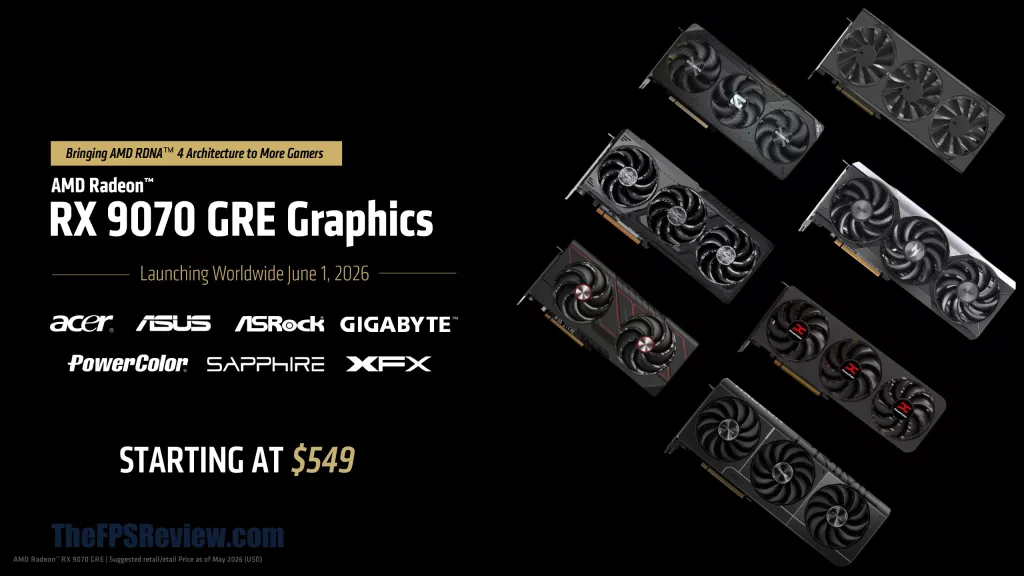
The AMD Radeon RX 9070 GRE was launched in the US and global markets on June 1st, 2026, and was announced at Computex 2026. The Radeon RX 9070 GRE was technically released before this; however, as it was a China-exclusive launch back in May, 2025. While it ‘could’ be acquired in the US, it certainly wasn’t easy, supported, or prevalent. Now, AMD has made the Radeon RX 9070 GRE accessible globally, and with that, announced the MSRP as $549. In light of this, it has had a “re-launch”, so to speak, but is actually a new launch for the US and global markets.
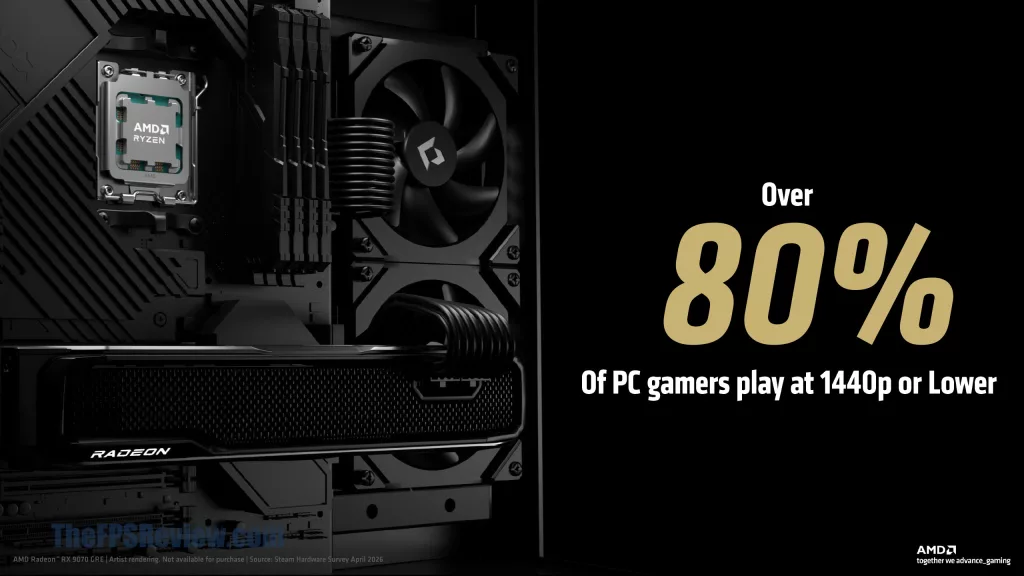
The AMD Radeon RX 9070 GRE is geared for 1440p gaming, but it is a 12GB VRAM video card. This brings up questions regarding performance in modern games in 2026. In order to evaluate this, we are going to look at both the average and 1% Low performance, which should tell us how well it can cope with modern games at 1440p with that framebuffer configuration. We’ll test at 1440p in both native resolution at high or ultra game settings, and then we will also enable FSR upscaling at 1440p, and we’ll also toggle ray tracing features on to see how that impacts the 1% Low performance.
In addition to that, we have four GPUs for comparison: the GeForce RTX 5070 12GB, the GeForce RTX 5060 Ti 16GB, the Radeon RX 9070 16GB, and the Radeon RX 9060 XT 16GB. This will provide a good stack to see where the Radeon RX 9070 GRE falls in terms of performance between these video cards.


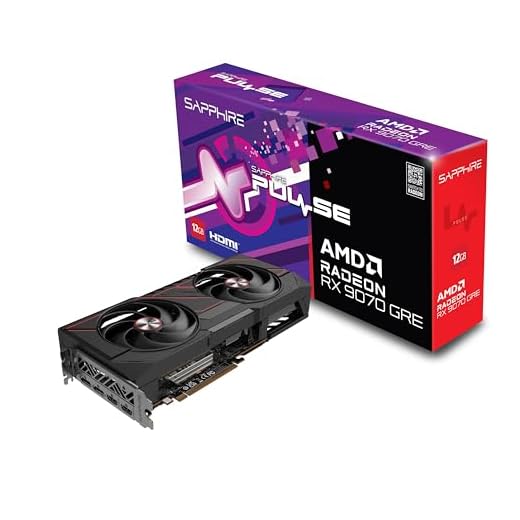
AMD Radeon RX 9070 GRE
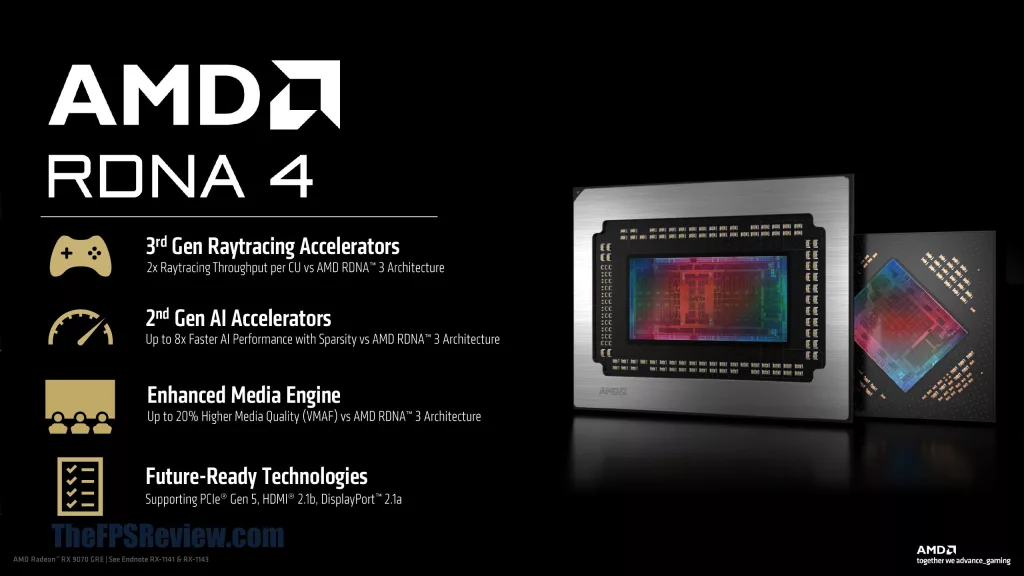
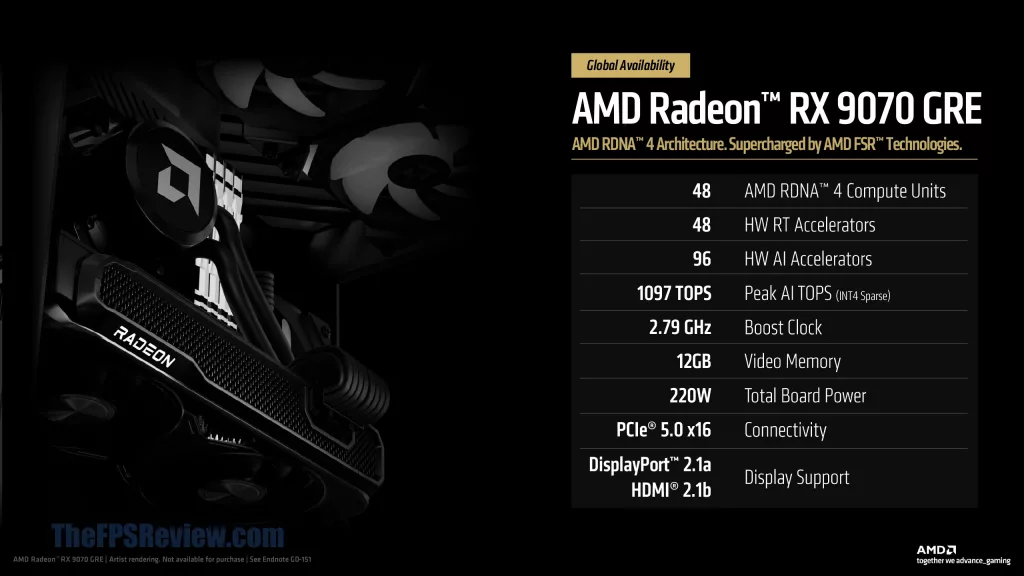
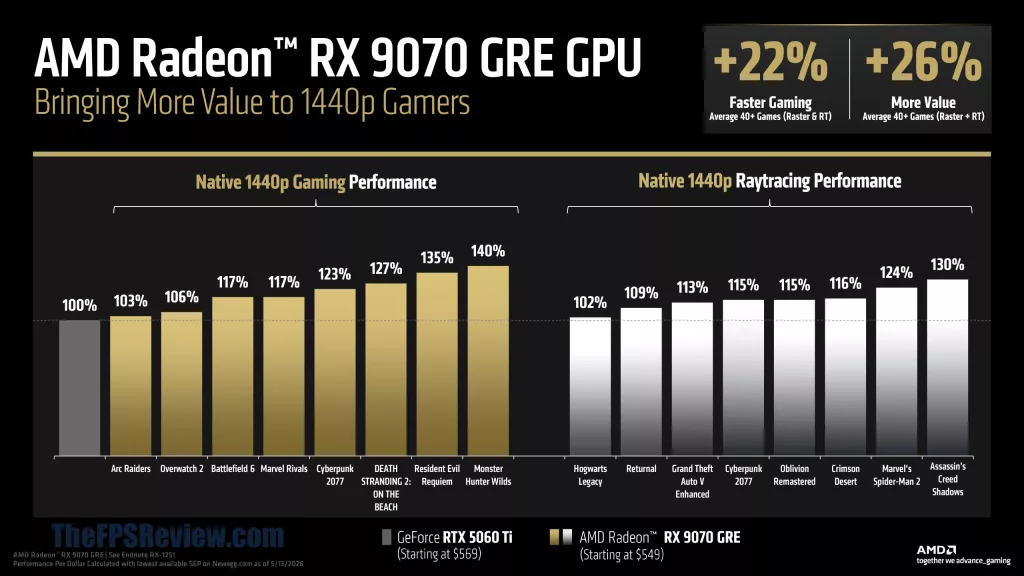
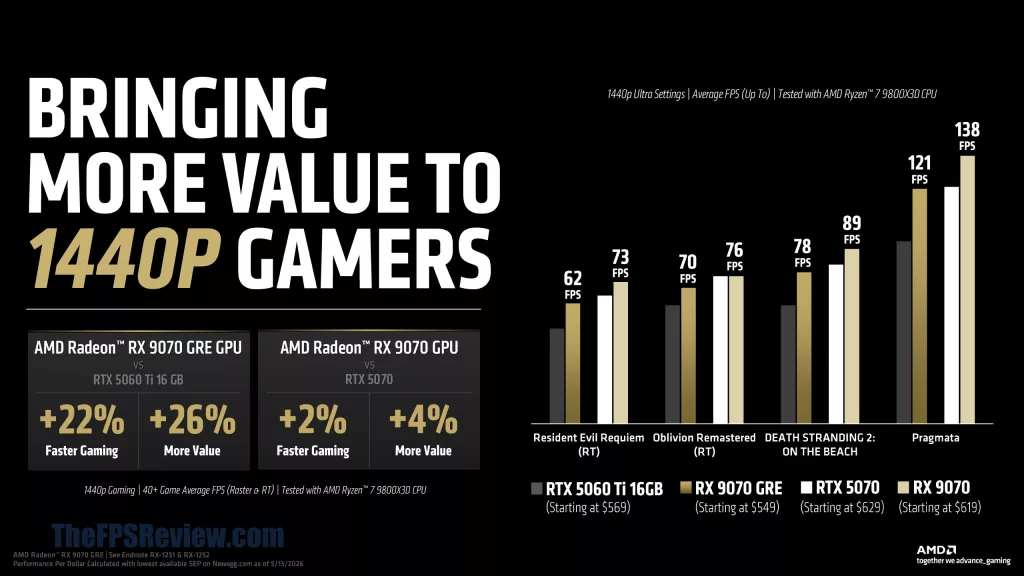
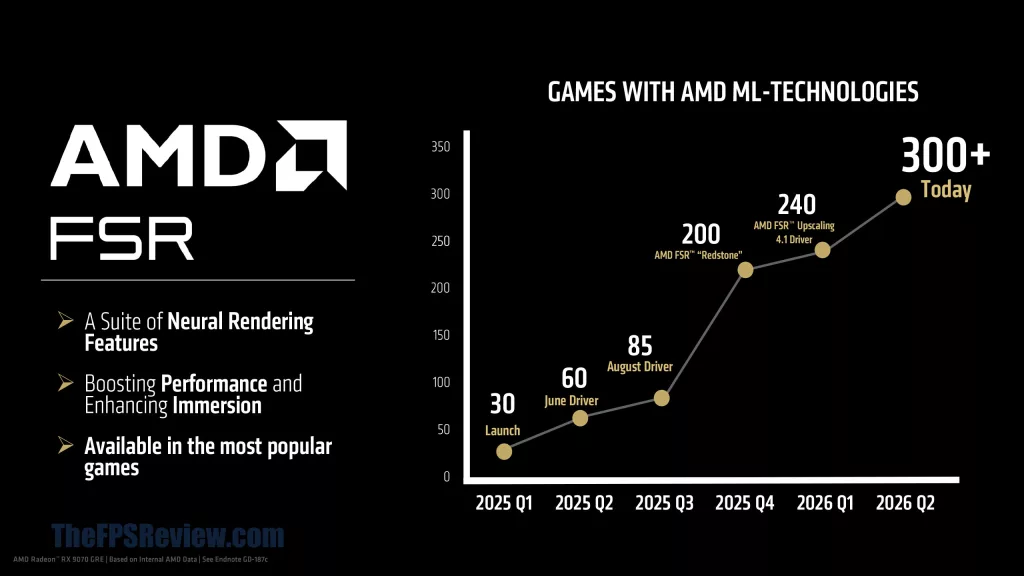
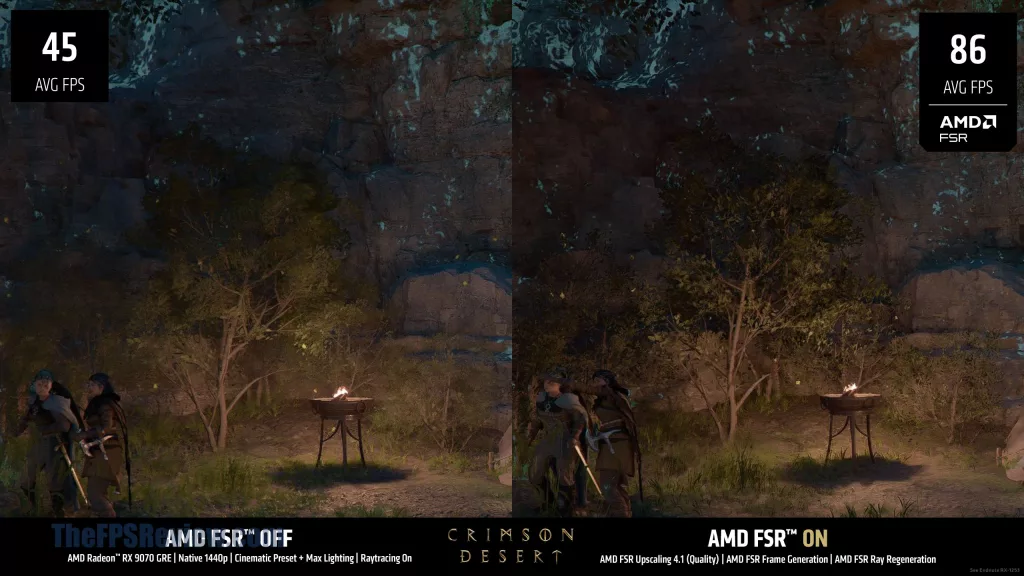
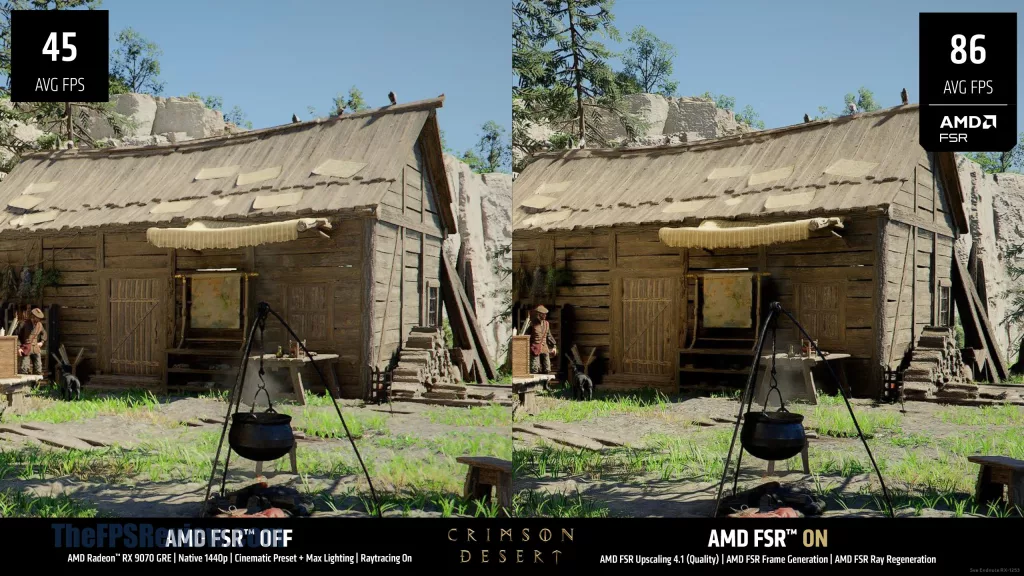
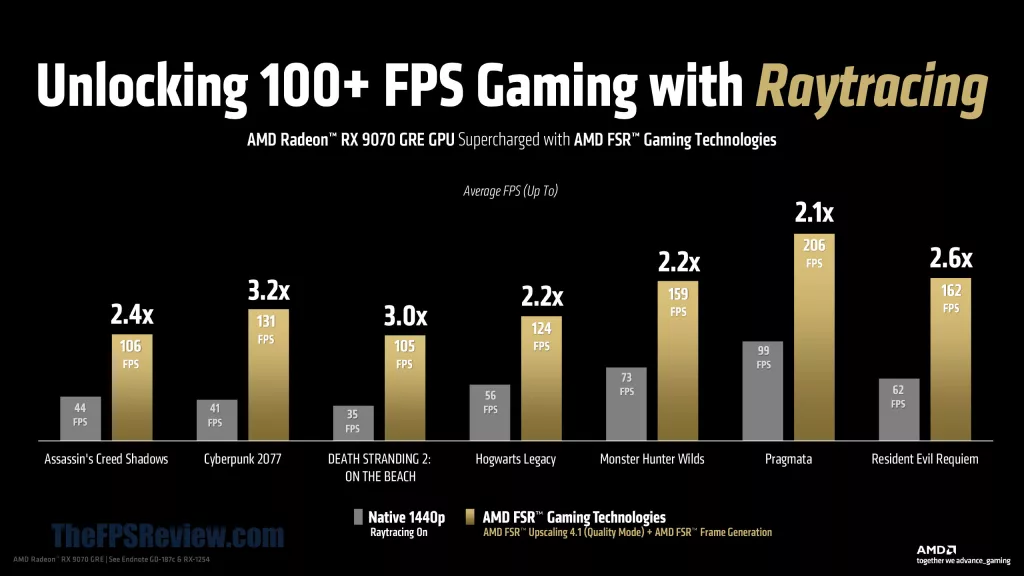
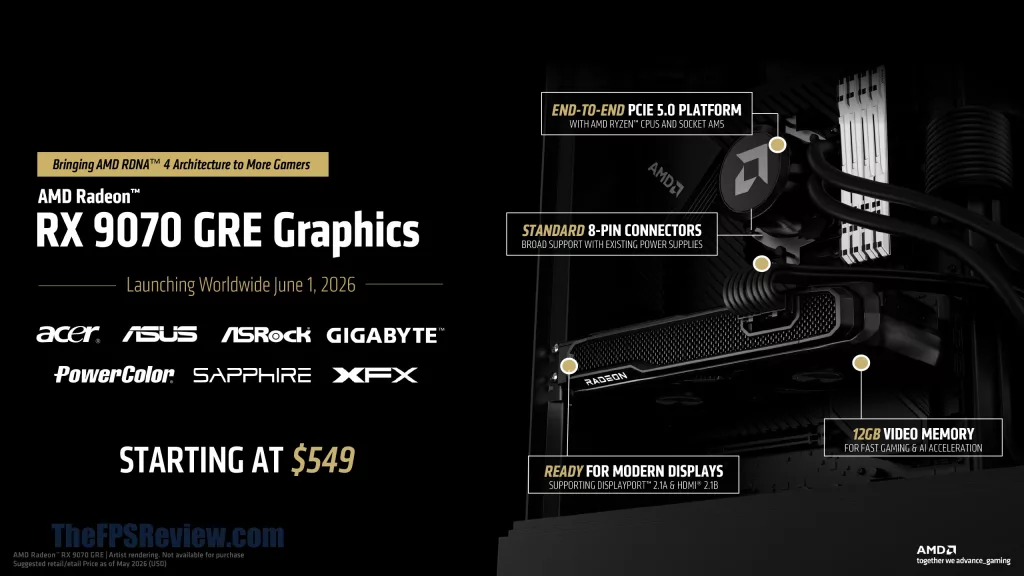
The AMD Radeon RX 9070 GRE is based on the RDNA 4 architecture and shares more in common with the Radeon RX 9070 than it does with the Radeon RX 9060 XT. The Radeon RX 9070 GRE utilizes the same NAVI 48 GPU as the Radeon RX 9070, but is cut down in specifications. The Radeon RX 9070 GRE is made up of 48 Compute Units, 3,072 Shading Units, 48 RT Accelerators, 96 HW AI Accelerators, 96 ROPS, and 192 TMUS. It has a Game Clock of 2220MHz and a Boost Clock of up to 2.79GHz. It has 12GB of GDDR6 on a 192-bit memory bus, at 18Gbps, providing 432GB/s of memory bandwidth. The Total Board Power is 220W, and it does support PCI-Express 5.0 x16 full bandwidth.
It should also be noted that the Radeon RX 9070 launched at $549 in March of 2025, but the Radeon RX 9070 GRE is launching now at the same price point as the Radeon RX 9070 should have been, but hasn’t been because of price inflations due to the market. Therefore, the Radeon RX 9070 GRE takes the price point that the intended pricing was meant for the Radeon RX 9070, but now with a lower performance specification. You can read more about the Radeon RX 9070 GRE specifications and overview in our launch review here.
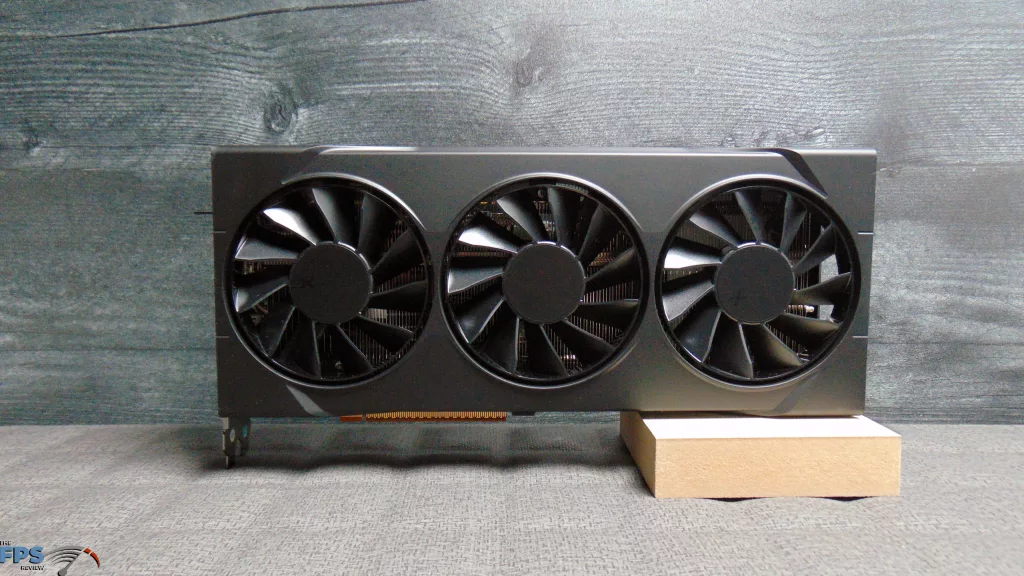
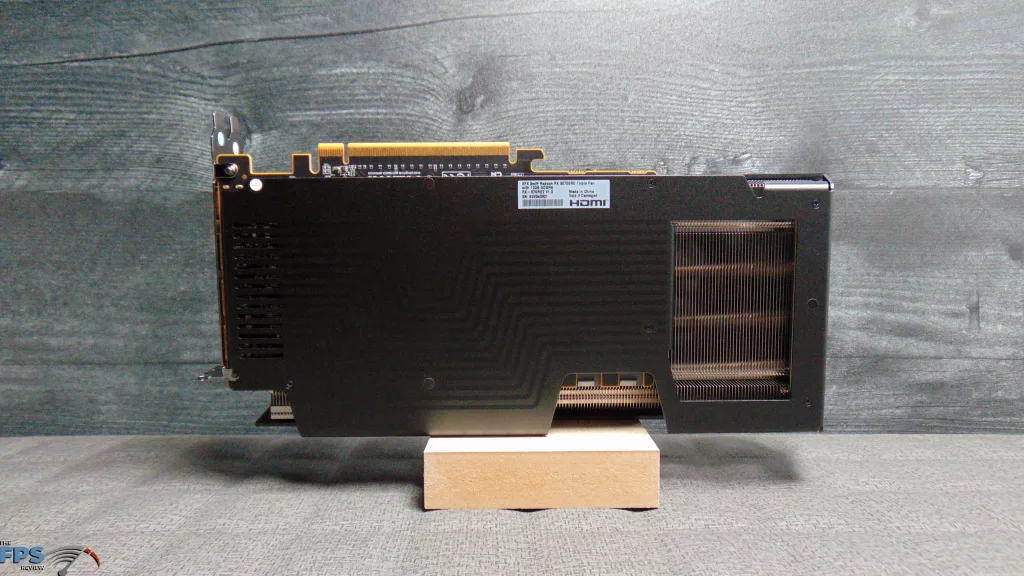
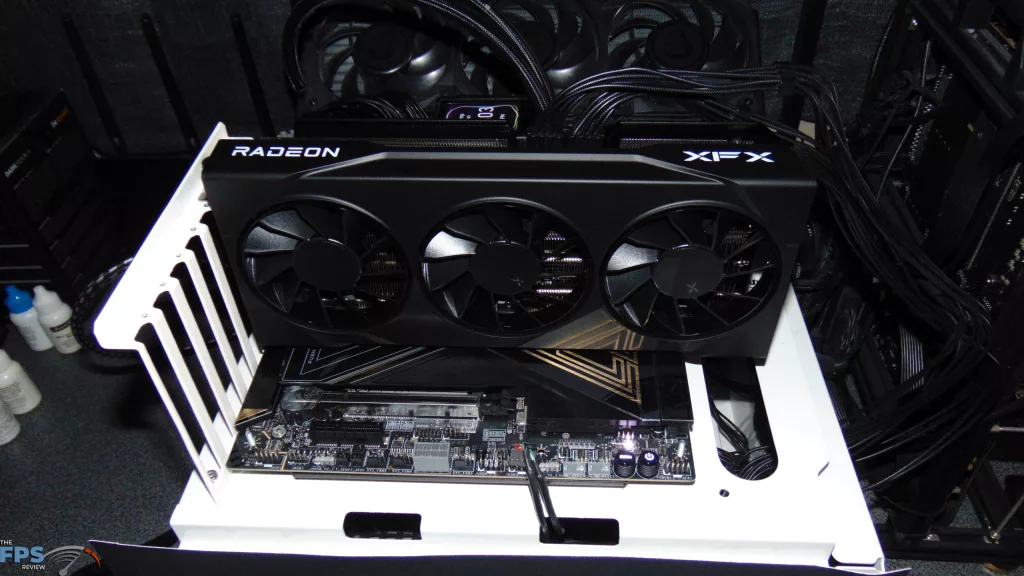
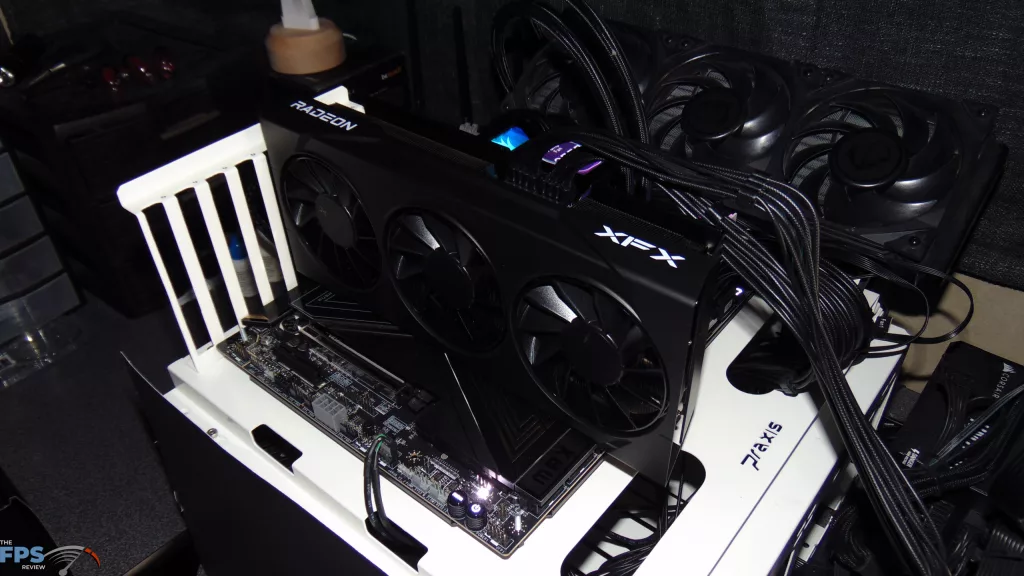
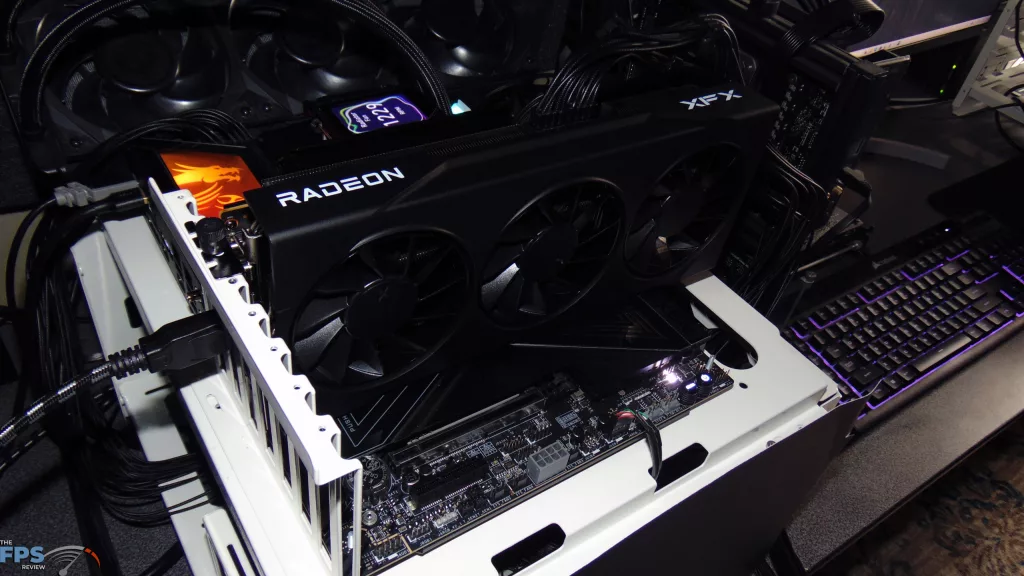
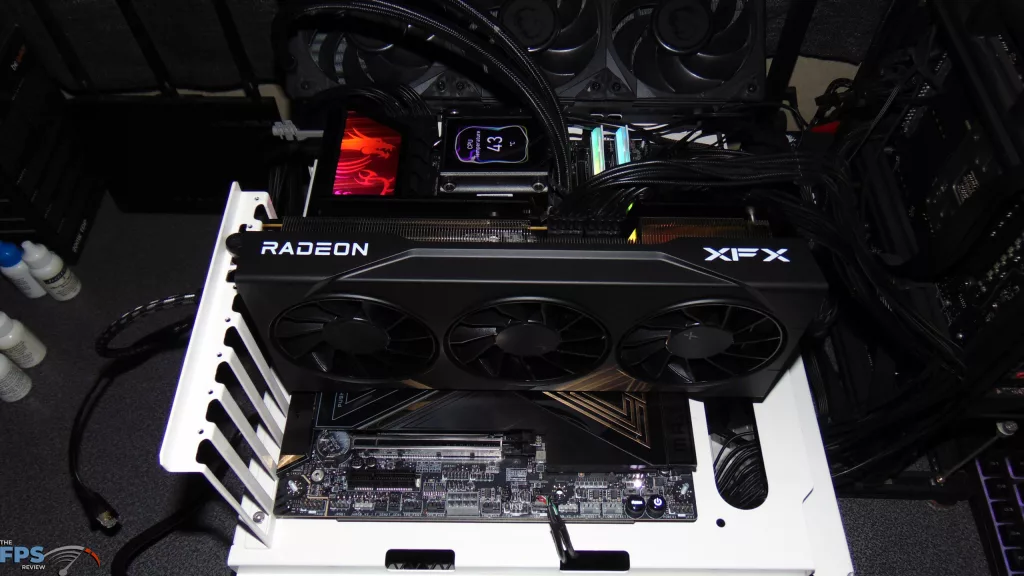
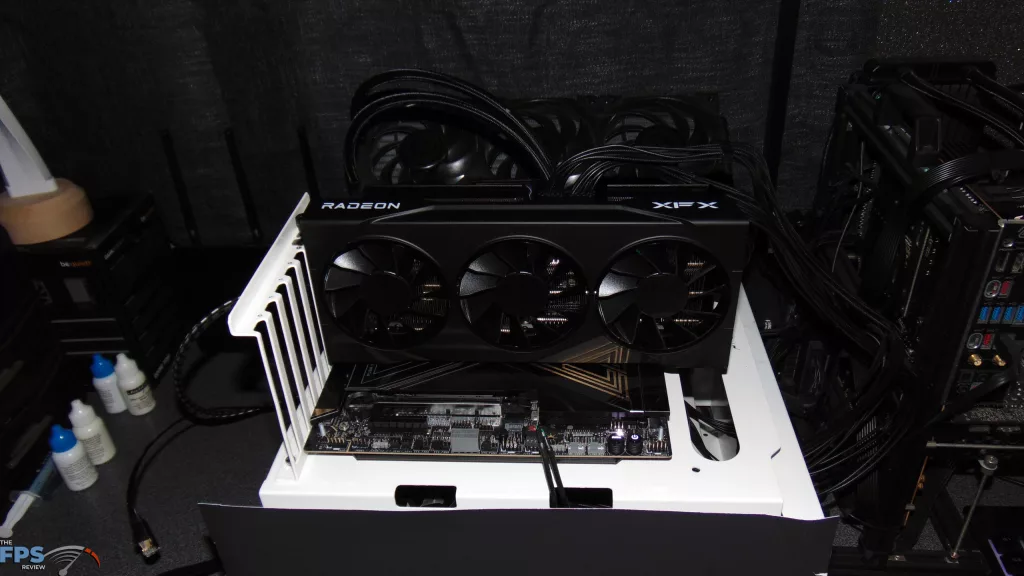
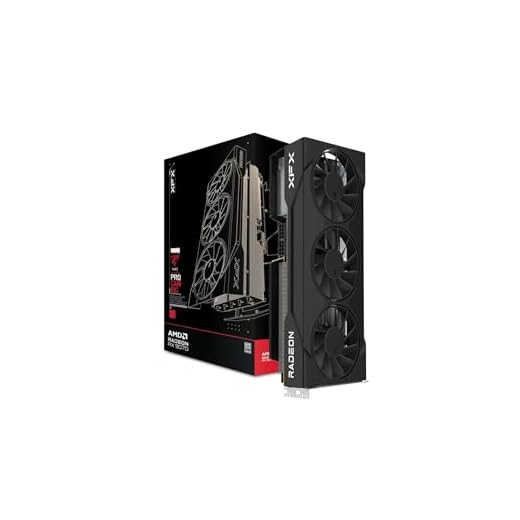
Today, we will be using specifically the XFX Swift Radeon RX 9070 GRE Triple Fan Gaming Edition video card, as it is clocked at the AMD reference clock speeds for the AMD Radeon RX 9070 GRE. The XFX Swift Radeon RX 9070 GRE Triple Fan Gaming Edition runs at the reference 2790MHz Boost Clock, with the standard TDP of 220W. Therefore, this video card will represent the baseline AMD reference Radeon RX 9070 GRE performance, with no factory overclocks or higher TDPs. You can read our full review of this specific video card here.
Discussion
Join Discussion →No replies yet. Be the first to reply on the forum.