
Introduction
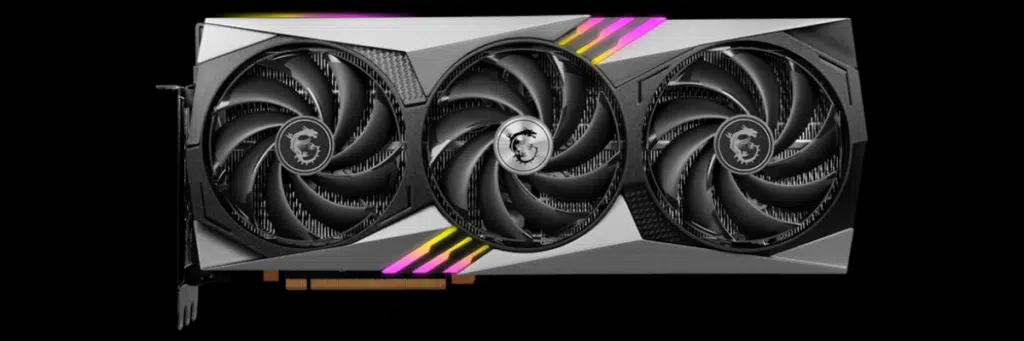
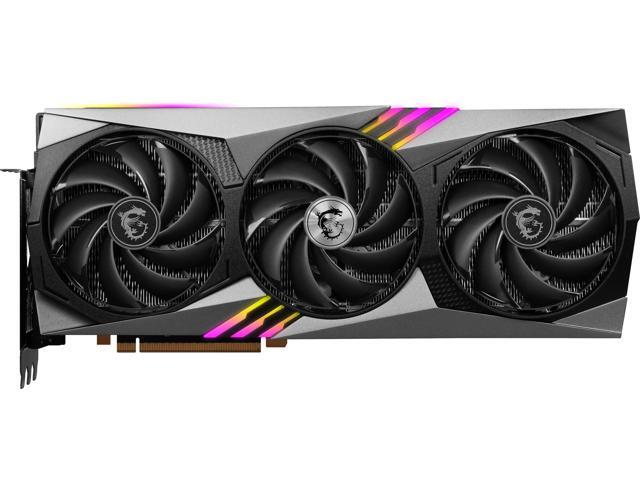
The NVIDIA GeForce RTX 4080 has launched, and today we have a full review of a retail AIB RTX 4080 video card. On our test bench, today is the MSI GeForce RTX 4080 16GB GAMING X TRIO video card ($1309.99 MSRP) based on NVIDIA’s new GeForce RTX 4080 GPU and Ada Lovelace architecture in the GeForce RTX 40 series family. The MSI GeForce RTX 4080 16GB GAMING X TRIO sports MSI’s TRI FROZR 3 thermal solution, a custom video card design, and a factory overclock geared for enthusiast gaming and overclocking.
In MSI’s new GeForce RTX 4080 lineup, the GAMING X TRIO sits in the top-end middle of the SKU product stack and will have an MSRP of $1309.99. There is a non-X version of the GAMING TRIO which has a lower factory overclock, but otherwise, the two are the same. Above the GAMING X TRIO, MSI has its SUPRIM and SUPRIM X models which have the most aggressive factory overclocks and custom enthusiast builds. Below the GAMING X TRIO is the VENTUS 3X and VENTUS 3X OC which have a more modest build, and lower clock speeds.



To learn all about the new GeForce RTX 4080 please read our review of the GeForce RTX 4080 Founders Edition. The GeForce RTX 4080 is based on the Ada Lovelace architecture on TSMC 4N NVIDIA custom process and has 9,728 CUDA Cores, 304 4th Gen Tensor Cores, 76 3rd Gen RT Cores, 304 Texture Units, and 112 ROPs. It has a Boost Clock of 2505MHz. It has 16GB of GDDR6X memory at 22.4GHz on a 256-bit memory bus giving it 716.8GB/s of memory bandwidth. The TGP is 320W.
MSI GeForce RTX 4080 16GB GAMING X TRIO

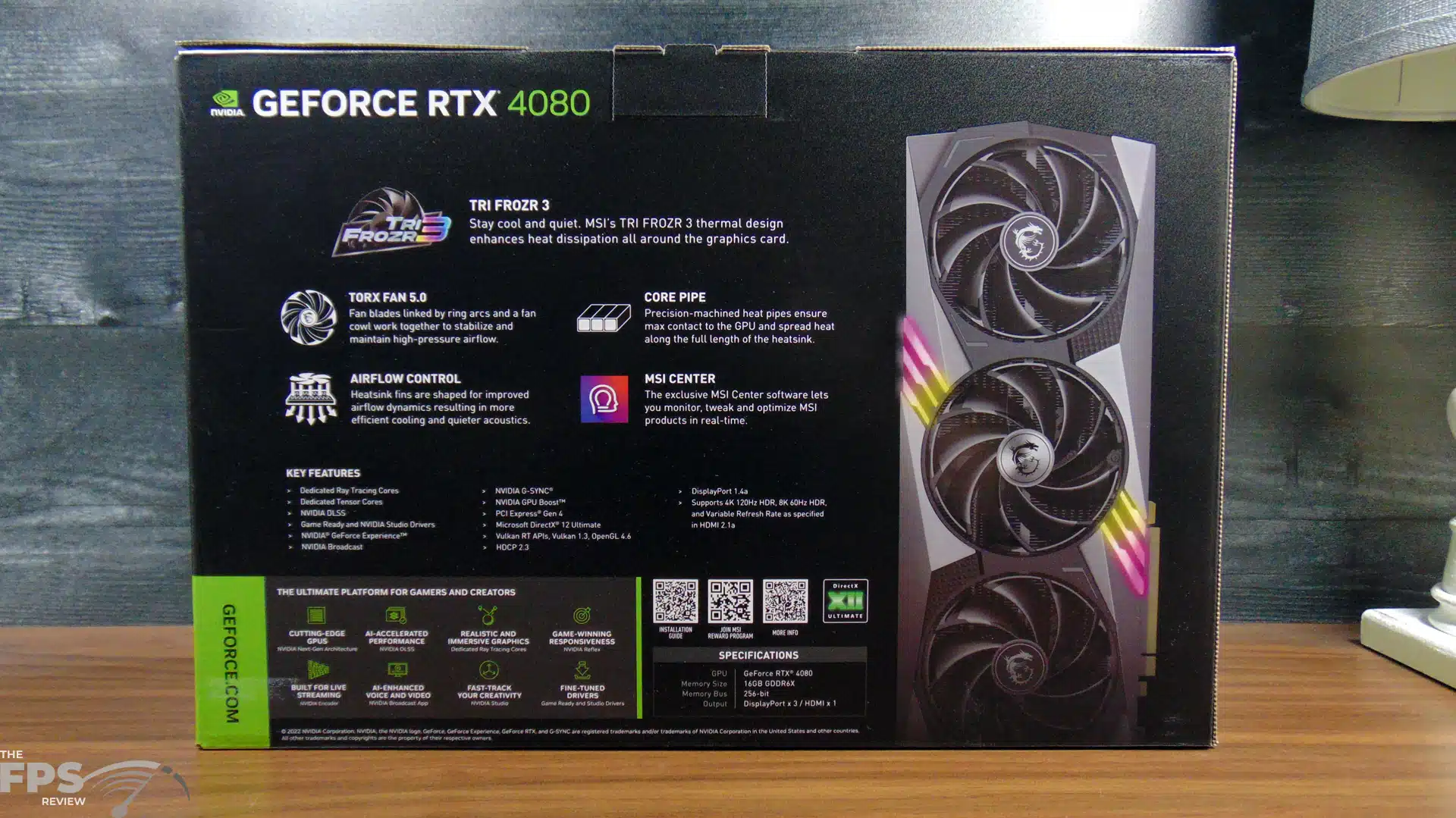
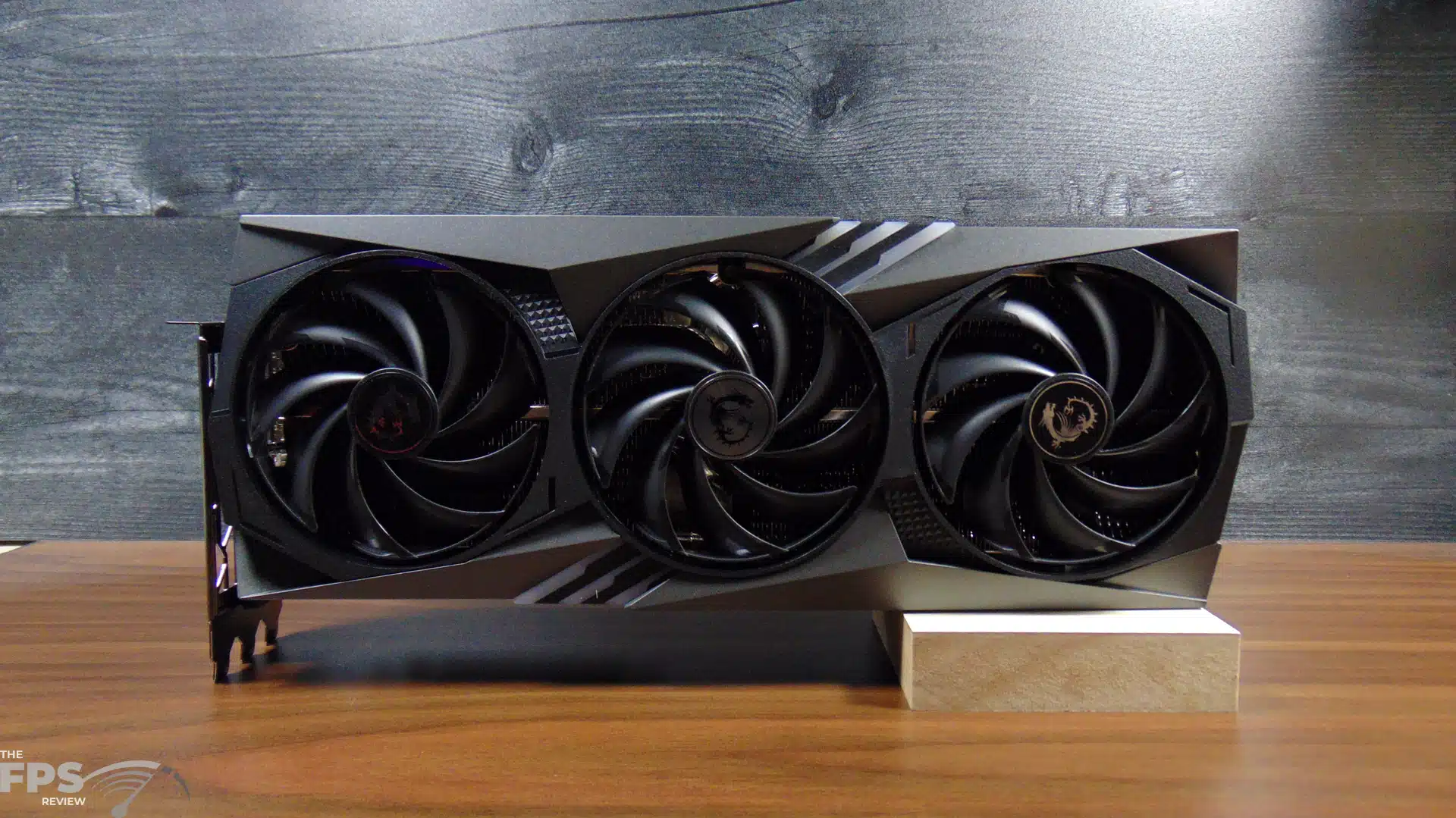
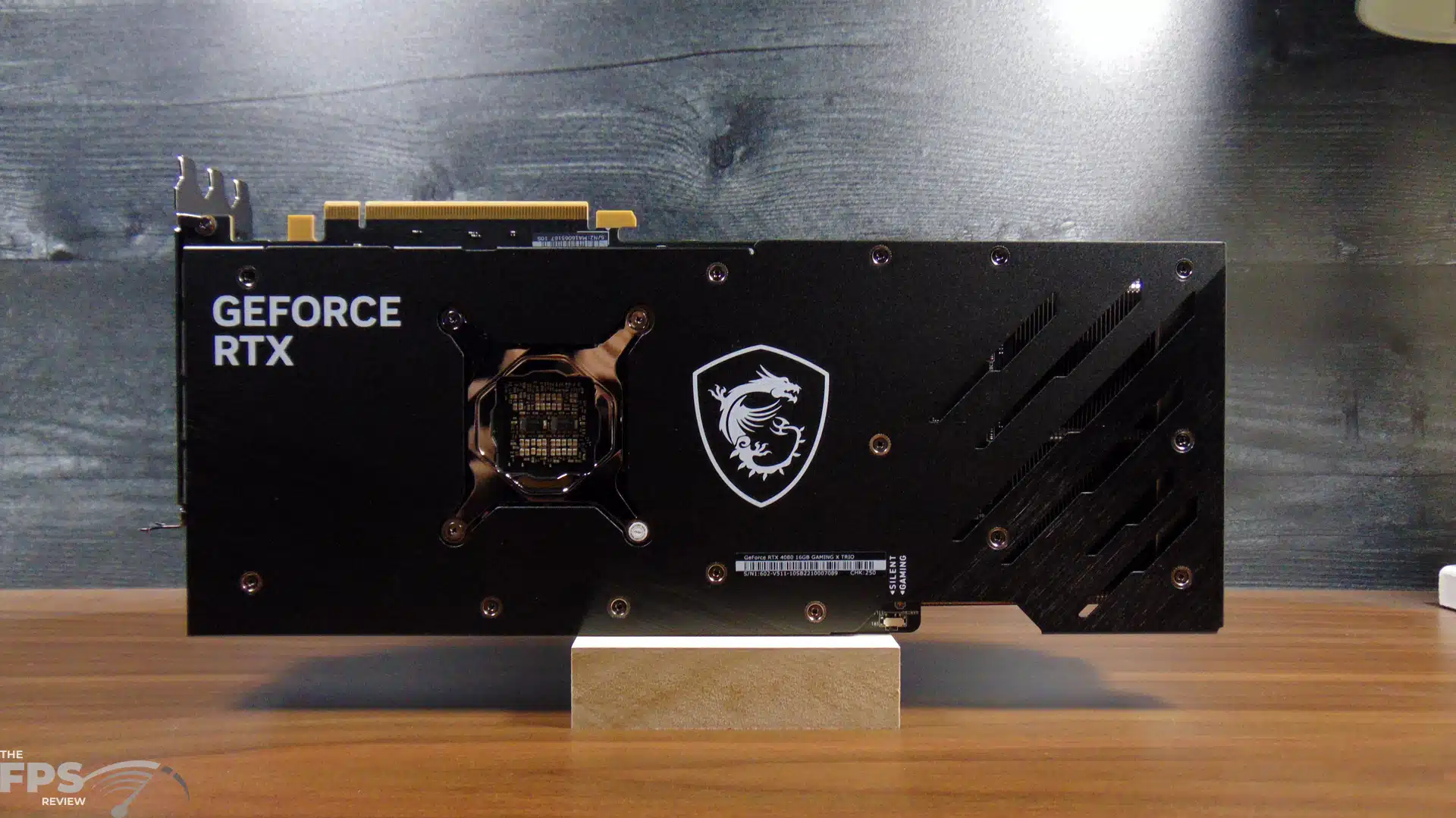
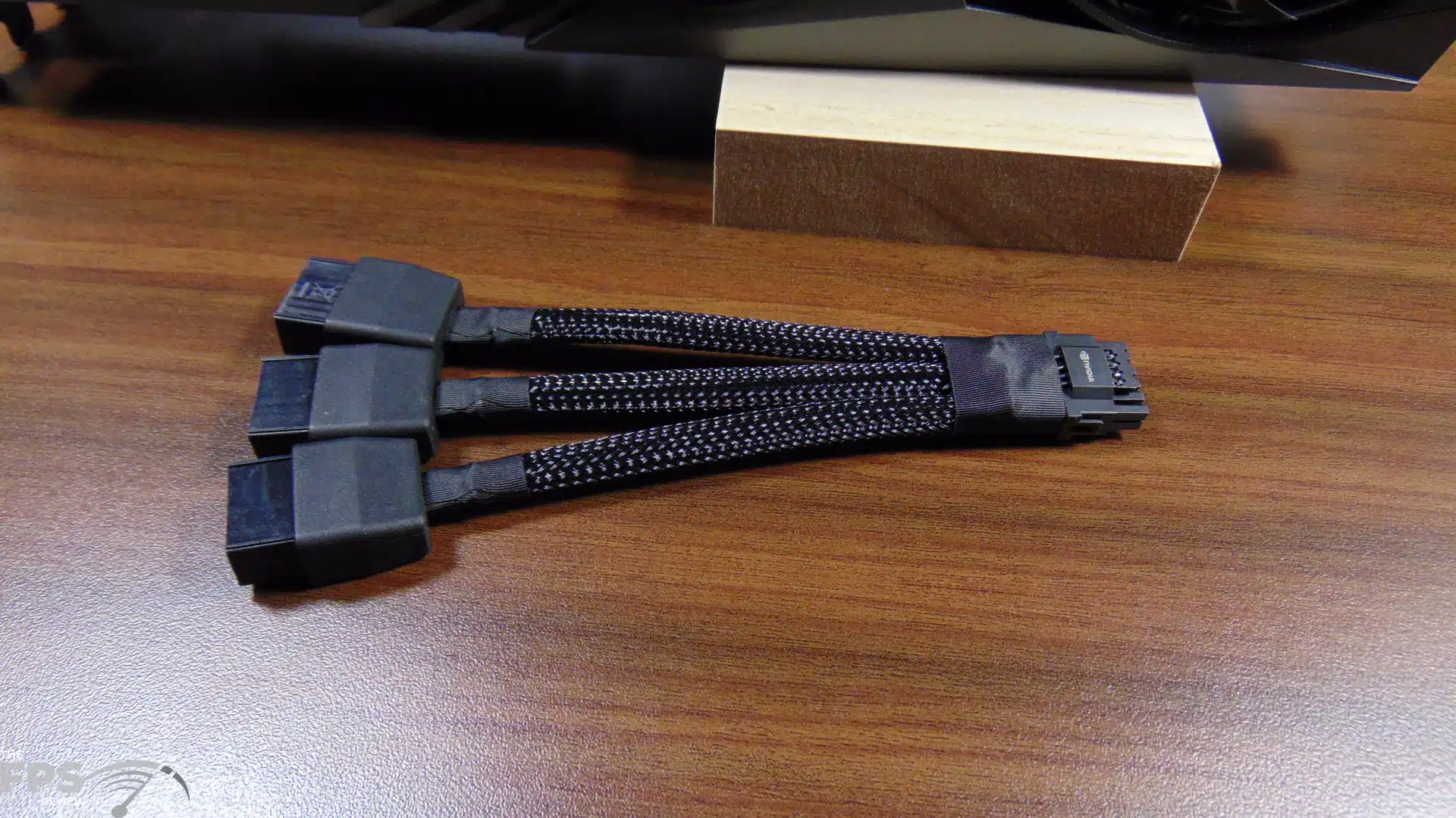
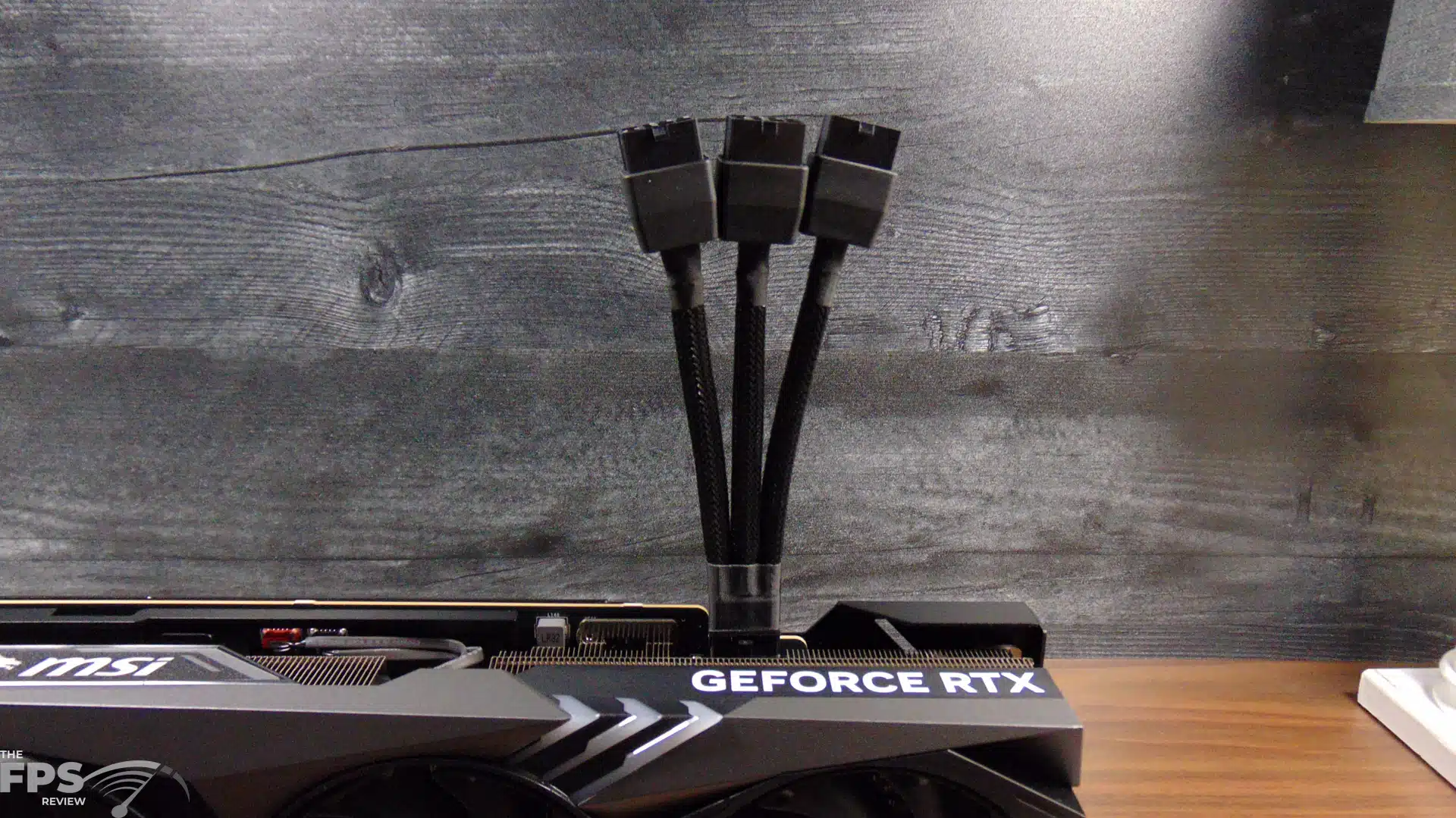
The MSI GeForce RTX 4080 16GB GAMING X TRIO has a factory overclock GPU Boost of 2595MHz. This is up 90MHz over the default Founders Edition clock speed of 2505MHz. The memory clock speeds are exactly the same at 22.4GHz with the 16GB of GDDR6X. MSI recommends an 850W PSU for this video card and it includes NVIDIA’s 3x 8-pin to 16-pin adapter in the box as this video card does have the 16-pin PCIe 5 power connector. The video card supports 3x DisplayPort 1.4a and 1x HDMI 2.1a.
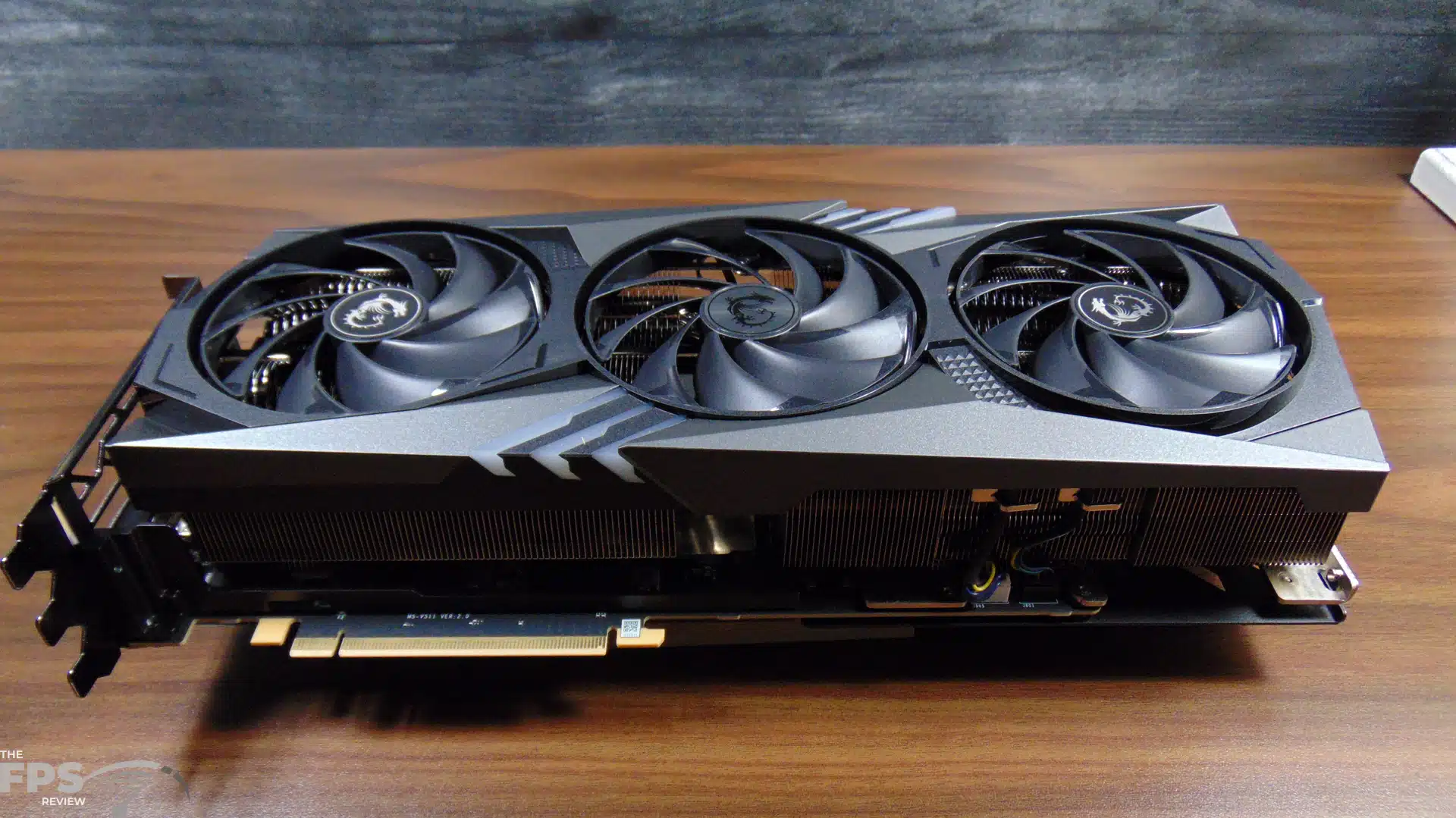
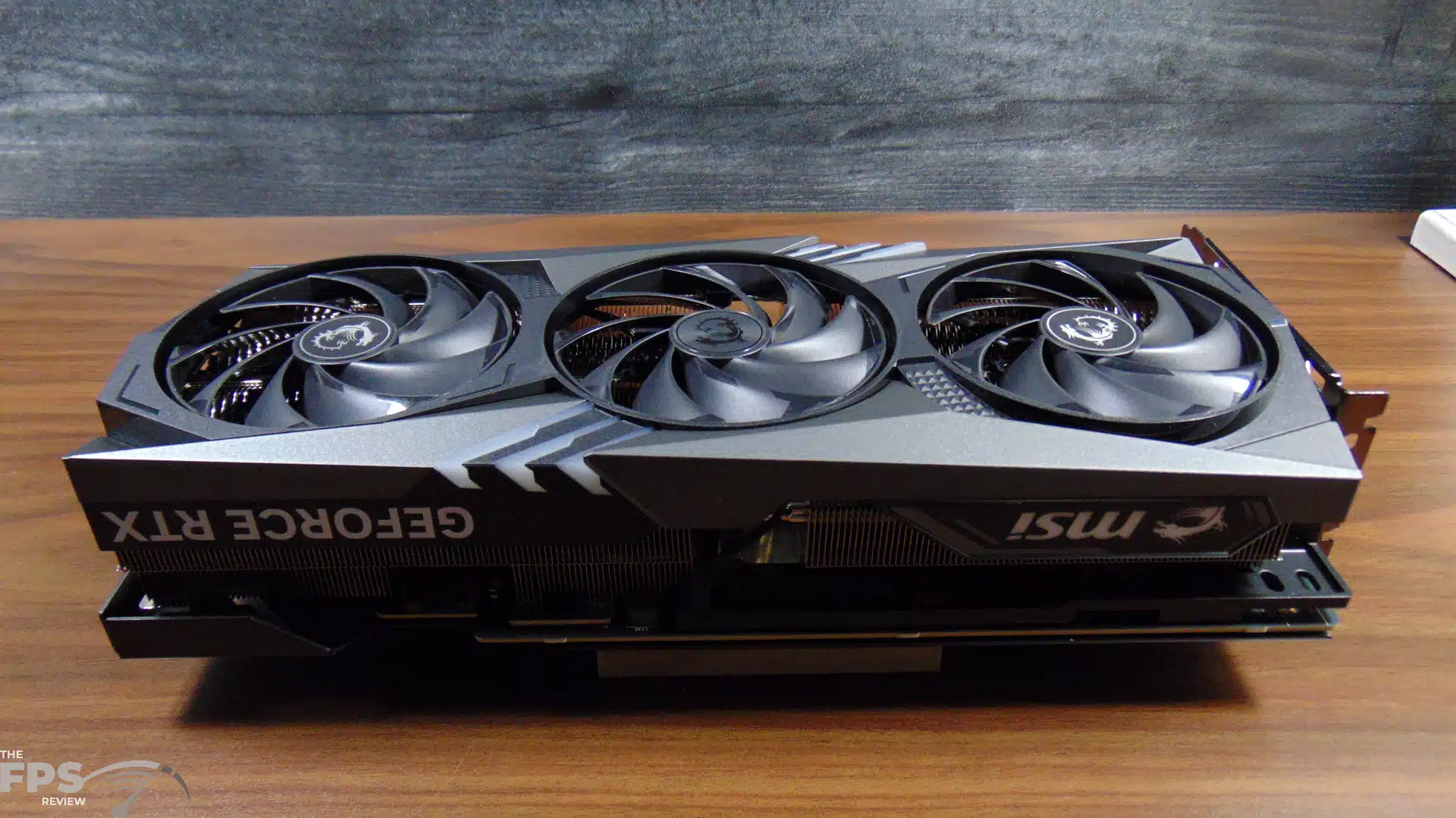
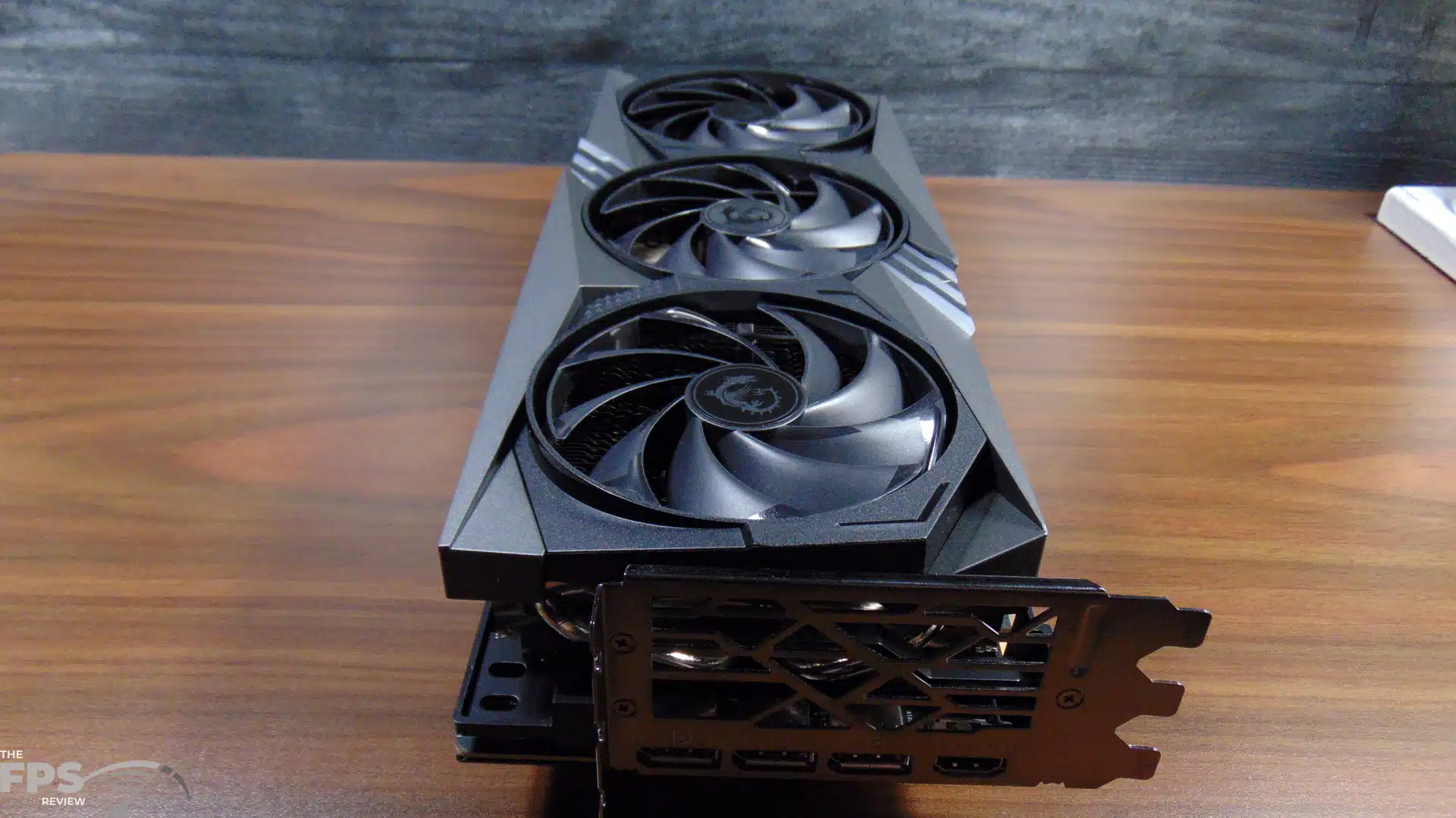
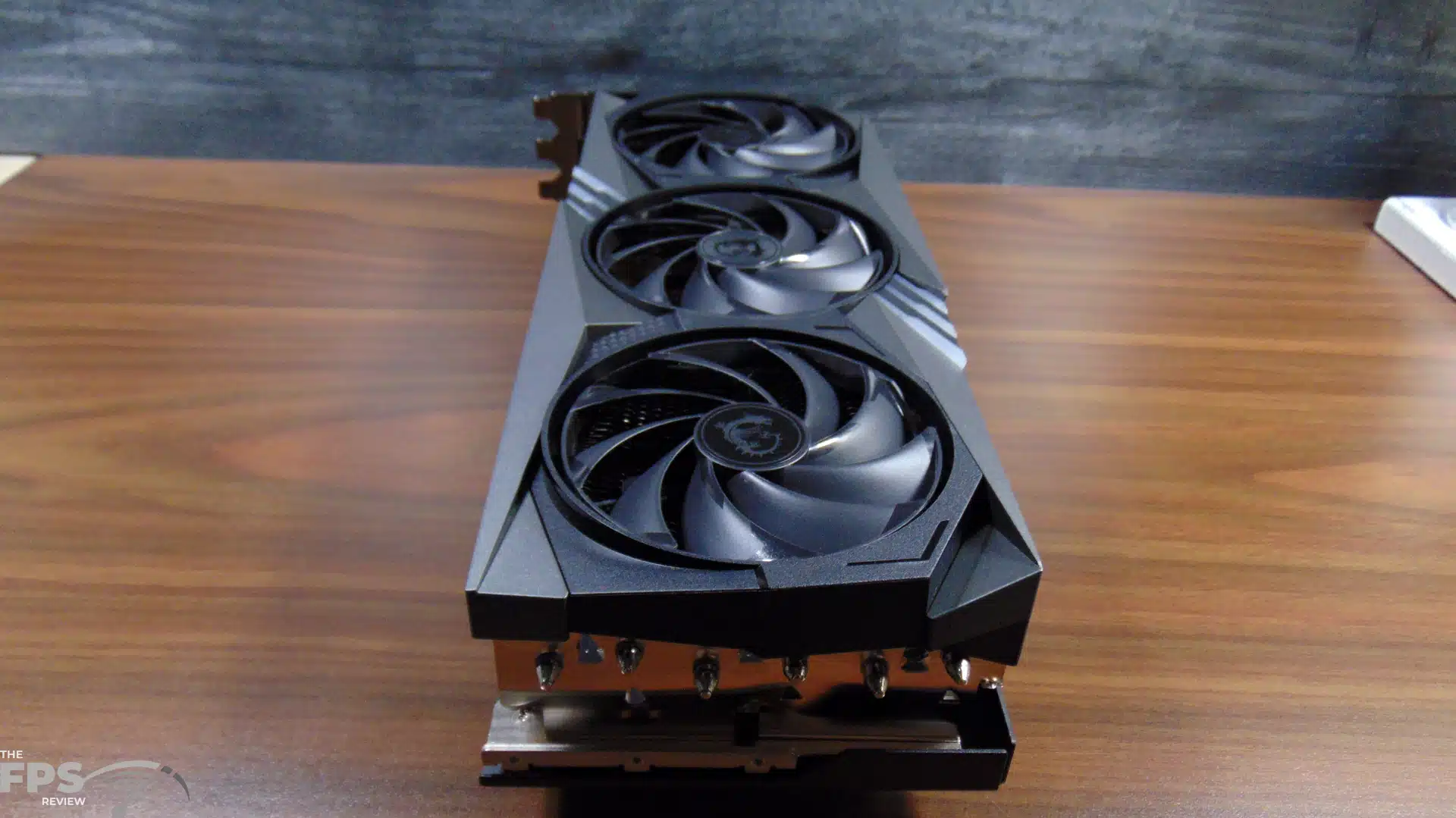
The MSI GeForce RTX 4080 16GB GAMING X TRIO measures 337mm in length, 140mm in width and 67mm in height. It is therefore longer, wider, and thicker than the Founders Edition video card. The Founders Edition video card measures 304mm in length, 137mm in width and 61mm in height. The MSI RTX 4080 GAMING X TRIO is 13.2” inches in length whereas the Founders Edition is 12” inches in length. The card slot height is 2.6” inches on the MSI RTX 4080 GAMING X TRIO while it is 2.4” on the Founders Edition.

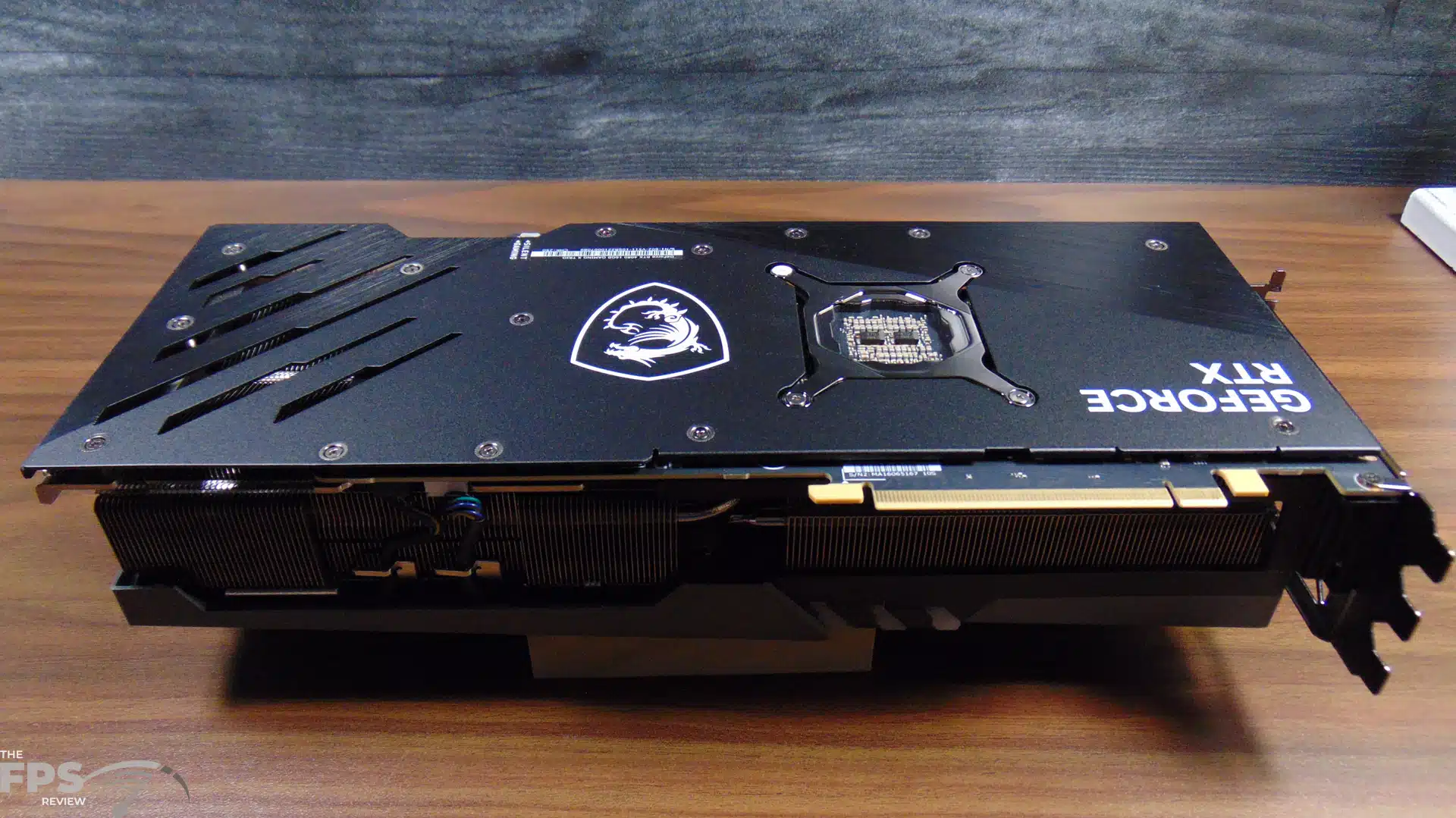
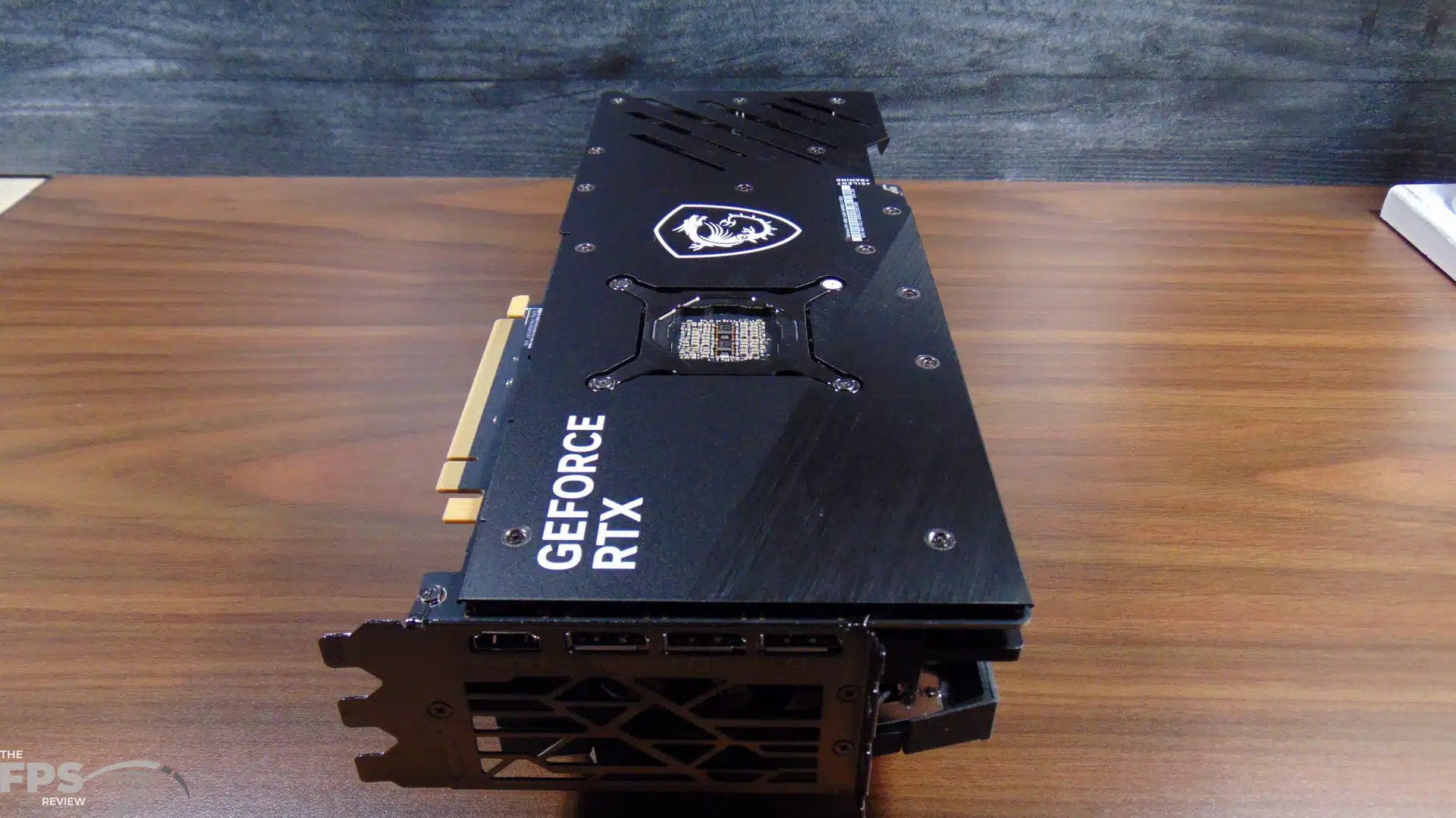
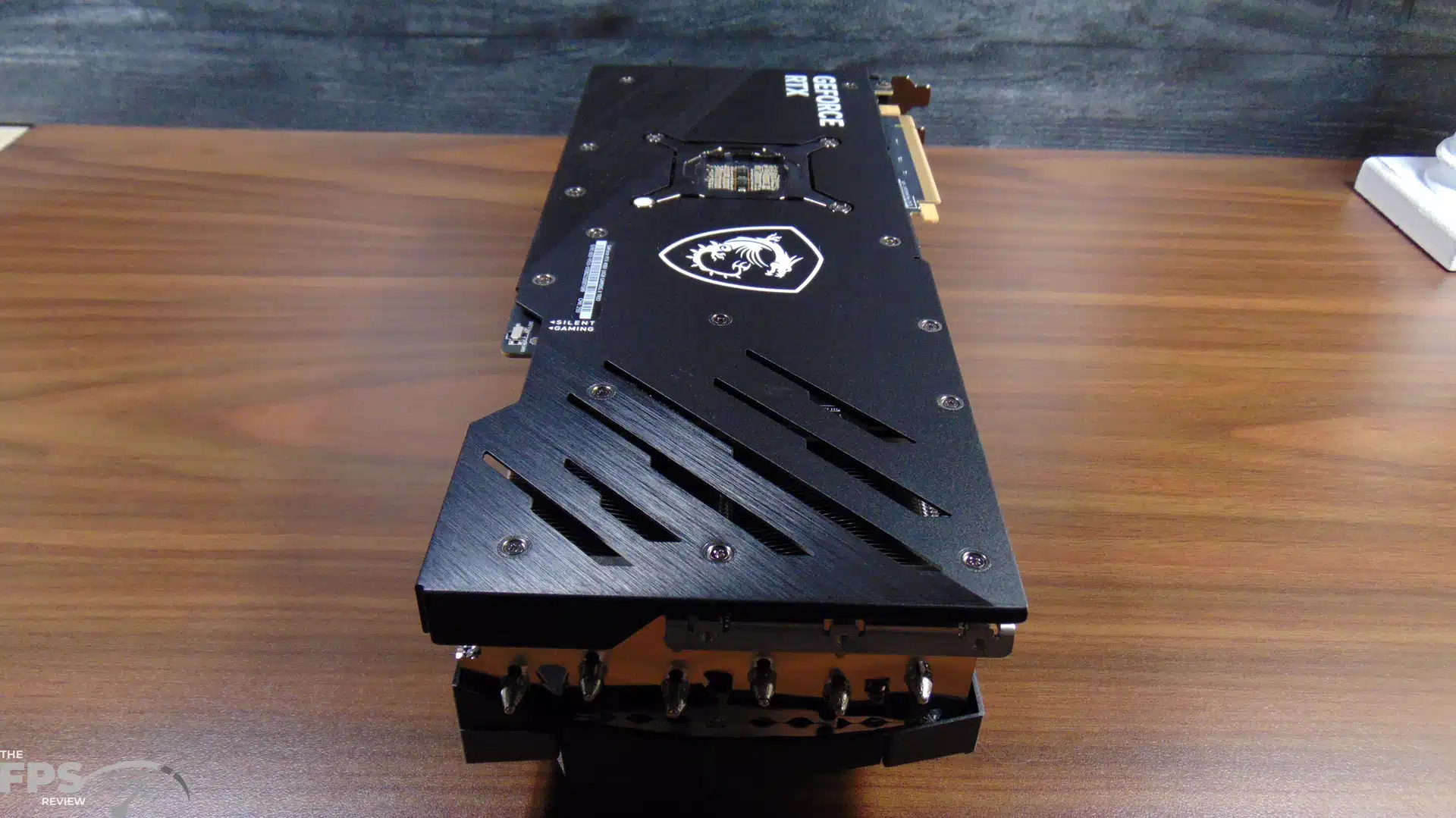
MSI has packed the RTX 4080 GAMING X TRIO full of its custom technology. Let’s start with the MSI TRI FROZR 3 thermal solution. The MSI GeForce RTX 4080 16GB GAMING X TRIO utilizes MSI’s TORX FAN 5.0 which are double ball bearing fans that use ring arcs that link three sets of fan blades that tilt 22 degrees together to maintain high-pressure airflow at slower rotational speeds. They support Zero FROZR to stop the fans at low temperatures and light workloads. The fan cowl extends a bit beyond the general enclosure to lengthen the winds passageway. Bulging notches under the cowl help reduce recirculation.
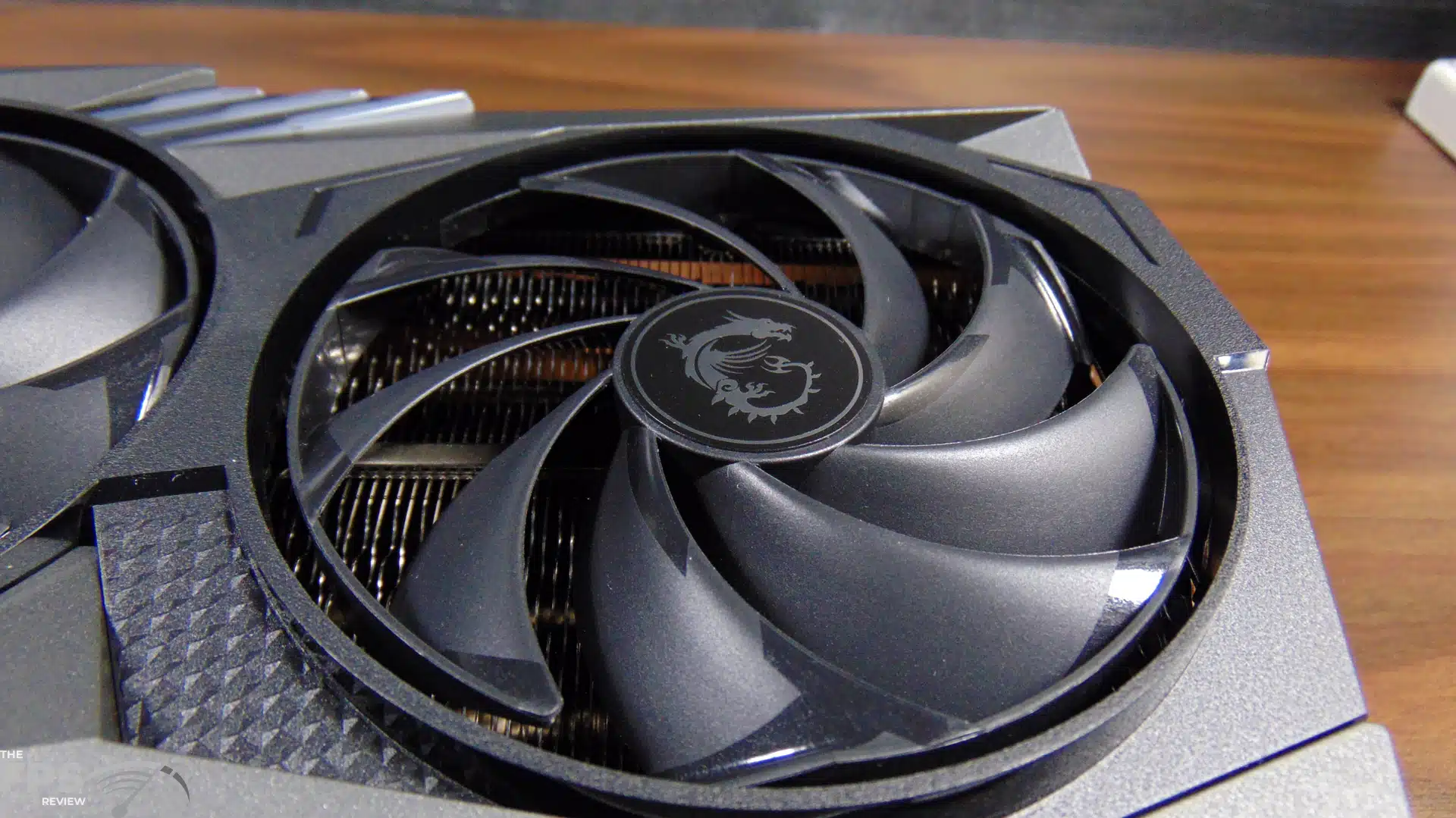
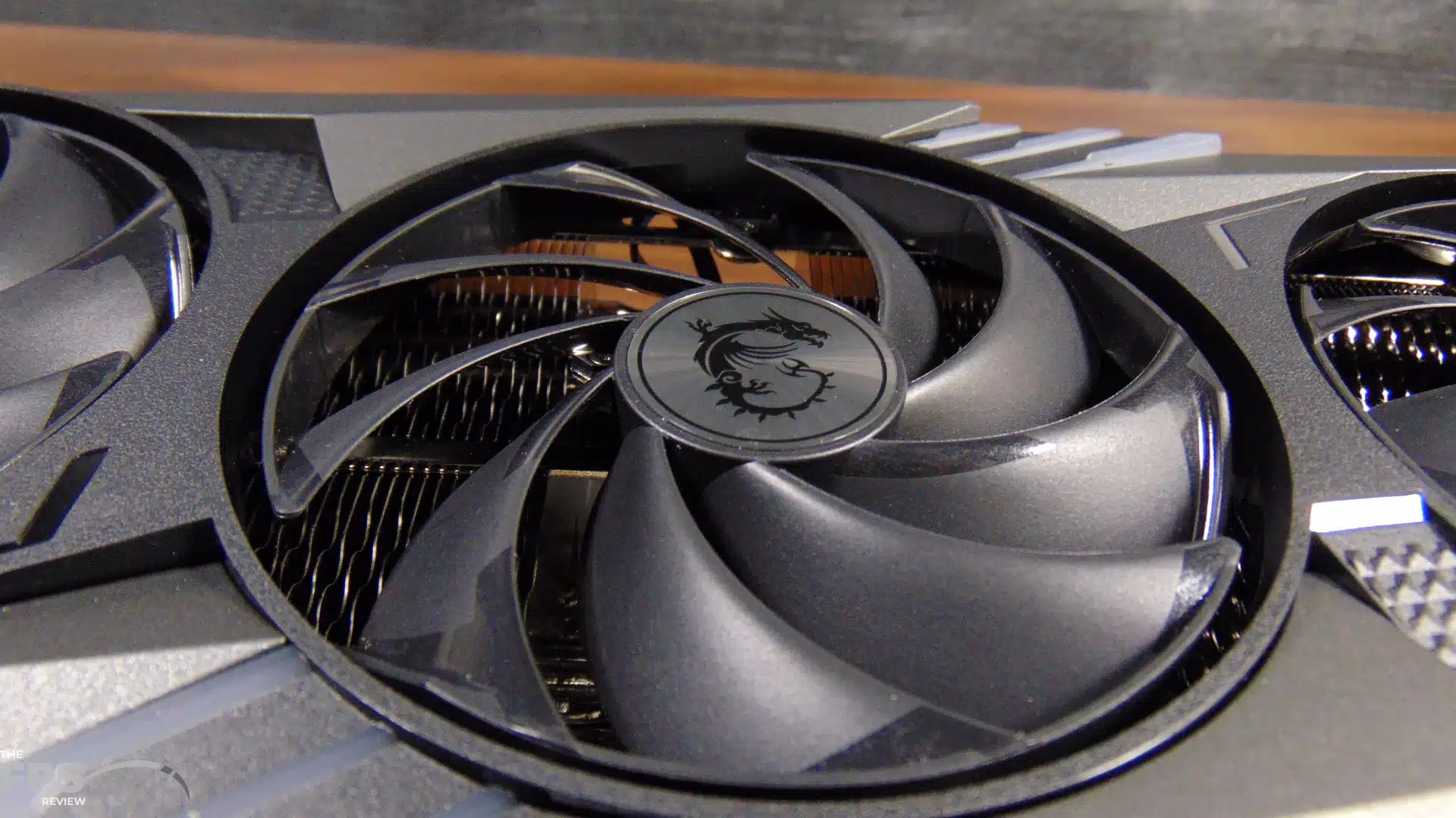
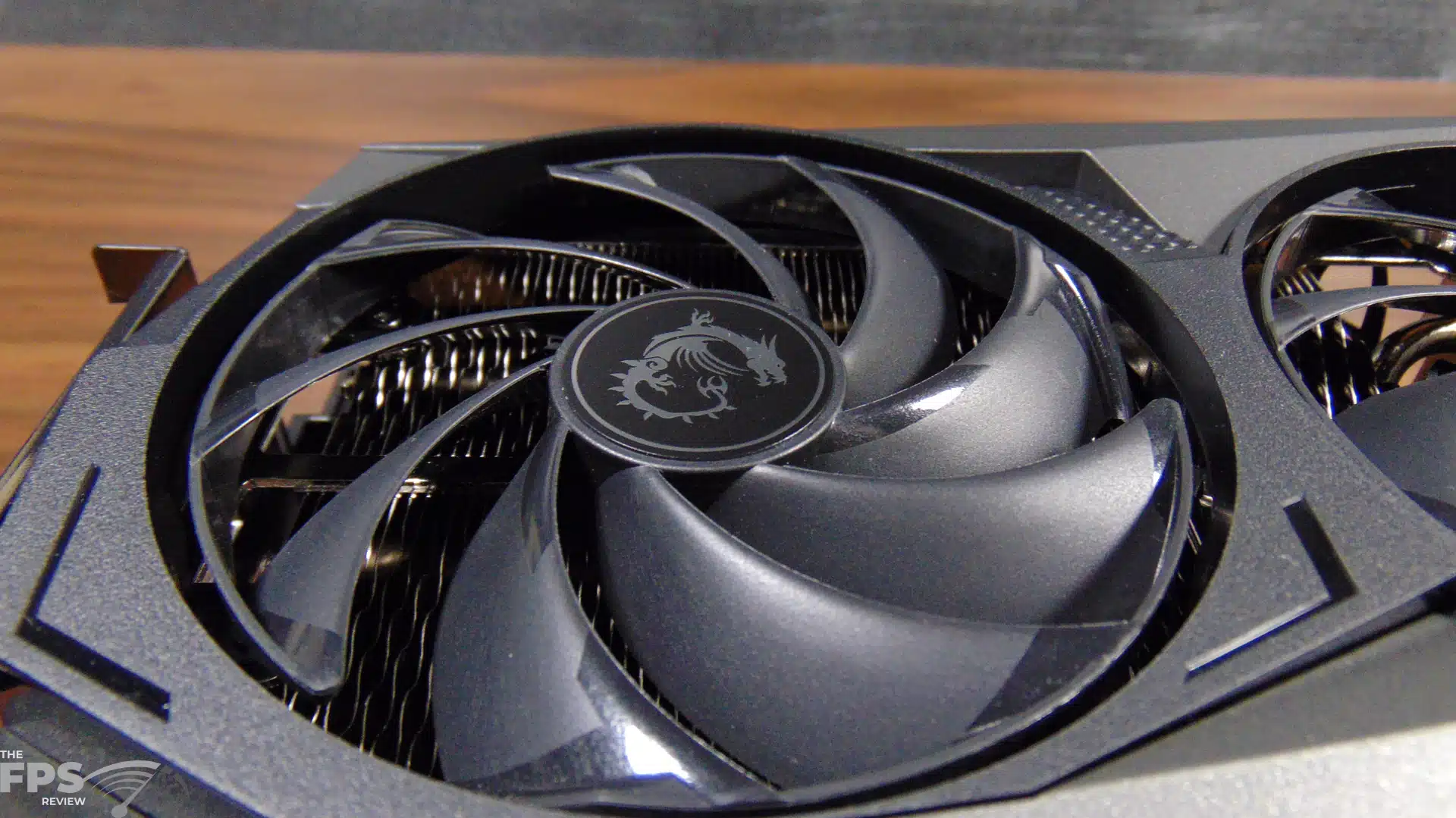
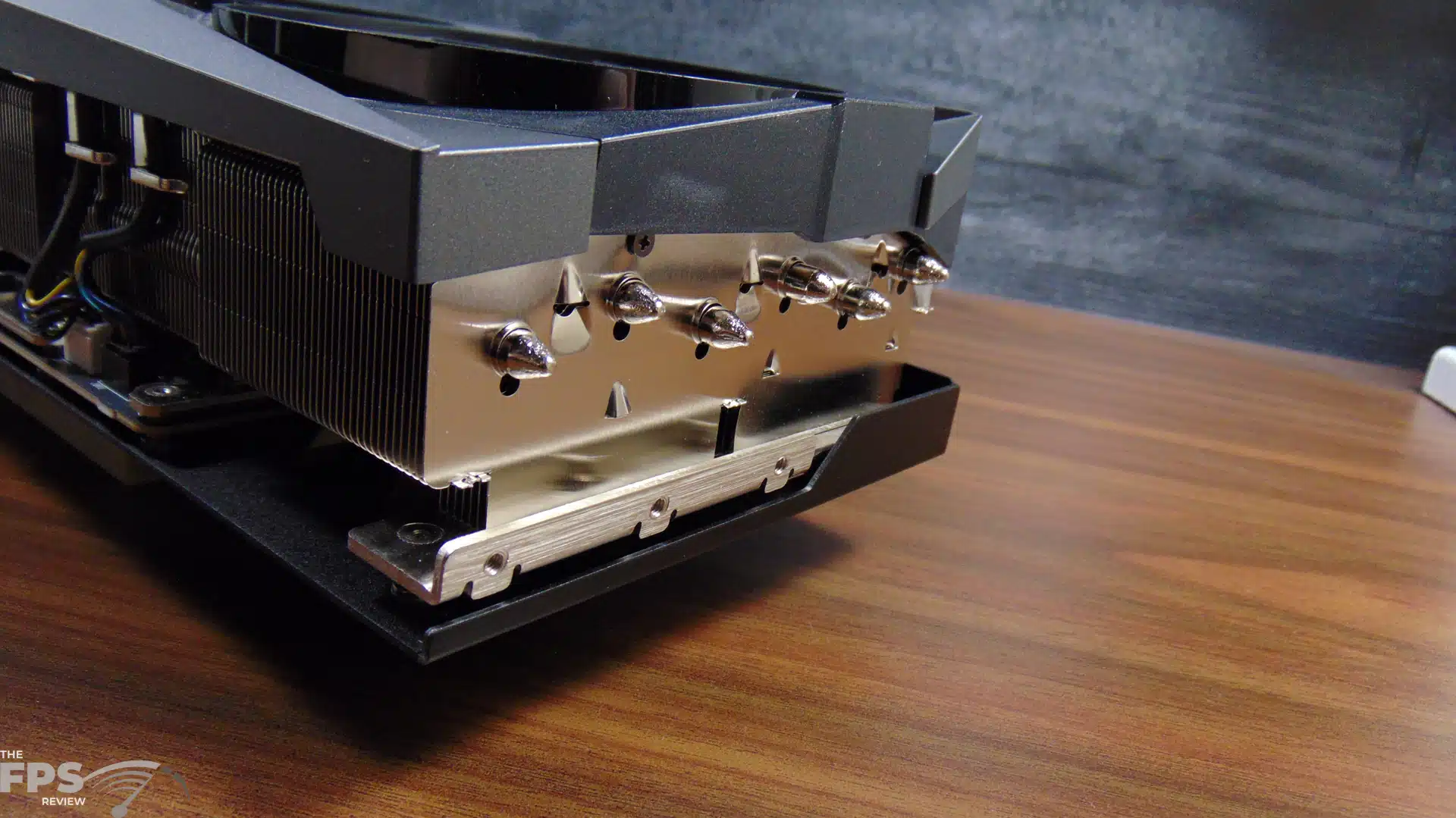
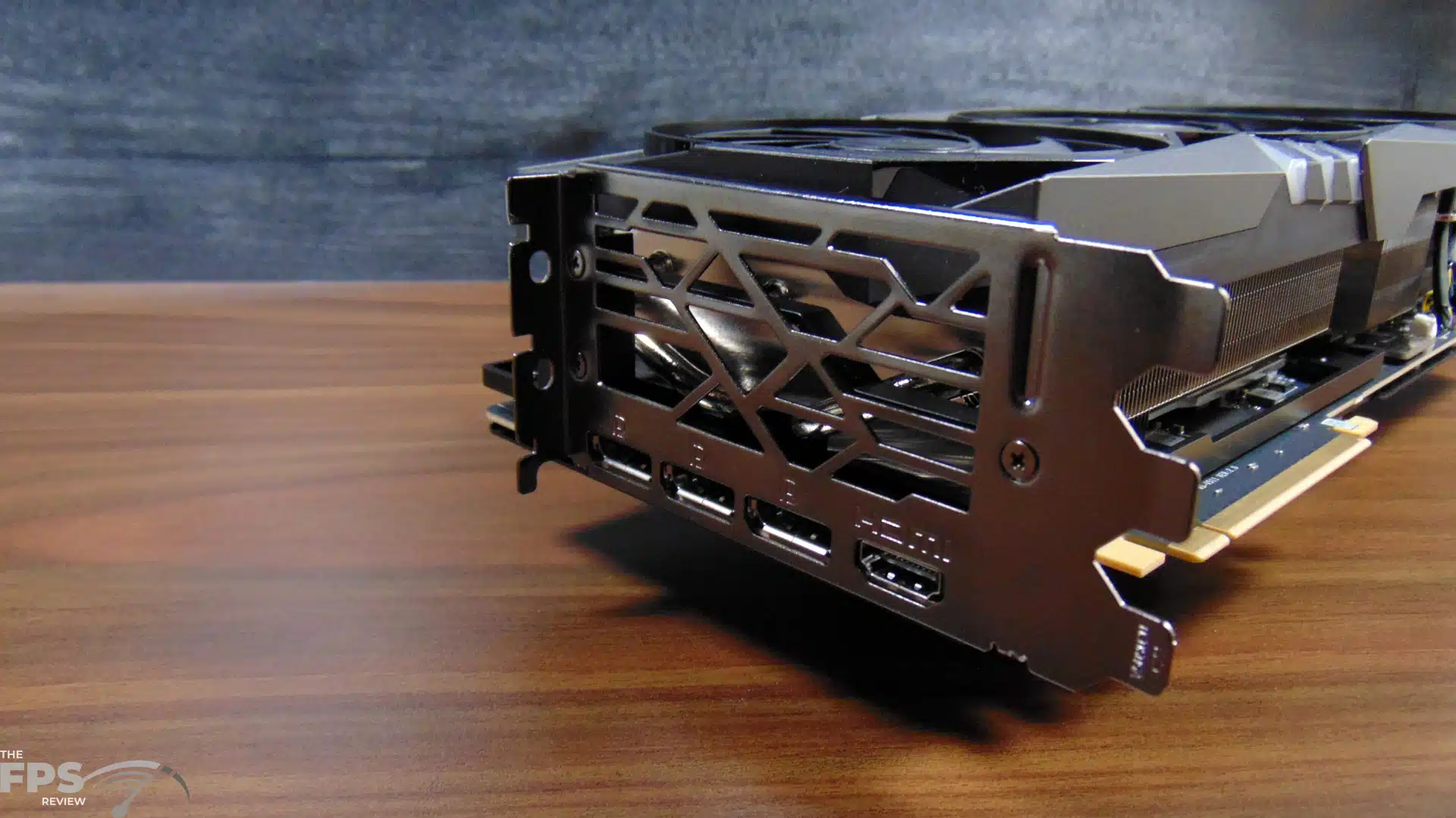
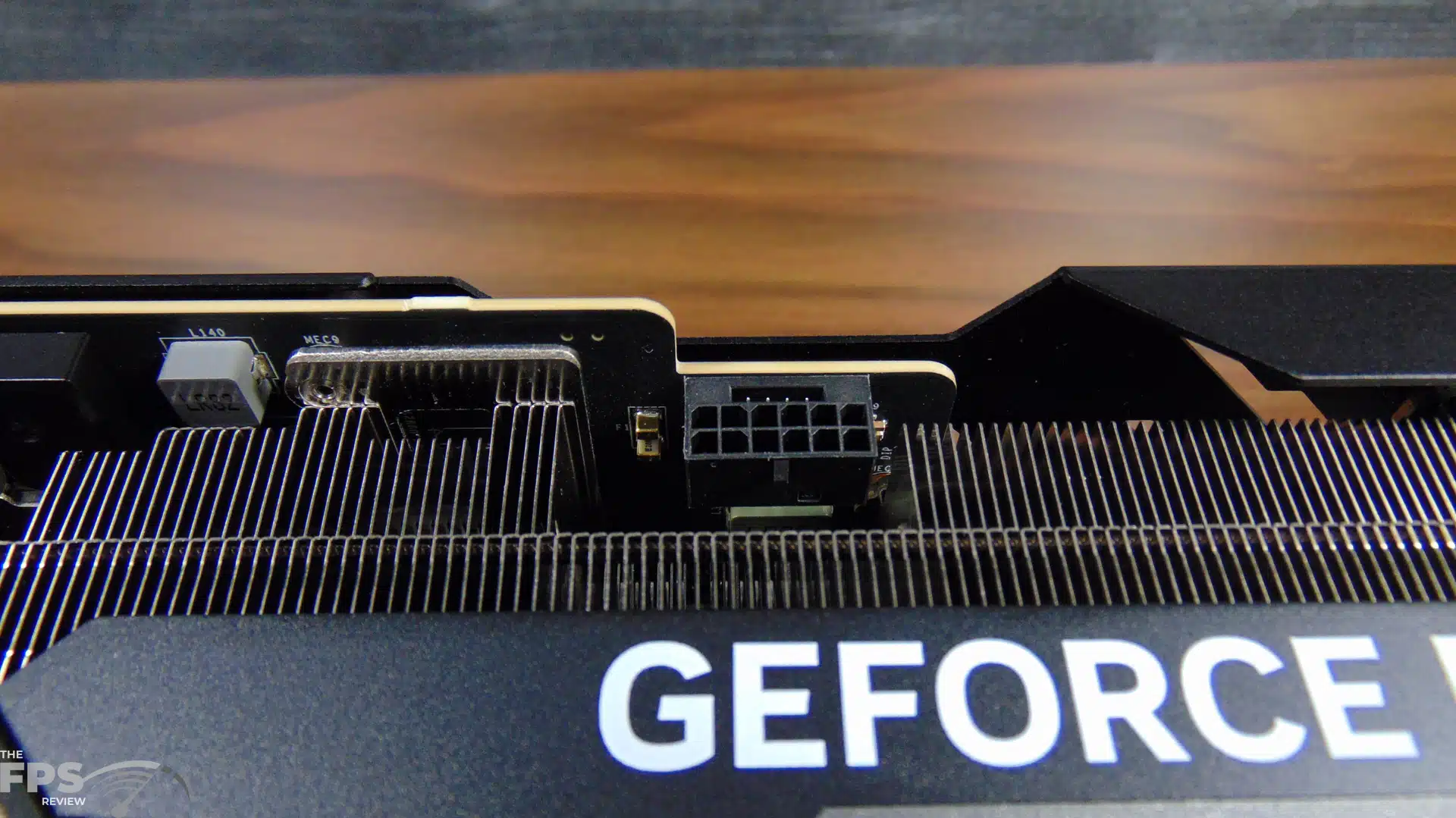
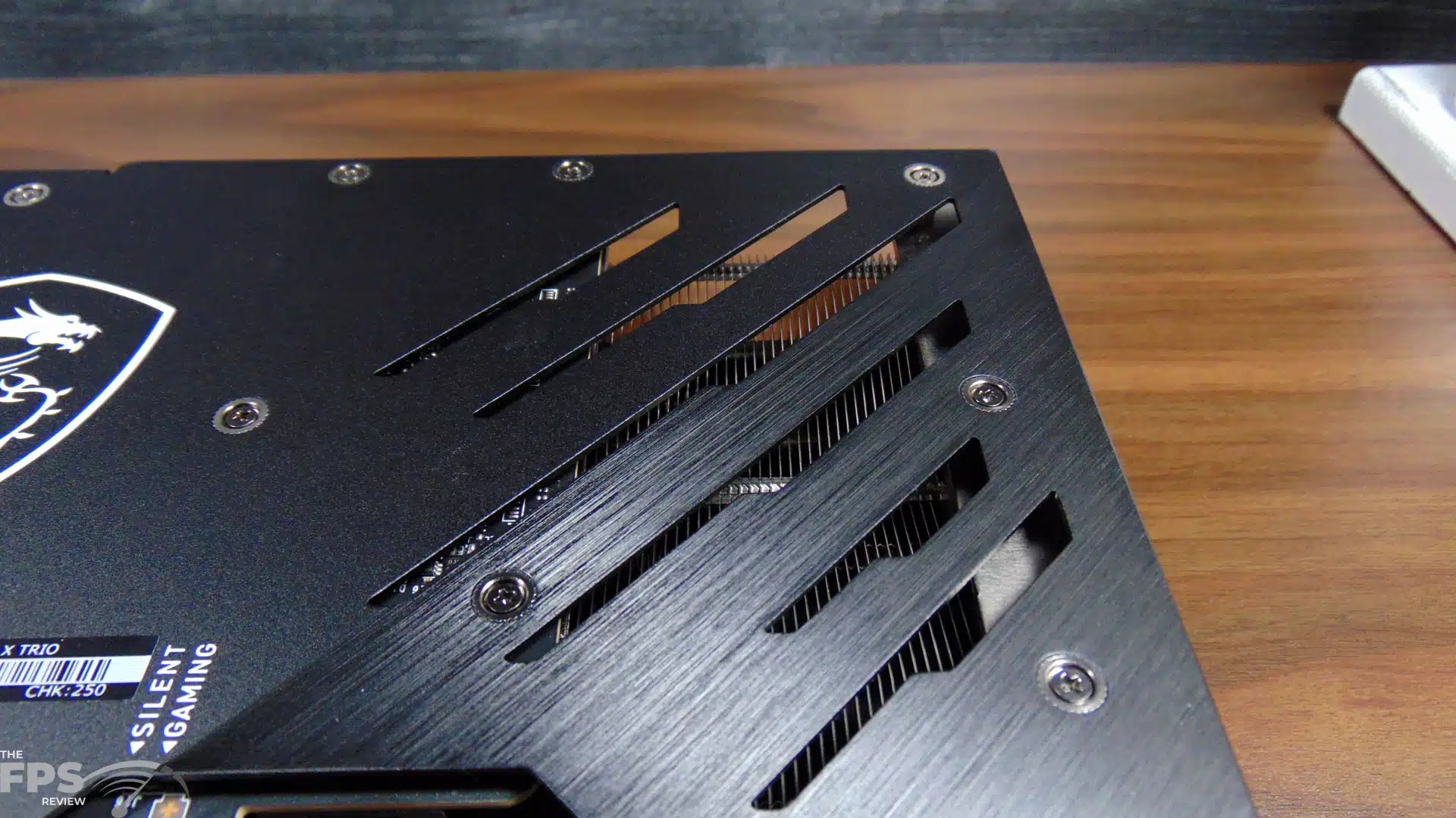
The heatsink uses a Copper Baseplate to rapidly transfer heat to the array of heat pipes and covers the GPU and memory. Core Pipes are precision-crafted to make the maximum use of available space, a squared section of heat pipes fully touch the GPU baseplate. Airflow Control improves airflow dynamics through the Wave Curved 2.0 deflectors and Air Antegrade fin design for optimizing the balance between cooling and noise. Air Antegrade Fin have a V-shaped cutout at the airflow passthrough to improve flow efficiency. There is a full Metal Backplate with thermal pads underneath to provide additional cooling with flow-through ventilation. The video card also has a die-cast anti-bending plate that reinforces the whole card and also uses thermal pads.
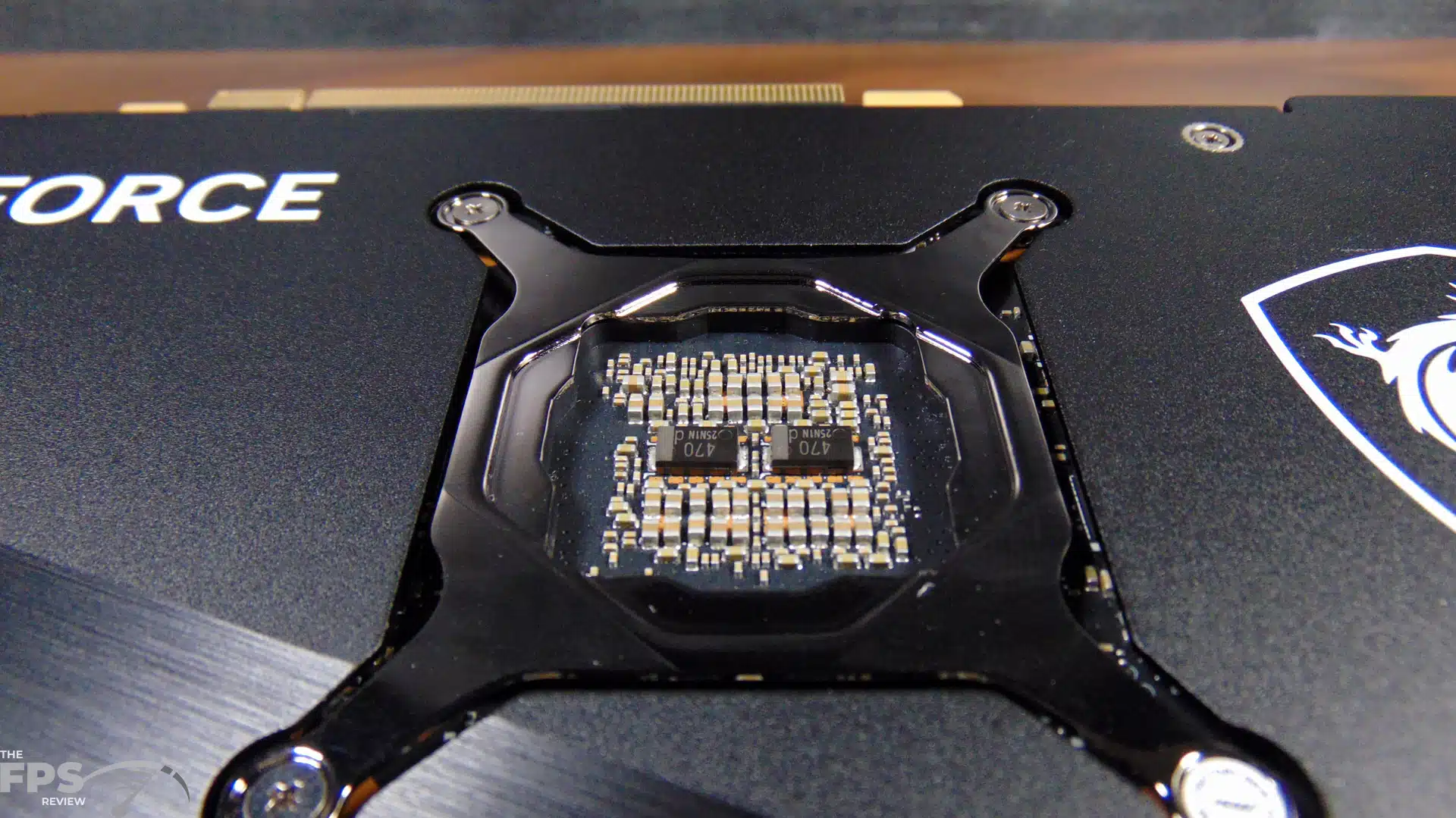
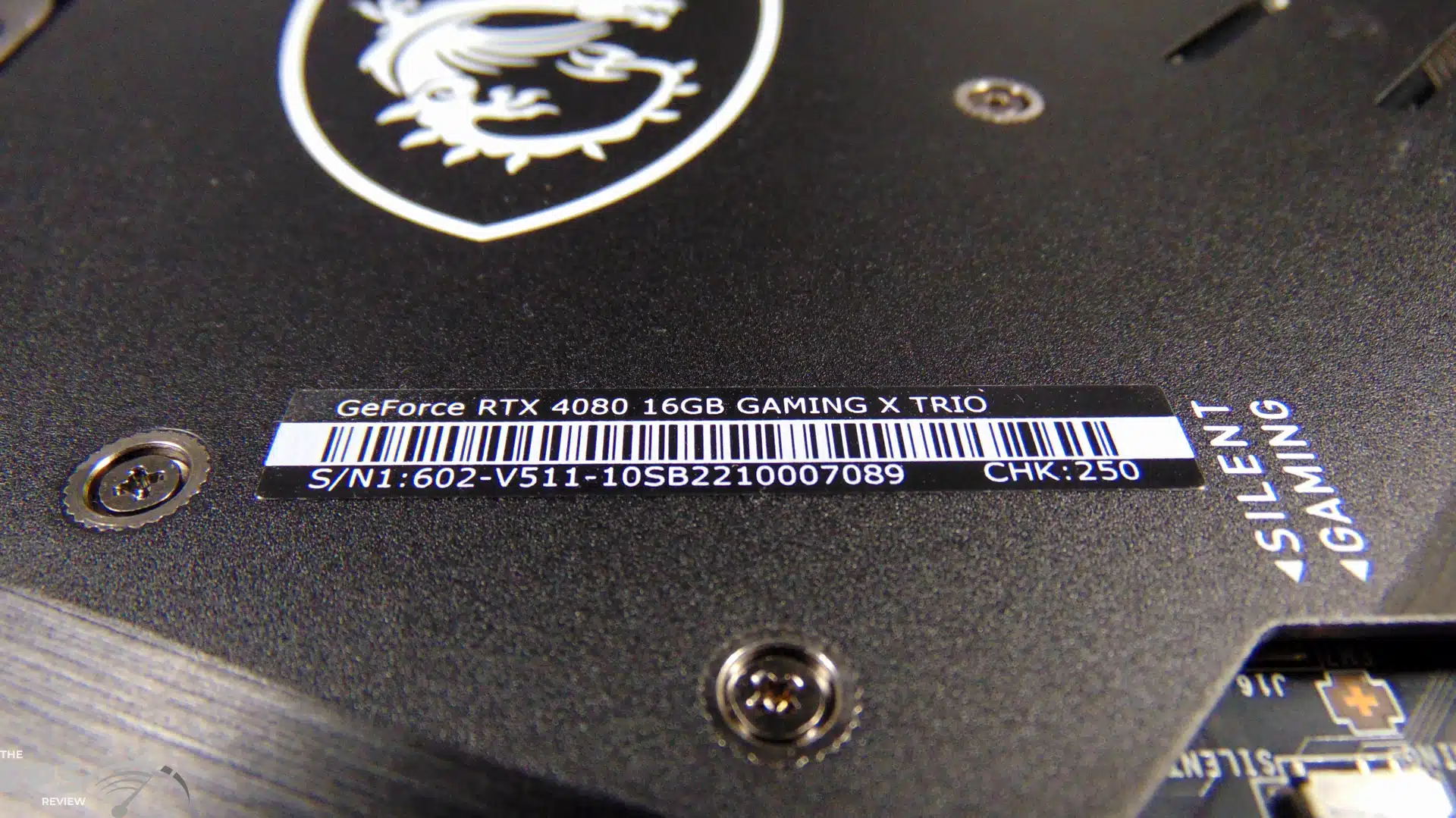
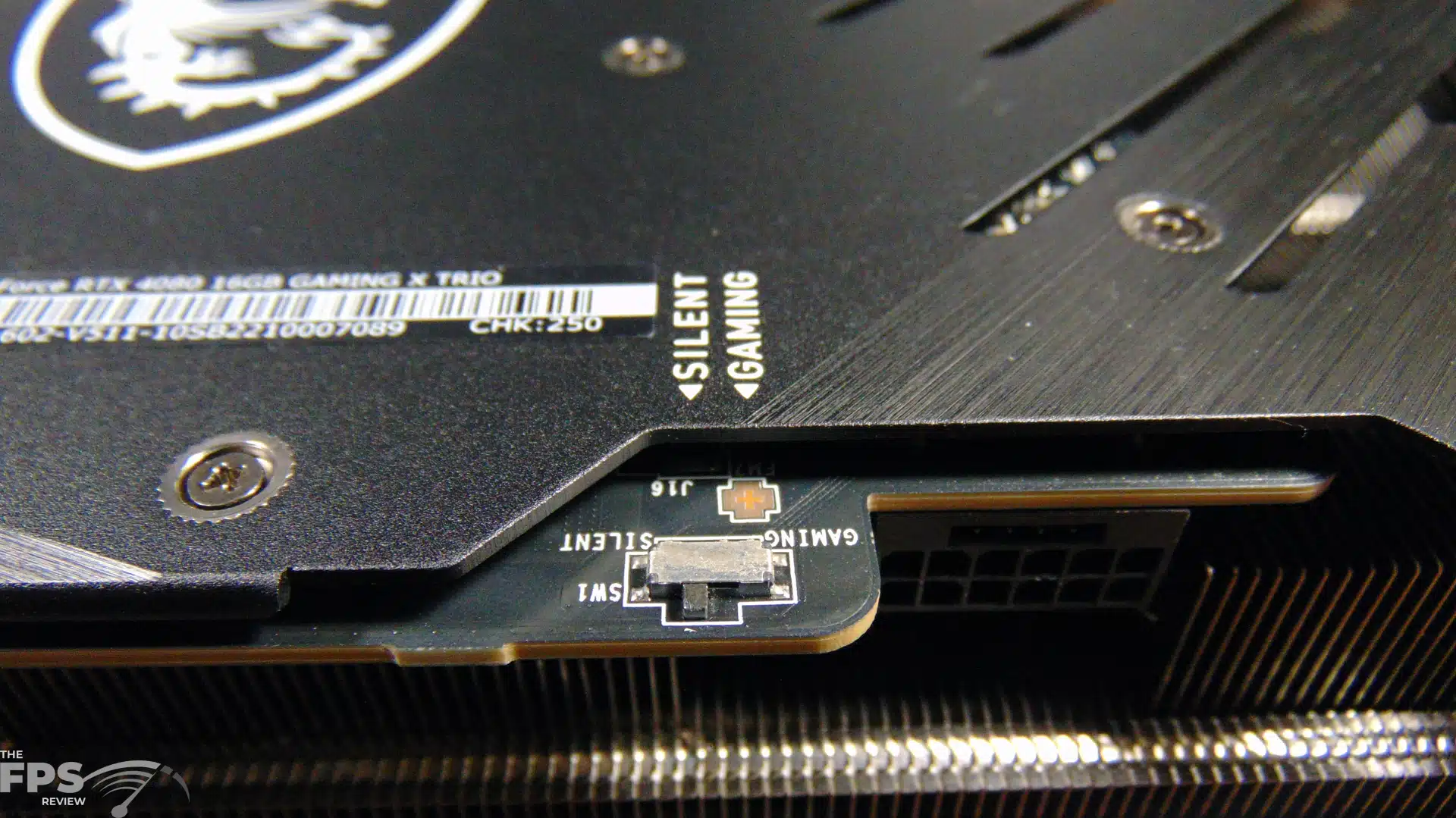
The PCB is a custom design that utilizes High-Efficiency Carbonyl Inductors (HCI) for the chokes. One-piece molding allows this design to operate with less choke noise and better electrical filtering. DrMOS power stage solutions provide great efficiency with low power loss and enhanced voltage controls. Additional fuses are built into the custom PCB to provide additional safeguards against electrical damage.
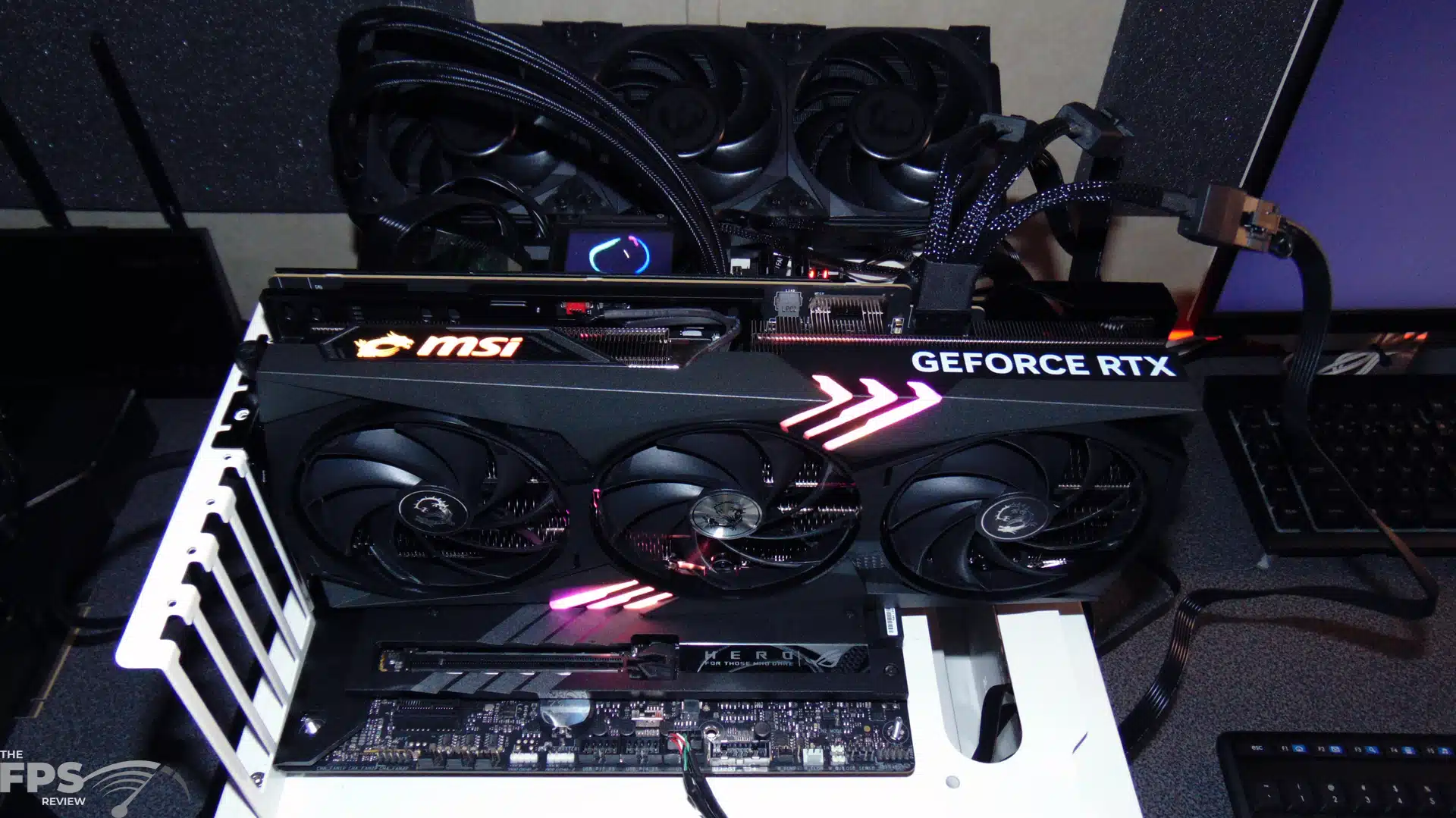
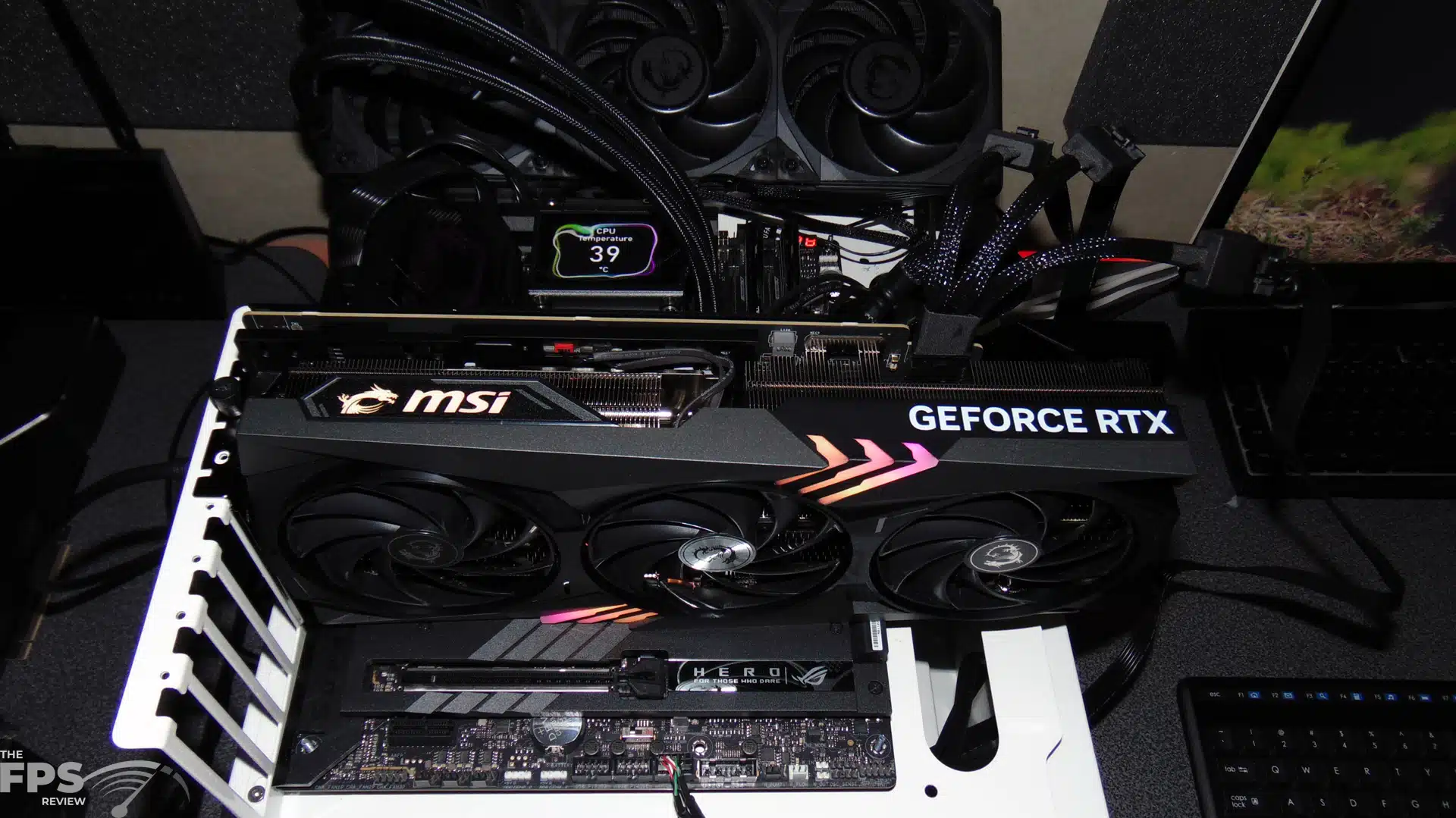
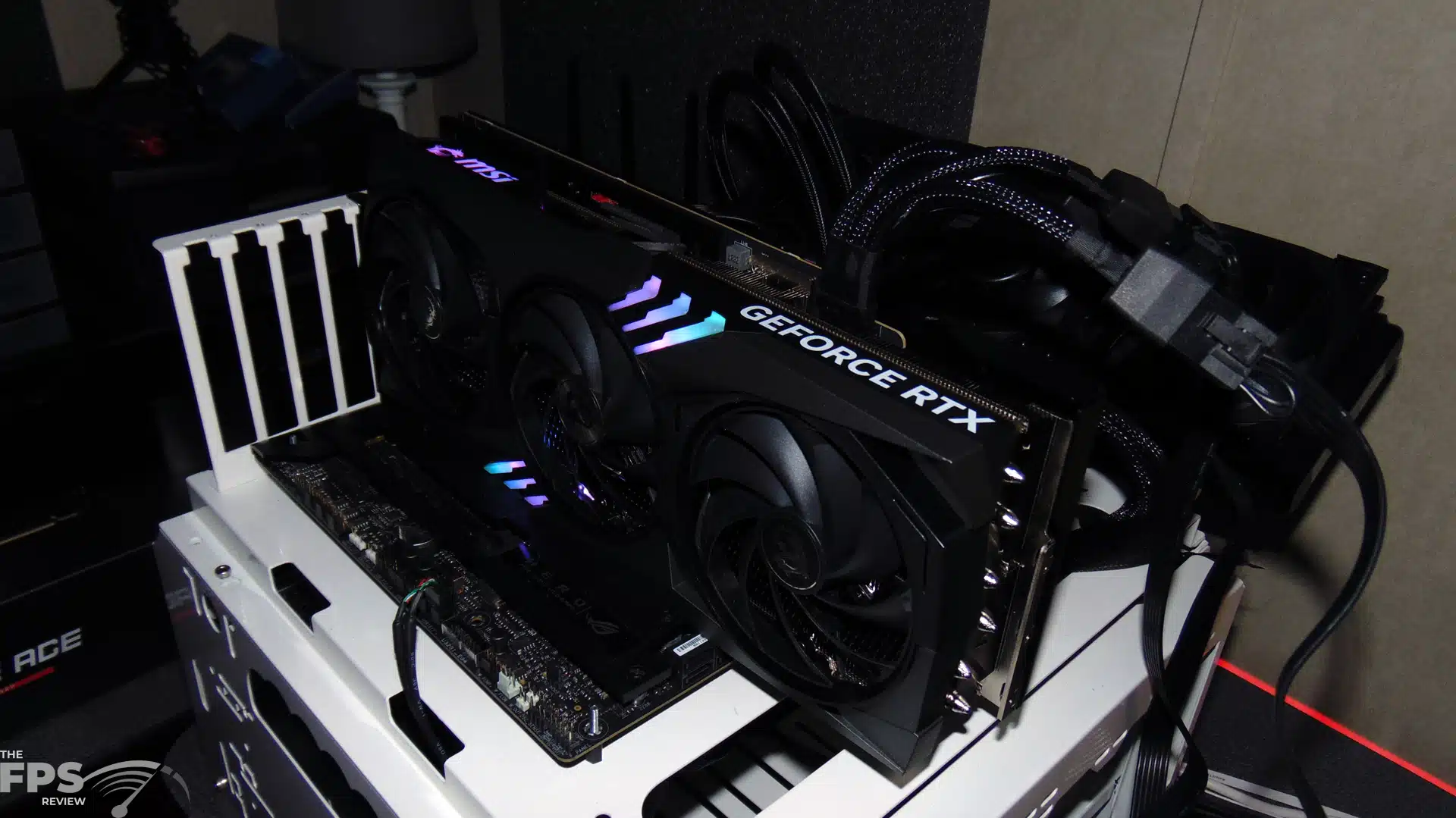
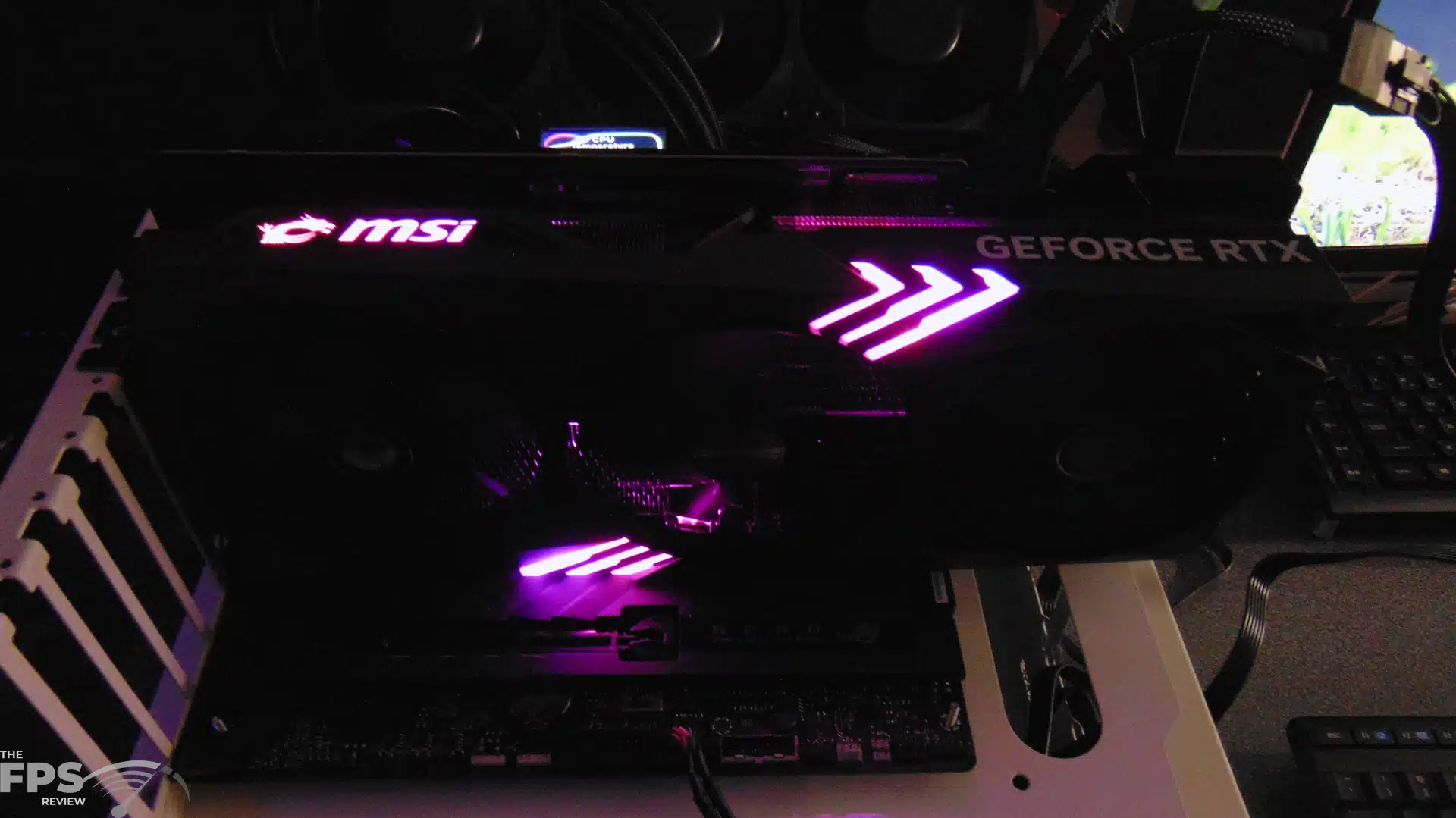
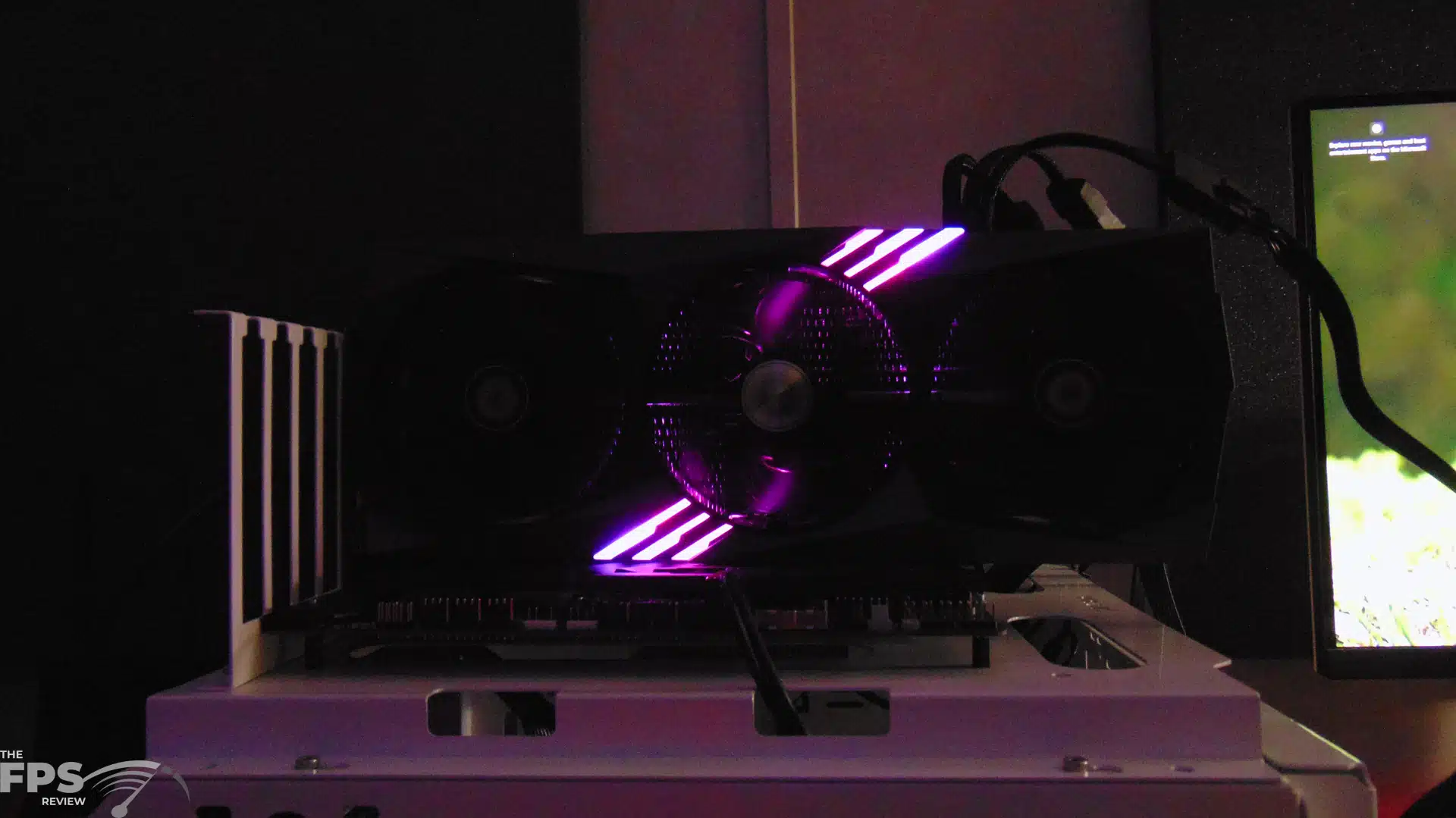
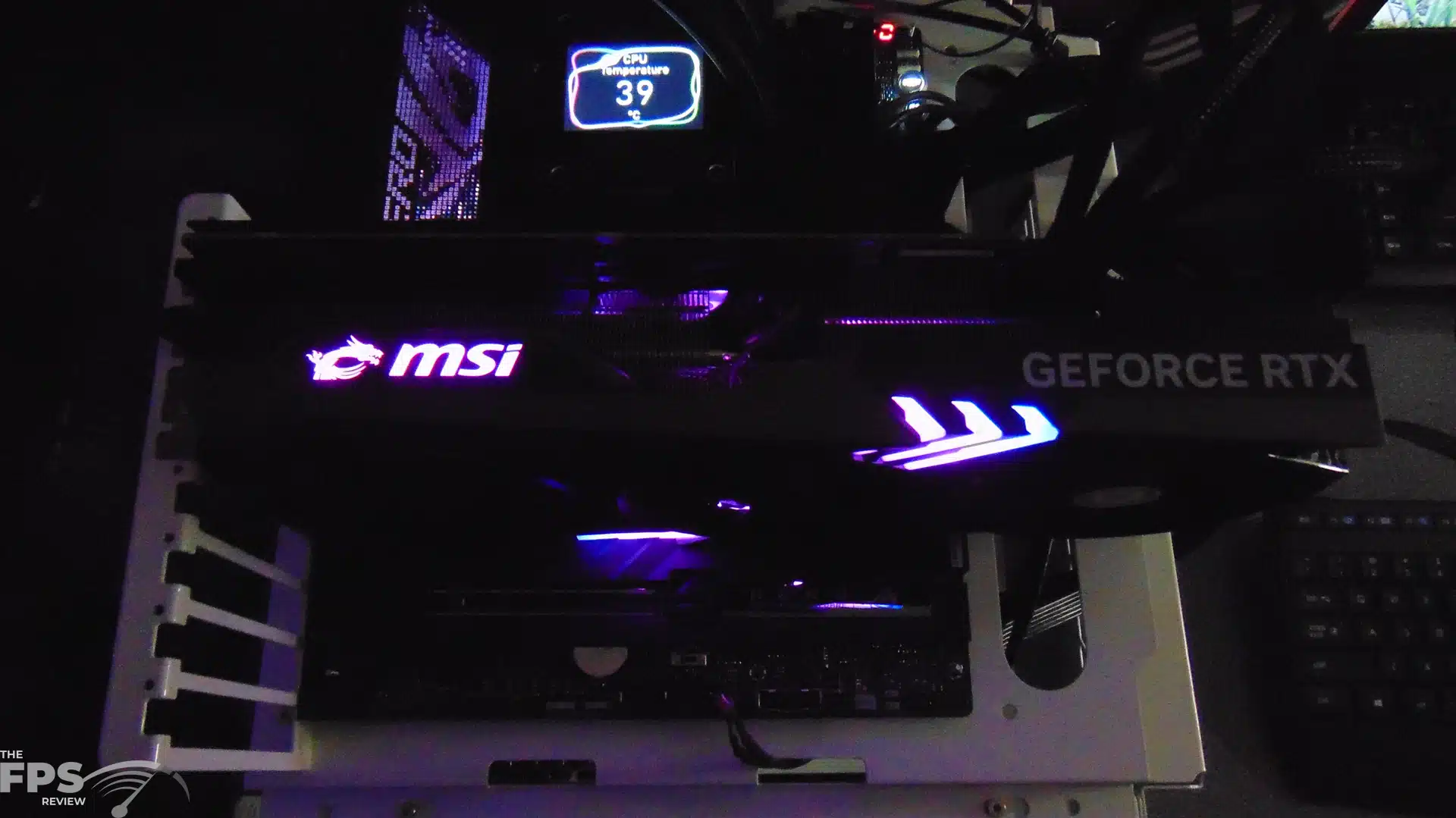
This video card also has a Dual BIOS that lets you prioritize between SILENT mode (default) and GAMING mode. Right now, we saw no differences between the two BIOS options, the default is on SILENT mode as the card ships, but we tried GAMING And found no difference in clock speeds, thermals, fan speeds, or power. You can use this BIOS as a way to backup the BIOS and have a backup if you attempt to tweak it. The video card supports MSI Center and MSI Afterburner as well as RGB.
Discussion (19 replies)
Join Discussion →Now this is just one result, but it's the one singled out on the summary page where the above statement is also located, and going back to the game benches it looks fairly typical:
Ok.. 10% less power - check. But 39% isn't anywhere close to twice as fast, is it?
Other than that one bit of math, which I admit I'm not certain I'm correct on even - good writeup. Looks like a great card. I'm still suspect on the pricing but it's definitely bringing the game.
*edit*
Is this graphic correct:
The 3080Ti and 4080OC Board Powers are identical, while the 4080 chip draws almost 100W more power? Also curious, the 3080Ti draws less board power than a 3090?
Makes me wonder - what's on the Ampere boards that is causing them to draw so much power aside from the GPU itself? Or is it just bad readouts from GPU-Z or on-board monitoring?
I know GDDR6X is going to use some decent power, but all these cards (except the AMD) are using it to various degrees.
How much does it cost????
I averaged the performance gain. And the power savings is even more in other games, Cyberpunk 2077 is where the power efficiency was rated, and that was the worst-case scenario, in reality, the power savings in other games over the 3080 is even greater. There are games where it sits under 300W.
Just eyeballing it, but even an average gain was somewhere in the 30% range? Not 100%, which would be "double". Nothing hit 100% that I saw compared to the 3080Ti.
If you have to ask...
That really is the correct answer to this question. 4090 looks like a better deal, and for some of those AIBs, about the same price.
I can see how that can be confusing, I think some of that was with DLSS 3 Frame Generation in mind. I've updated the text accordingly in both reviews.
Hmm, I'm dissapointed I can only find 4K benchmarks, and while those have some interest, from other reviews I seen that the 4080 sometimes get's beaten by 3000 series cards at lower resolutions.
Also somewhat dissapointed there are no test results with a 3080 which this card is supposed to replace even if the price would suggest otherwise.
There are some 1440p scores and a comparison with the RTX3080 as well
My Founders Edition review has two pages of 1440p results.
After scanning through this review... this generation of cards I think are actually bringing 4k to the upper tier gaming to be a easily enjoyable experience.
Not so.
This card gives roughly 75% of a 4090 in performance at 4K.
If the card is more than msrp then it is not worth it. May as well buy a 4090.
Didn't we just say the same thing? :unsure:
ASUS RTX 4080 STRIX OC
$1450
16 GB, GDDR6X, 256-bit
[/TR]
[/TABLE]
I honestly didn't notice an issue with 4K gaming and my 3090 Ti with everything maxed out, but the 4090 is a lot smoother.
$1309.99 MSRP
Oofta! With pricing like that who knew you could offer something that makes the top-tier card look appealing? It's a nice card but other than power savings I'm not sure what the incentive to get one over a 4090 would be. I can understand picking it over a 3080/3090/3090 Ti but not a 4090.
I'm still pretty happy with my Hybrid 3090 Ti. For giggles, I ran my OC settings on it on Sunday for a few hours with CP 2077 (Driver 525 and latest 1.61 build), RT med, DLSS performance, and just about everything else completely maxed (sans any post-processing like motion blur which I always turn off completely) and it was holding 60-66 FPS at 4K (2160-2175 MHz), with a max temp ~61c. At its stock settings (2040-2050 MHz), and so quiet, it averages 50-60+, with occasional dips in the high 40s and temps ~50-60c, but still a very enjoyable experience.