

Introduction
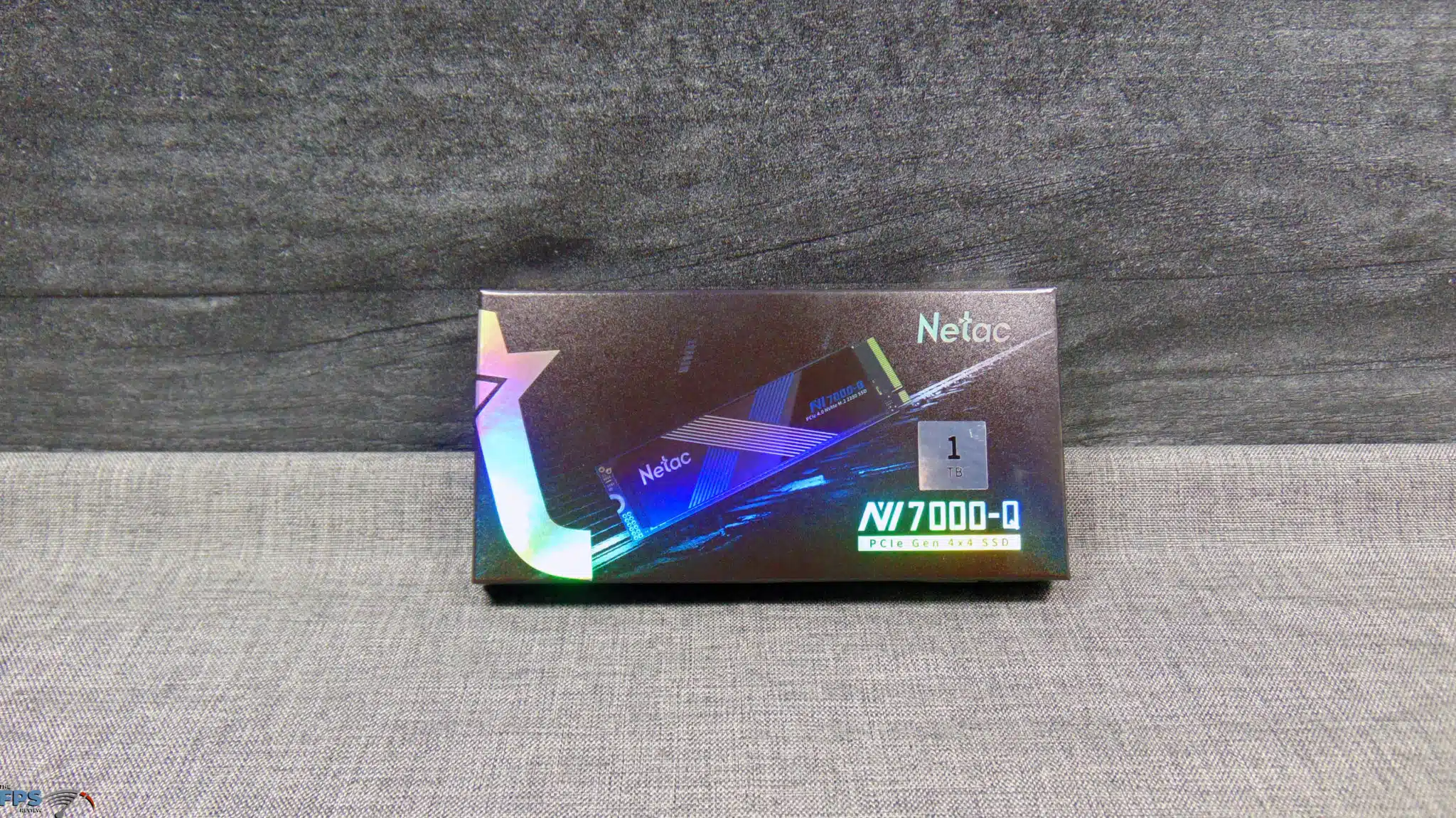
The Netac NV7000-Q 1TB PCIe Gen4 x4 M.2 2280 NVMe SSD is a new QLC-based SSD from Netac offering value for money with high-end PCIe Gen4 NVMe throughput performance of 7,100MB/s read and 6,200MB/s write. This particular SSD was shown at Computex 2024, and now we have it in our hands to perform a full review with testing and benchmarks.
While this SSD is currently not available for purchase yet in the US, it will be coming soon for retail in the US and Netac quotes pricing at around $79 for the 1TB model. However, prices are not necessarily solidified yet, so keep an eye out for the final pricing. This review should at least allow us to examine what its performance is like so that you can make an informed buying decision when prices are finalized and it is available.
Netac is not a new brand to us, we have previously reviewed two other Netac SSD storage devices with the Netac NV7000 2TB PCIe Gen4 x4 NVMe SSD and the Netac NV7000-t 1TB PCIe Gen4 x4 NVMe SSD. In our testing, both of those SSDs performed as specified, and did well in our benchmarks.
If you are not familiar with Netac, Netac has operated for more than two decades in China and is known as the world’s first creator of USB flash drives. Netac is a supplier of products and solutions in the field of global flash application with a focus on manufacturing flash memory such as solid state drives, Portable SSD, DDR, and mobile storage products.
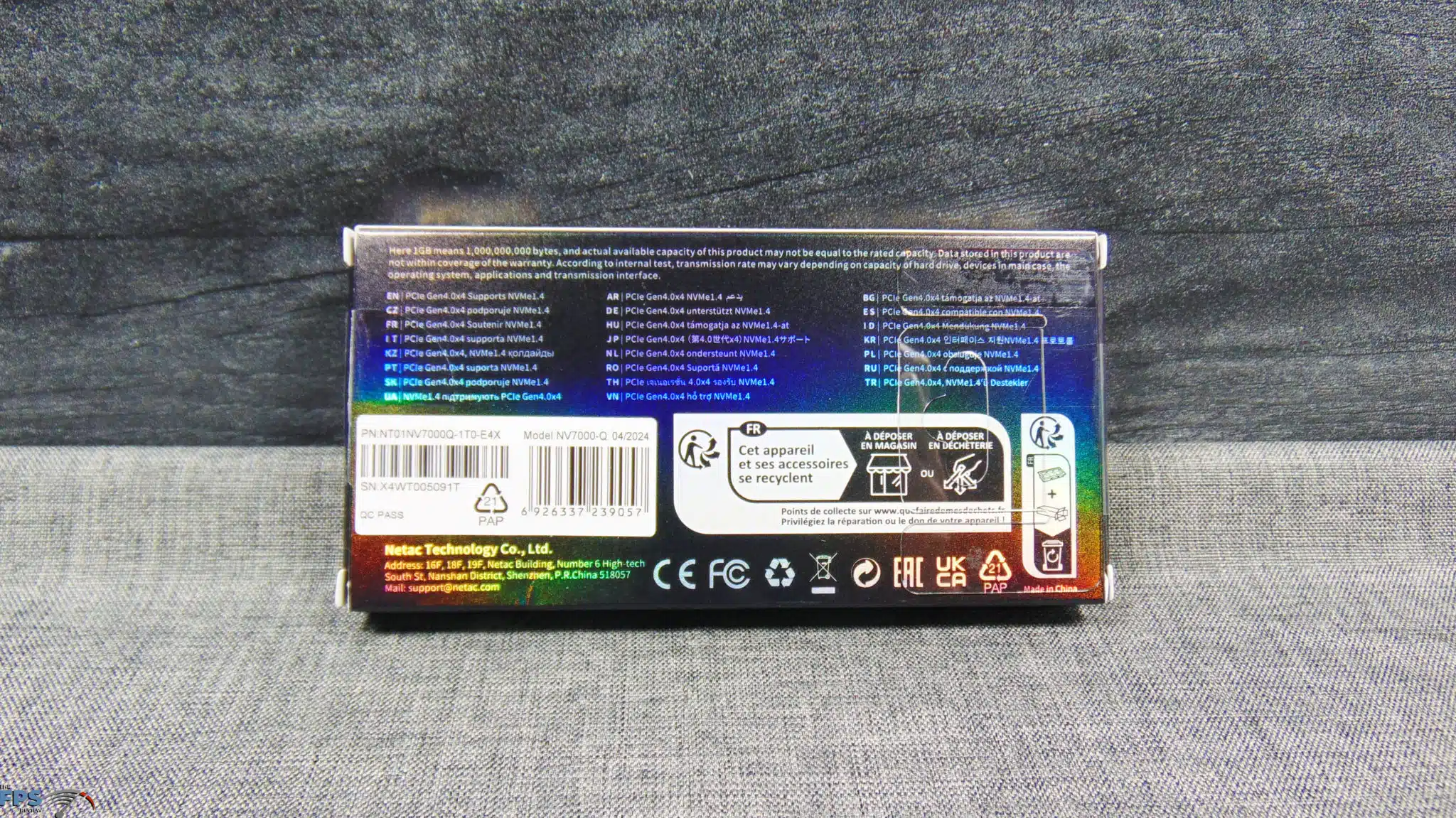
The Netac NV7000-Q is a compact M.2 2280 SSD with a slim profile, low power consumption, and high density geared for the likes of laptops, desktop PCs, and the PS5 console. Netac specifies it is able to cope with various types of data including file transfer, large-size gaming, and video editing made for PC enthusiasts. You will find the Netac NV7000-Q with the model name NV7000-Q-1TB and NT01NV7000Q-1T0-E4X which is the model we are reviewing today.
Netac NV7000-Q
Specification-wise, the Netac NV7000-Q 1TB PCIe Gen4 x4 NVMe SSD (NV7000-Q-1TB) is based on the NVMe 1.4 protocol and has a specified sequential read throughput of 7,100MB/s and a sequential write throughput of 6,200MB/s. This isn’t the fastest speed that a Gen4 x4 TLC drive is capable of, but it is within the latest generation of PCIe Gen4 x4 performance and tops out at that 7GB/s read throughput many Gen4 drives are known for in the high-end. The endurance rating is 640 TBW. It has an operation temperature of up to 85c, a weight of 8g, dimensions of 80x22x2.3mm, and an MTBF of 1.5 million hours. Netac offers a 5-year limited warranty.
The Netac NV7000 was released in 2022 and introduced Netac’s PCIe Gen4 x4 SSD lineup. The NV7000’s components were changed over time, with either the 8-channel InnoGrit IG5236 controller or the 8-channel Phison E18 and with either Micron 176-layer TLC NAND flash or 128-layer SK Hynix flash. The NV7000 did have a DRAM cache and an integrated tall aluminum heatsink and was a TLC 3D NAND flash SSD.
Later came the Netac NV7000-t in 2023. The Netac NV7000-t ditched the tall aluminum heatsink and DRAM cache and opted for a more affordable 4-channel Maxio MAP1602 controller with 232-Layer 3D TLC YMTC Xtacking 3.0 3D NAND.
The new Netac NV7000-Q follows in the same line as Netac’s other NV7000 model drives, which means it runs at PCIe Gen4 x4 NVMe performance, but the “Q” denotes something different. The NV7000-t and NV7000 SSDs were TLC (3-bit per cell) SSDs, while the NV7000-Q is Netac’s new QLC (4-bit per cell) offering, and based on the same 4-channel Maxio MAP1602 controller that the NV7000-t is based on.
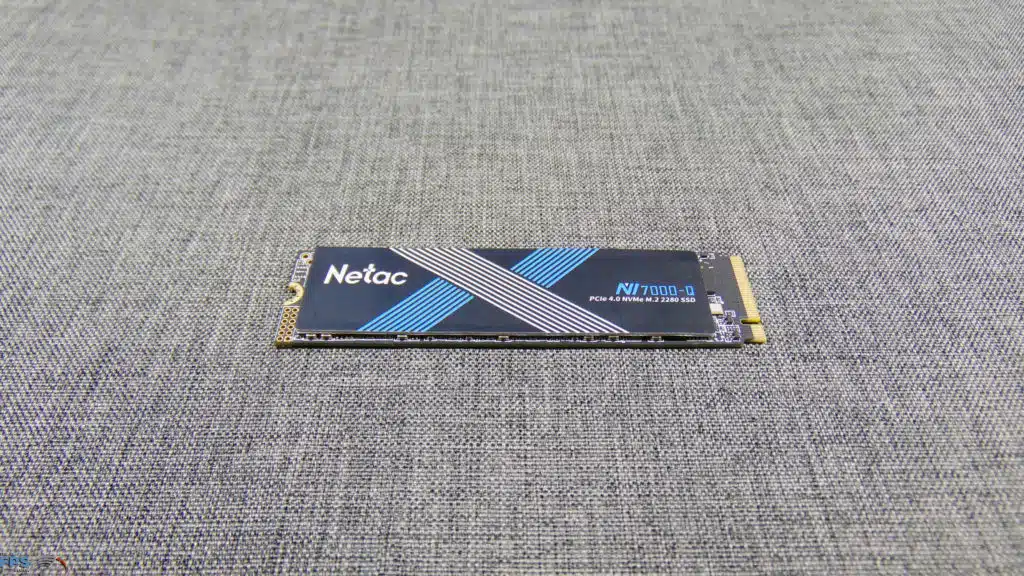
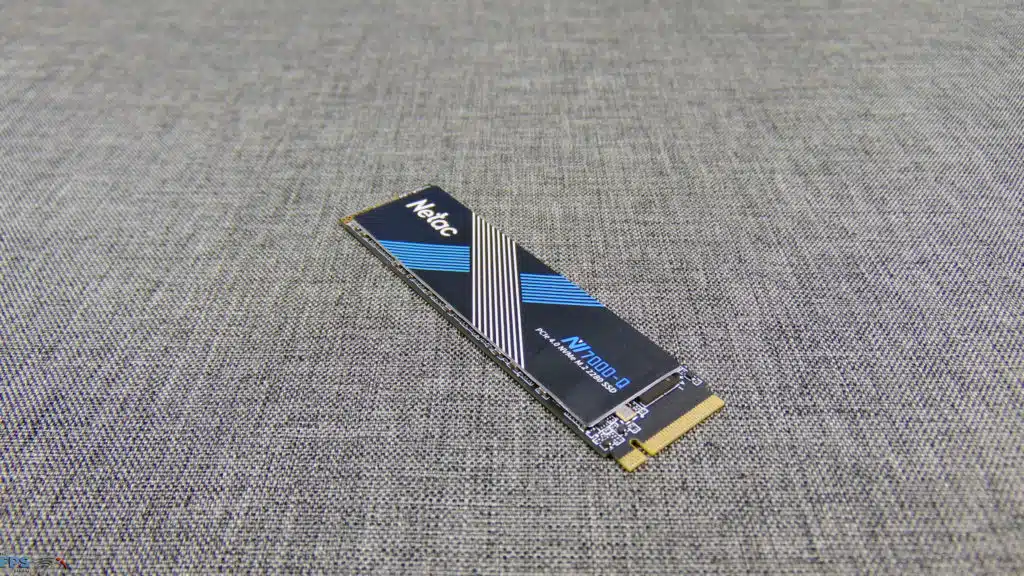
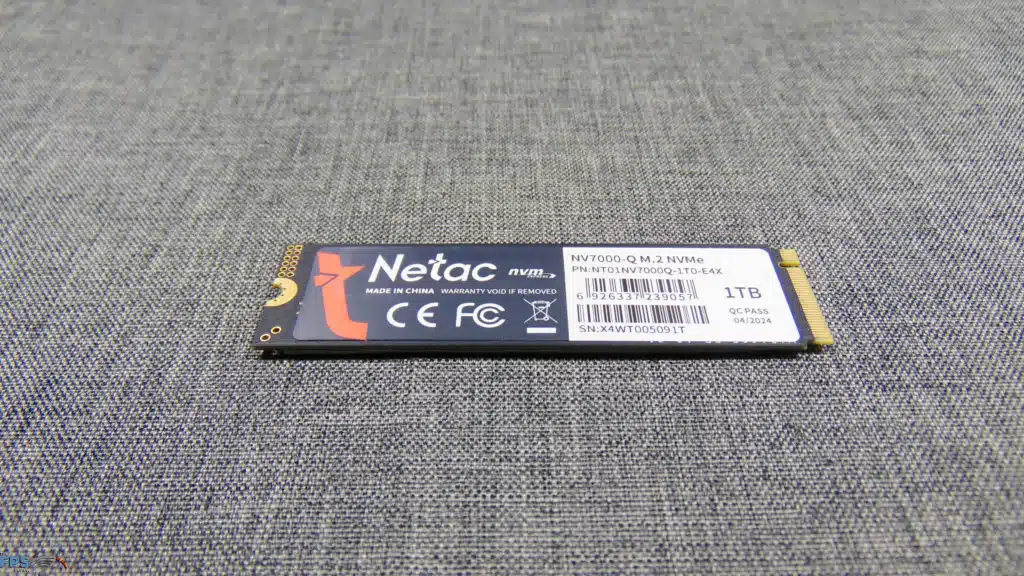
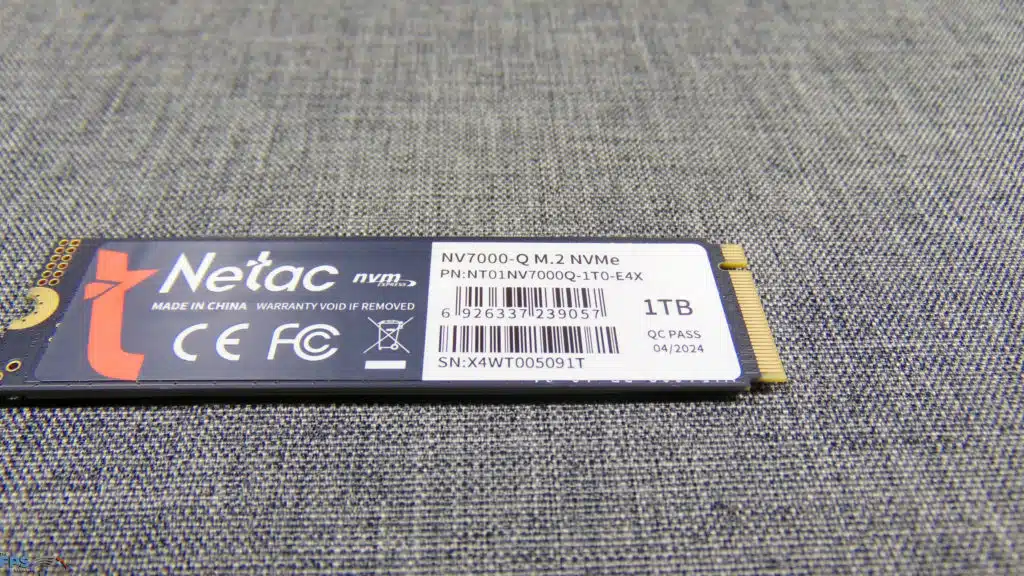
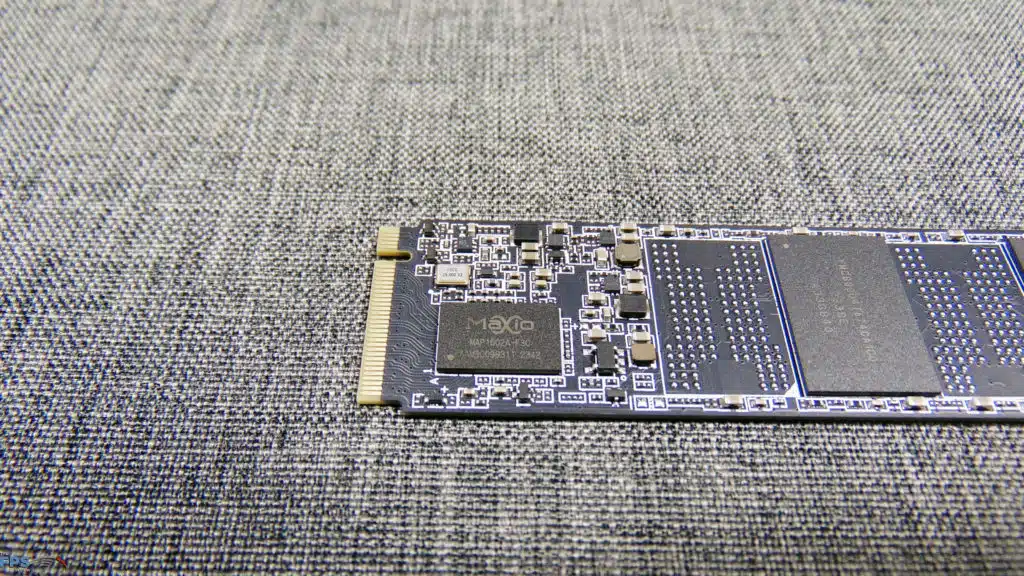
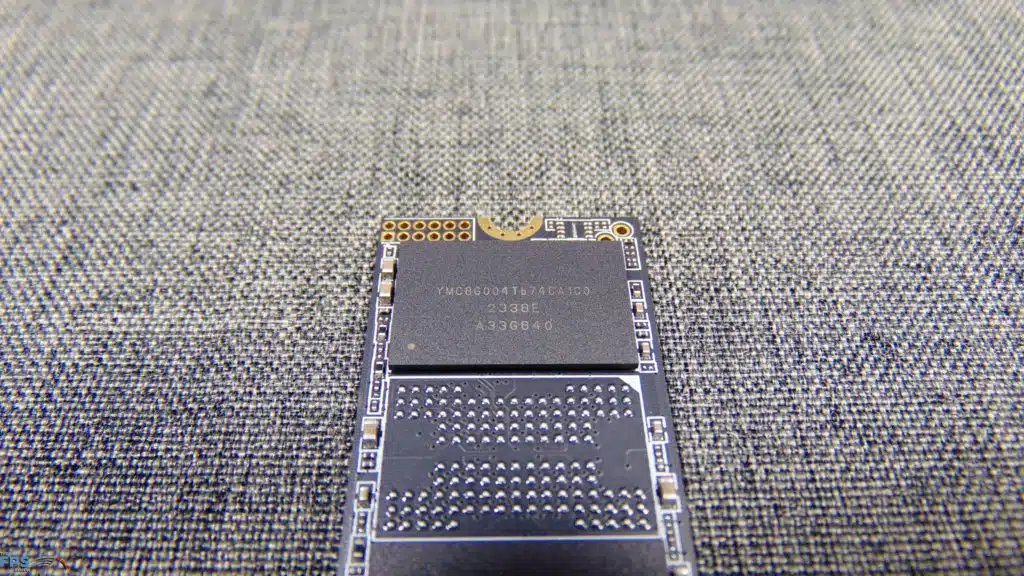
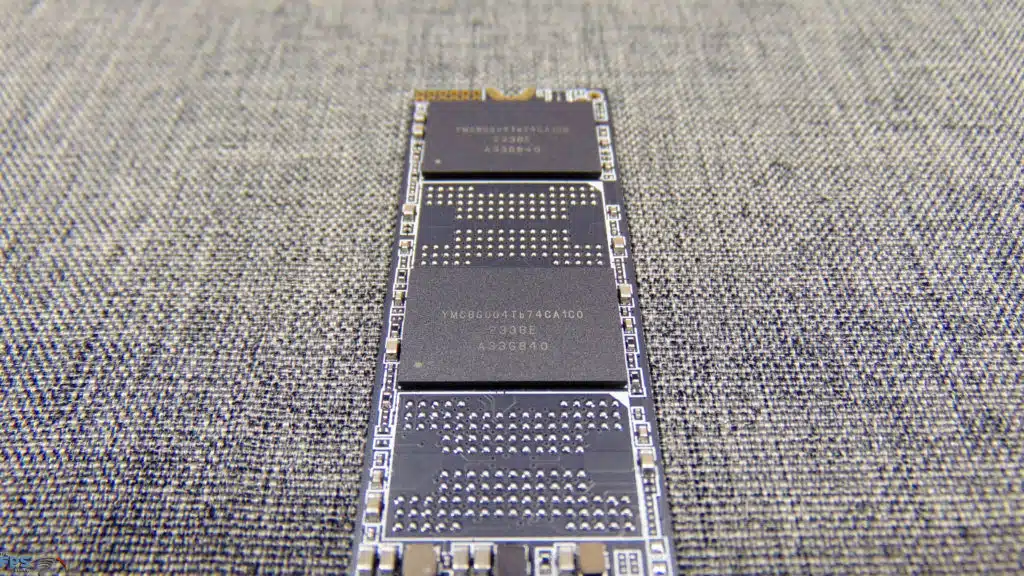
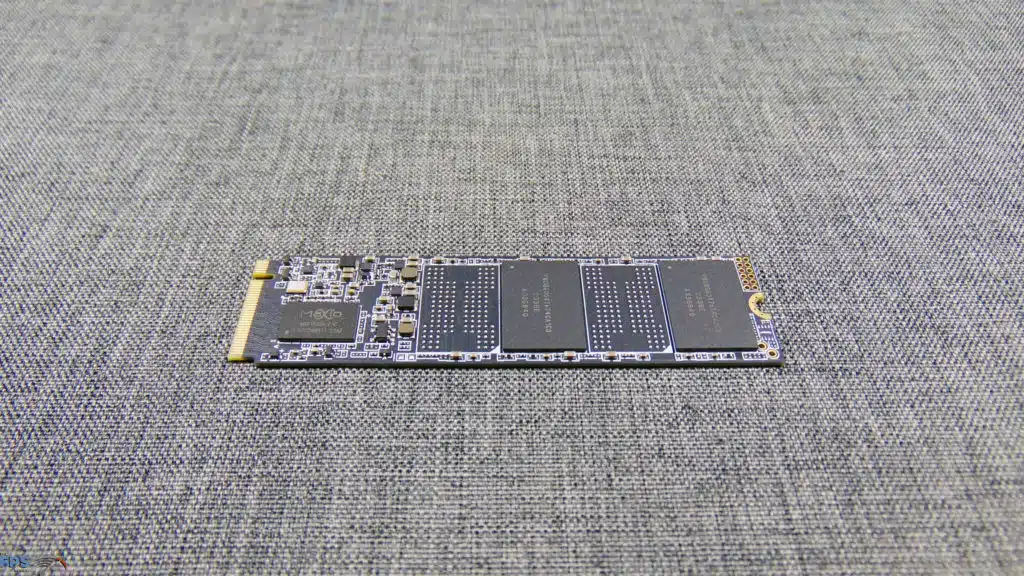
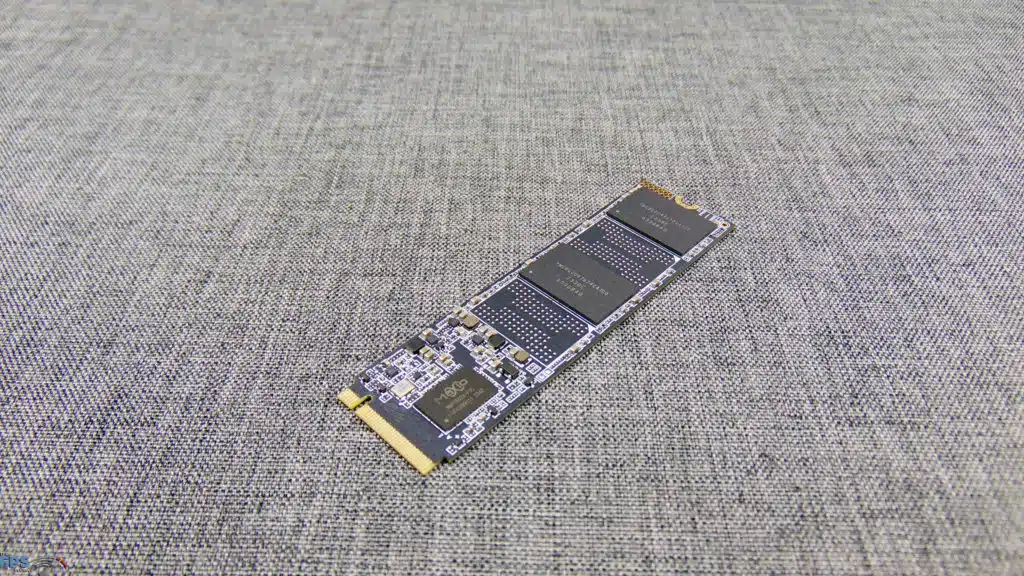
Since the NV7000-Q is a value-based SSD it does not have a DRAM cache and instead uses Host Memory Buffer (HMB) and an SLC cache. The NV7000-Q also does not have a large aluminum heatsink, but rather a thin heat spreader similar to the NV7000-t and is a one-sided SSD. It utilizes intelligent temperature control technology to reduce hard drive degradation and throttling.
The QLC nature is based on the 232-Layer QLC 3D NAND flash that it uses from YMTC with its YMTC Xtacking technology, also the same brand of NAND flash the NV7000-t utilizes, though QLC NAND flash is cheaper in cost. The YMTC NAND flash reads YMC8G004Tb74CA100. Uniquely, the YMTC QLC 3D flash is bumped up to run at 2400MT/s which boosts the throughput performance of this SSD right up to the latest generation of PCIe Gen4 x4 performance.
Endurance and write cycles are also improved with YMTC’s QLC 3D NAND flash, with an endurance rating of 640 TBW this SSD matches the same endurance as the NV7000-t TLC-based SSD’s endurance for 1TB. It is also only 60 TBW shy of the Netac NV7000’s 1TB 700 TBW endurance rating. Right now, Netac will only have a 1TB model available, but there is room on the SSD to add more flash memory if they want to produce higher capacities in the future.
Netac NV7000-Q Specs
| Netac NV7000-Q 1TB | |
|---|---|
| Interface | PCIe Gen 4.0 x4, NVMe 1.4 |
| Cell Type | QLC (4-bit) |
| Controller | Maxio MAP1602 |
| NAND Flash | YMTC 232-Layer QLC 3D NAND flash |
| DRAM Cache | N/A | HMB |
| SLC Caching | Yes |
| Read Speed | 7100MB/s |
| Write Speed | 6200MB/s |
| TBW | 1TB: 640TBW |
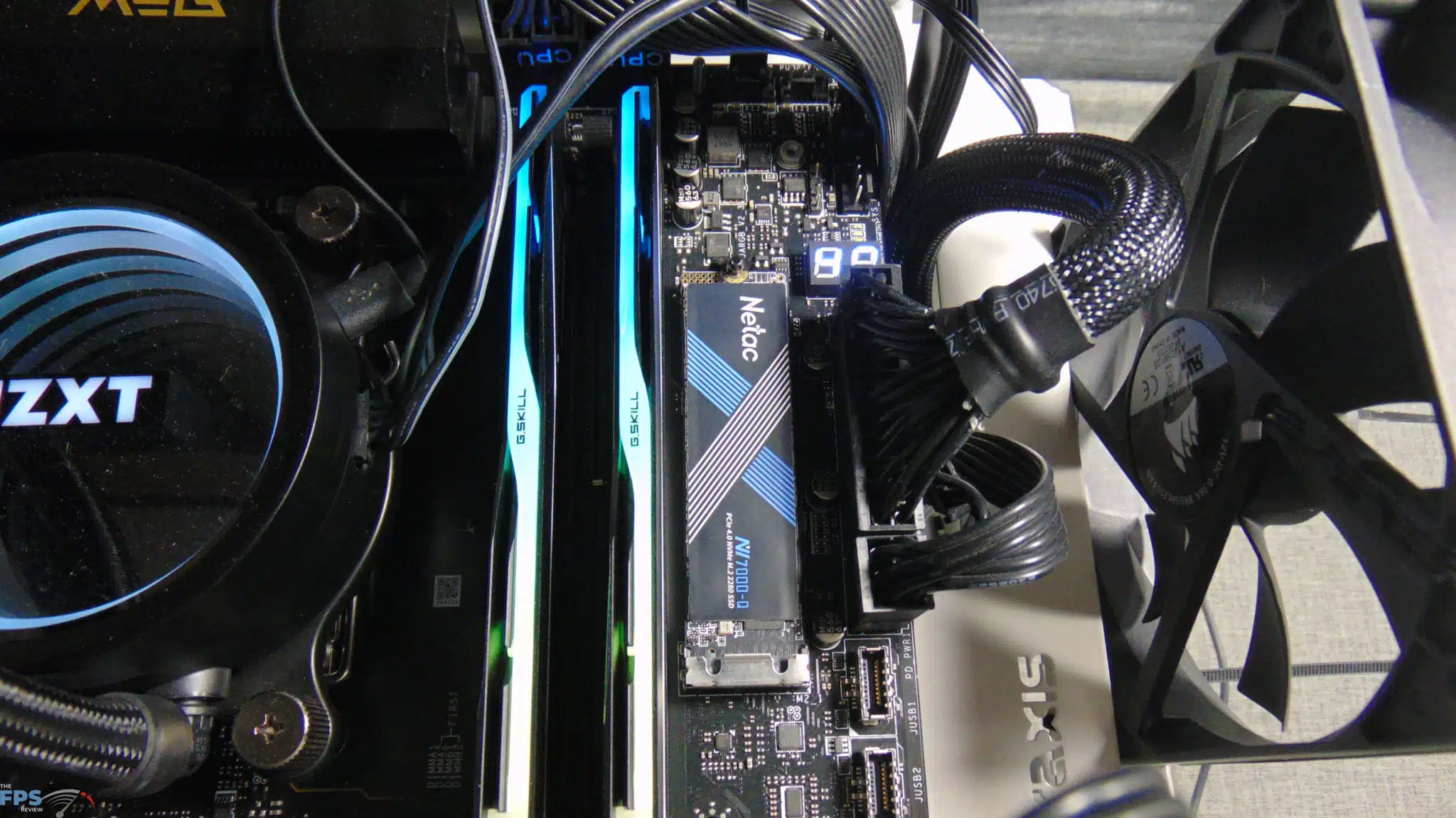
It sits perfectly in our desktop PC’s M.2 2280 slot, and with the low profile makes for a slim installation and cool running controller and low power where an external heatsink is not required for operation.
Discussion (2 replies)
Join Discussion →More options are obviously great, but I have to admit, I am a little bit paranoid about losing my data, which is why I view drives from new brands with a lot of skepticism.
Heck, even more established brands have problems sometimes.
I mean yes, I backup all of my non-replaceable data. At least most of it, but it is still a real pain in the ass to have to re-install windows and reconfigure things when things go wrong.
I periodically dump drive images to my NAS, but realistically this does not happen every day, every week or even every month. When my 2TB Sabrent Rocket 4 died, I didn't lose any files (those were all on the NAS) but I had to revert to an 8 month old drive image. I had done some config changes since, and had some game progress in my user folder that I ultimately lost.
The biggest annoyance was the downtime. I decided to not wait for Sabrent's RMA, and just went and bought a Samsung 990 Pro at Microcenter to get myself going again immediately. When I got the Sabrent Rocket 4 back, I had some trust issues, so I only used it as a Steam library drive, figuring that if it died, worst case I'd leave my machine on overnight and download everything again. That was a good call, as that RMA drive started failing as well, and is no longer in use.
Which brings me back to Netac. Maybe they are good, maybe they aren't. This review isn't bad, but who knows what will happen after 2 years of use? I don't know. Some might trust them just because they use established Phison reference drives, but so was the Sabrent Rocket 4....
Back before I bought eh Sabrent Rocket 4 I had a philosophy of only trusting two SSD brands. Samsung, and Intel. Every other drive from every other brand I had tried (especially OCZ) had failed on me within two years. This was back in the SATA era though. The companies and controllers have changed since then, and this dataset is likely no longer relevant. Especially since Intel sold its SSD brand to SK Hynix, and Samsung has had some high profile firware bugs in its 980 Pro and 990 Pro drives causing extremely premature drive ware. (Some have also had some real problems with Samsung NVMe drives in Windows Server for some reason)
This requires establishing a new rule of thumb, which is still maturing for me.
If I require a drive that is high performance, I will probably stick to a brand that designs, develops and uses their own controllers.
Crucial/Micron, SK Hynix, WD/Sandisk, and yeah, Samsung (though with less confidence than in the past).
Samsung drives still perform better than anyhting else out there on the market (other than discontinued Optane drives) likely in large part due to very high 4k random read performance.
If Intel's Optane DC 5800x drives ever come down in price to more sane levels, I'll be snapping up one of those too.
I have yet to test any Crucial/Micron or SK Hynix drives, though I want to at some point. I have been putting a pair of 4TB WD Black SN850x drives through their paces, and they seem very reliable and perform well. This may become a go-to brand for my NVMe buying in the future.
As for these budget brand engineered Phison reference design drives, they have their place.
I've actually had really good luck with my twelve old Inland Premium drives ranging in size from 256GB up to 2TB. I have absolutely hammered them without ever having a bad issue, and no eexcessive drive wear. They appear to be reference Phison E12 drives manufactured by Team for Microcenter (Inland is Microcenters in house brand) The Inland Premium drives had a very good reputation out there on the forums though, which is why I was willing to give them a chance. Sadly, while there are other rebadged Inland branded reference drives, the "Inland Premium" models which were well regarded seem to ahve been discontinued.
As for other budget unknown brand reference Phison design drives, I'd probably only use them as a Steam library drive on a cheap gaming system. At least unless associated with the large volume of positive long term reviews from actual users on forums I trust the Inland Premiums got. That minimises risks.
Brent, this looks like both the flash and the controller (and its firmware) are produced in China by a Chinese company, correct? They've got the whole stack in house, a la Samsung?
Also nice to see QLC flash being mostly competitive outside of sustained high-speed write scenarios, which is useful for most consumers when price is a factor.