
Introduction
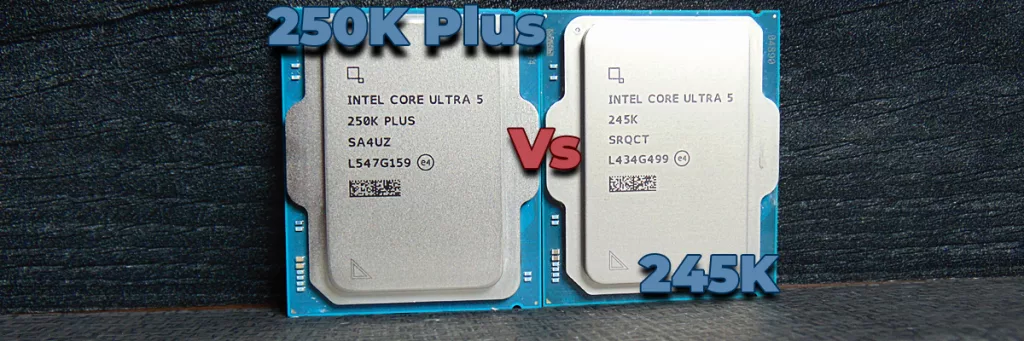
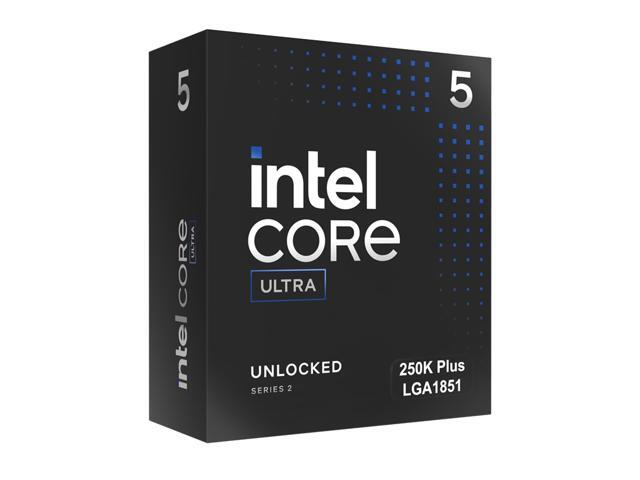
The Intel Core Ultra 5 250K Plus was launched alongside the Intel Core Ultra 7 270K Plus on March 26th, 2026. Both of these new CPUs are part of the new Intel Core Ultra 200S Plus desktop CPU series “Arrow Lake Refresh” launched for current generation socket LGA1851 motherboards.
The Intel Core Ultra 5 250K Plus was launched with an MSRP of $199. Both of these CPUs are based on the same Intel Core Ultra 200S Arrow Lake architecture, but have upgrades in terms of extra E-Cores, Die-to-Die Frequency improvements, and the Intel Binary Optimization Tool. You can read our official announcement article with all the juicy details here. Also, be sure to check out our Intel Core Ultra 7 270K Plus vs Intel Core Ultra 7 265K Review.
In today’s CPU performance review, we are going to directly benchmark the Intel Core Ultra 5 250K Plus versus the Intel Core Ultra 5 245K in both synthetic benchmarks and 14 games, with some of the most recent game releases including Crimson Desert and Resident Evil Requiem. The goal is to determine how much faster the Intel Core Ultra 5 250K Plus really is compared to the CPU it is supplanting in the lineup.
Given the fact that the Intel Core Ultra 5 250K plus has upgrades in terms of Die-to-Die frequency, 4 Extra E-Cores, and the new Intel Binary Optimization Tool, we want to find out what all this really means in terms of a performance upgrade over the Intel Core Ultra 5 245K. This is the first of several comparison reviews, as well as full CPU reviews with AMD comparisons that we have planned for the future, so stay tuned for much more.



Intel Core Ultra 5 250K Plus
Before we dive into the benchmarks, let’s briefly talk about what is new with the Intel Core Ultra 5 250K Plus, and what its specifications are in comparison to the Intel Core Ultra 5 245K.
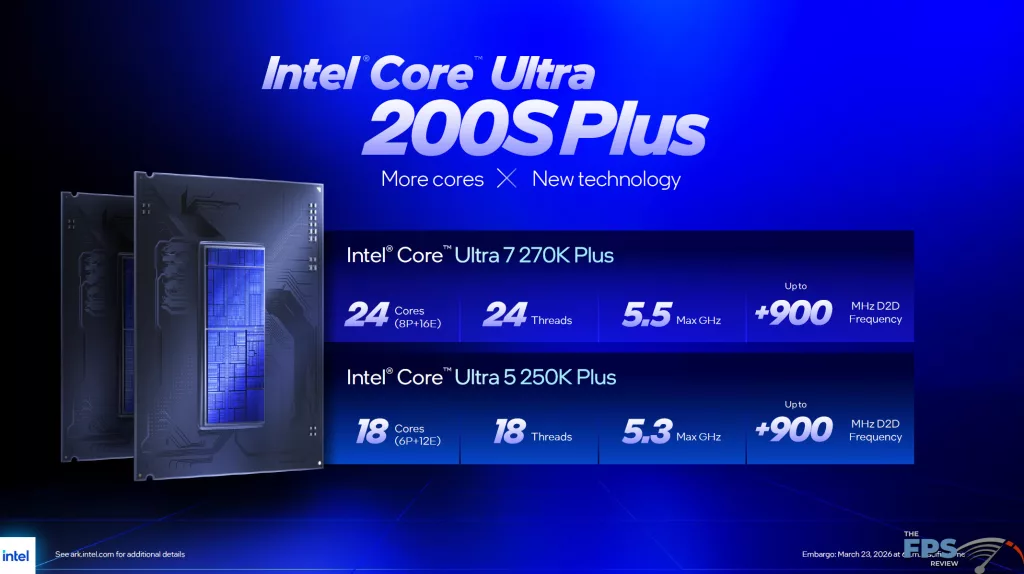
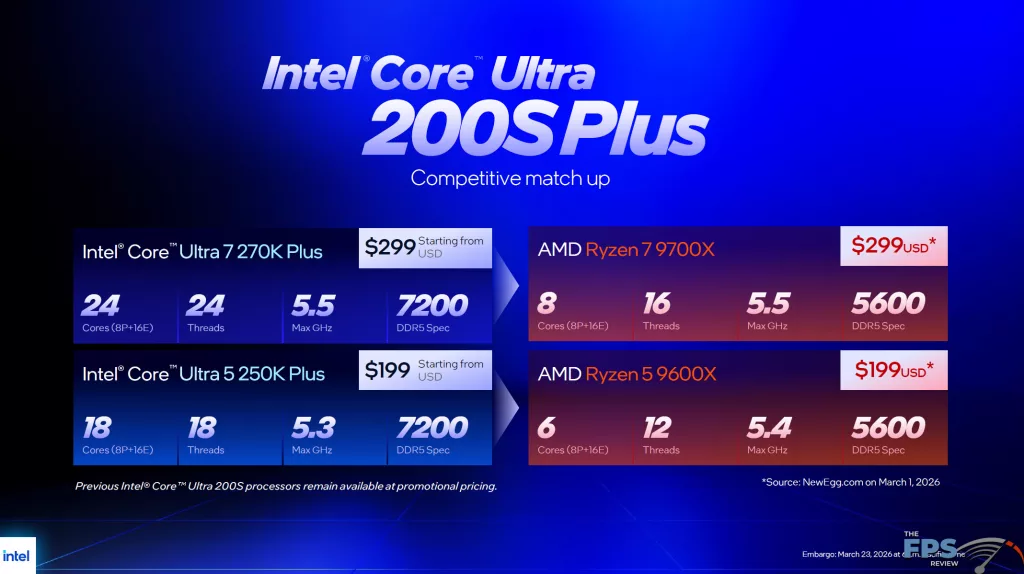
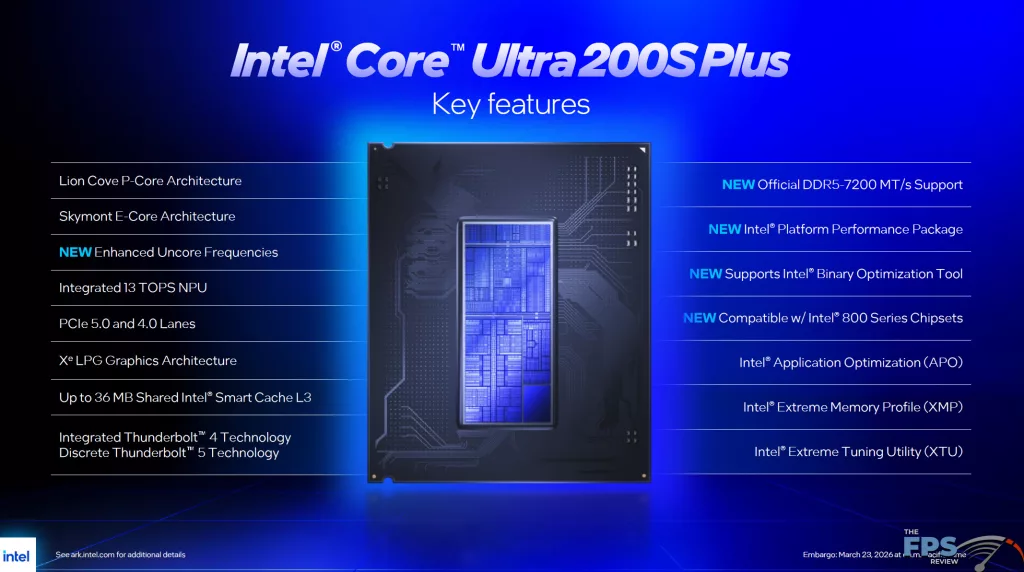
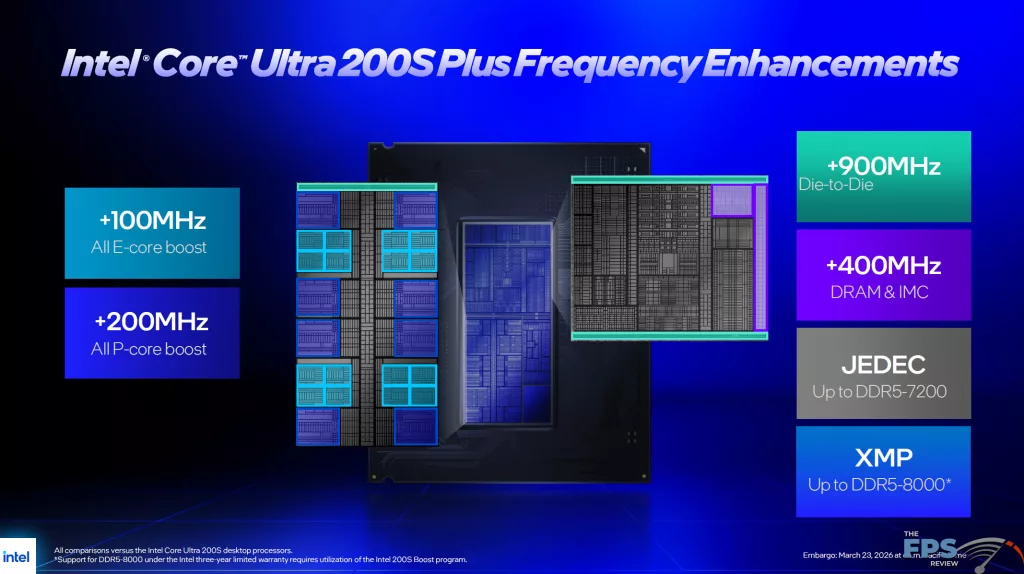
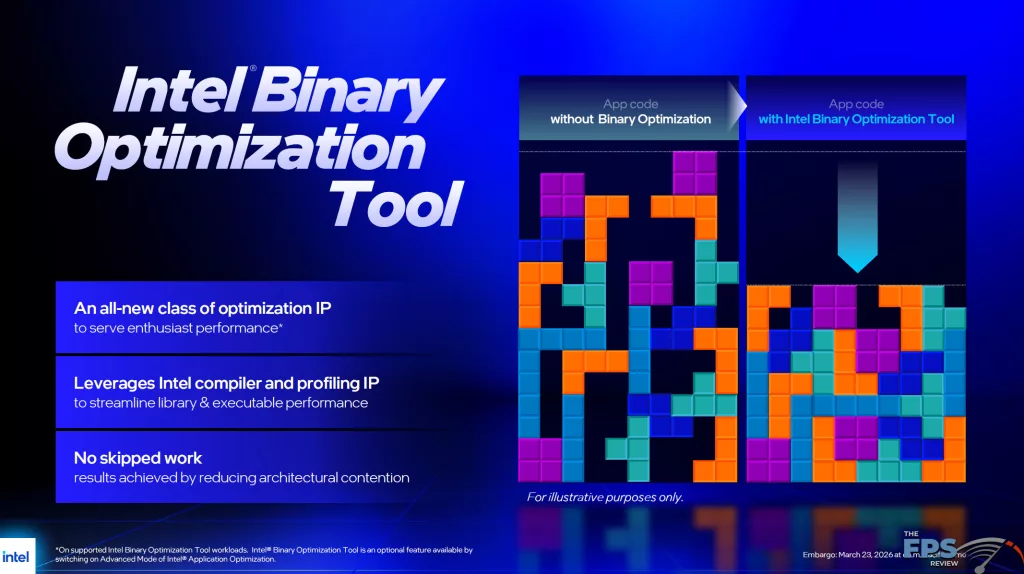
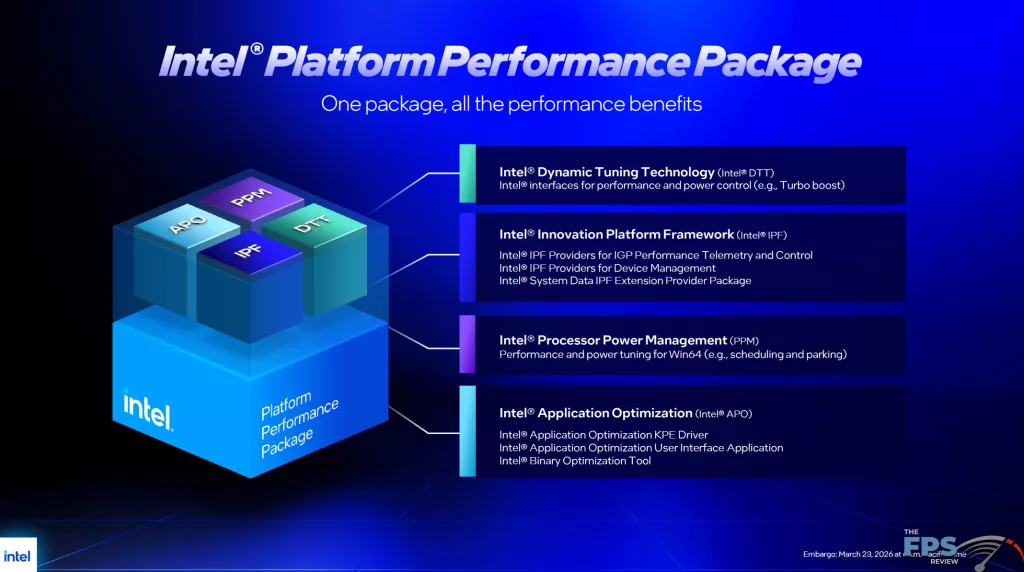
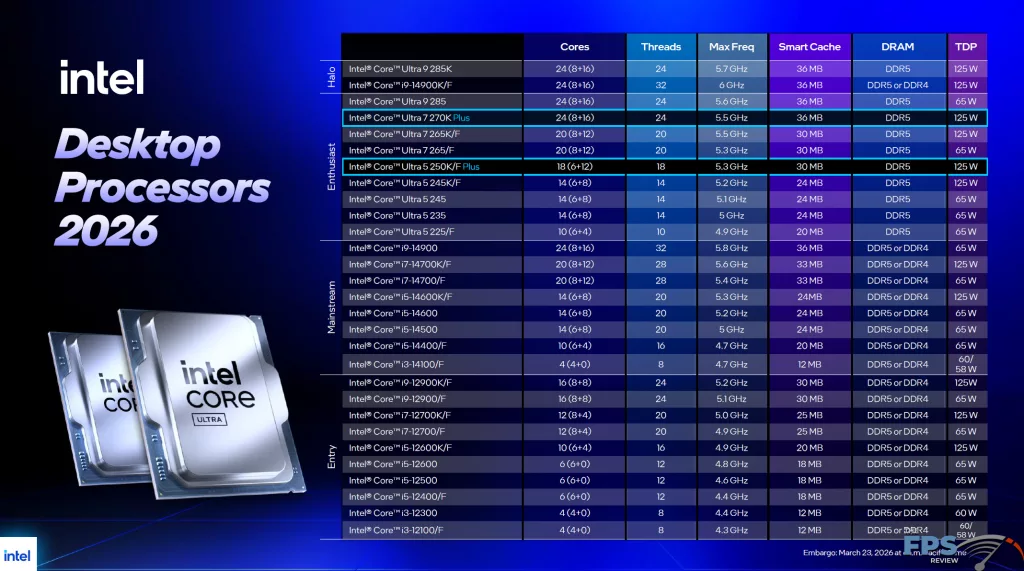
The key features of the Intel Core Ultra 200S Plus CPUs include 4 more efficiency cores (E-Cores), up to 900MHz boost to the die-to-die frequency, a new Intel Binary Optimization Tool, Support for DDR5 7200MT/s memory, and early support for 4-Rank CUDIMM memory. These are the primary differences, though there is also a minor boost frequency difference as well to the P-Cores.
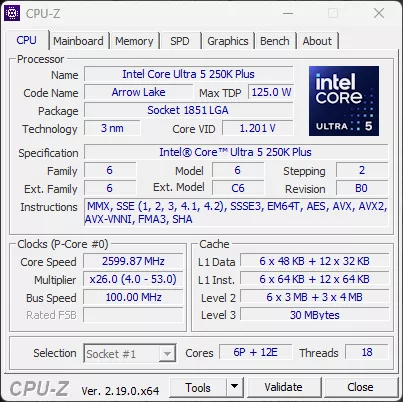
The Intel Core Ultra 5 250K Plus has 18 total cores, while the Intel Core Ultra 5 245K has 14 cores. The Intel Core Ultra 5 250K Plus has 6 P-Cores, as does the Intel Core Ultra 5 245K. Where it differs is that the Intel Core Ultra 5 250K Plus has 12 E-Cores, while the 245K has 8 E-Cores.
The Intel Core Ultra 5 250K Plus receives a Boost Clock frequency upgrade up to 5.3GHz for the P-Core Boost Clock, compared to the 5.2GHz on the Intel Core Ultra 5 245K. Otherwise, the E-Cores remain at the same maximum clock of 4.6GHz between them, though there are 4 more of them now.
Other internal frequencies have also increased, in one instance for example the die-to-die frequency increases by +900MHz. On Intel CPUs, there are three other clock domains to be aware of: the Ring/LLC Clock, the D2D Clock, and the NGU Clock, all of these are UP on the Intel Core Ultra 5 250K Plus.
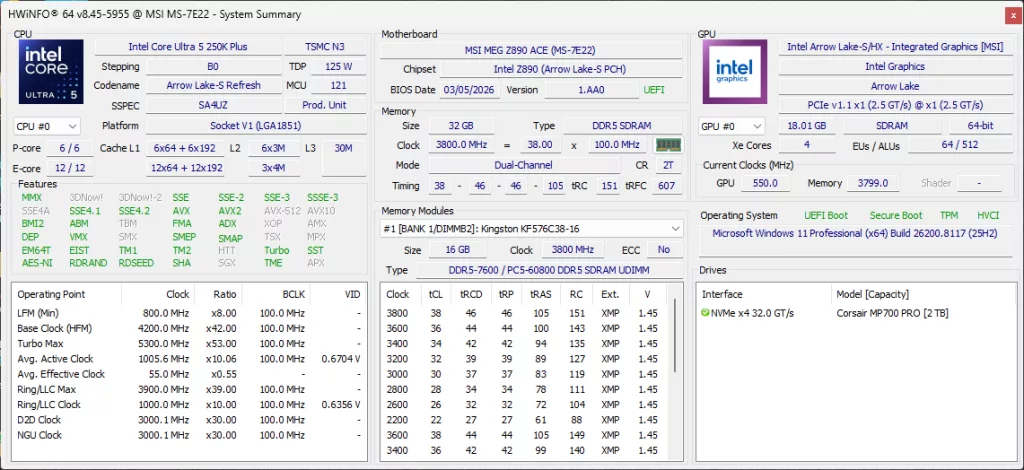
The Ring/LLC Clock gets an upgrade up to 3.9GHz compared to the 245K, which was 3.8GHz. The D2D Clock gets an upgrade up to 3GHz compared to the 245K which was at 2.1GHz. The NGU Clock gets an upgrade up to 3GHz compared to the 245K, which was at 2.6GHz.
Also, do not overlook the fact that the Intel Core Ultra 5 250K Plus has a larger shared 30MB of the L3 Smart Cache, compared to 24MB of shared L3 on the Intel Core Ultra 245K, this will make a difference. Otherwise, the TDP remains the same at 125W with Max Turbo Power at 159W.
Intel Application Optimization Tool
In addition to these upgrades, Intel is continuing on the software front to provide optimization in games and applications. By way of the Intel Application Optimization Tool, Intel has a new ability called the Intel Binary Optimization Tool. This sits atop APO Optimations, and can be toggled manually off or on per-game supported. Now, when we set it up, we did find that while APO Optimization is enabled by default, the Intel Binary Optimization Tool toggles were DISABLED by default. Therefore, you must manually enable them if you wish to experience the performance benefits in the game supports.
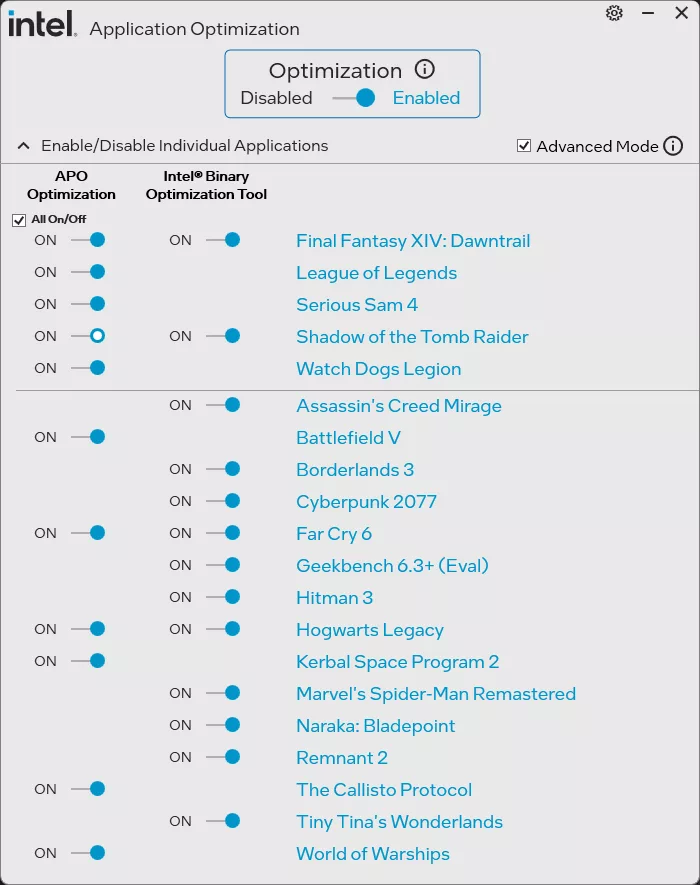
On our Intel Core Ultra 5 250K Plus, the list of supported games is much smaller than that of the Intel Core Ultra 7 270K Plus. Though out of all the games on the list, we are only using 2 games on the list there that support Intel Binary Optimization Tool: Cyberpunk 2077 and Hogwarts Legacy. In fact, there are no other games on this list that we are using today; therefore, other than the two games aforementioned, APO and Intel Binary Optimization Tool aren’t really doing a lot for our selection of 14 games. Overall, for the Intel Core Ultra 5 250K Plus, there are a total of 19 APO-supported games and 12 Binary Optimization Tool-supported games.
Intel Core Ultra 5 250K Plus Installation
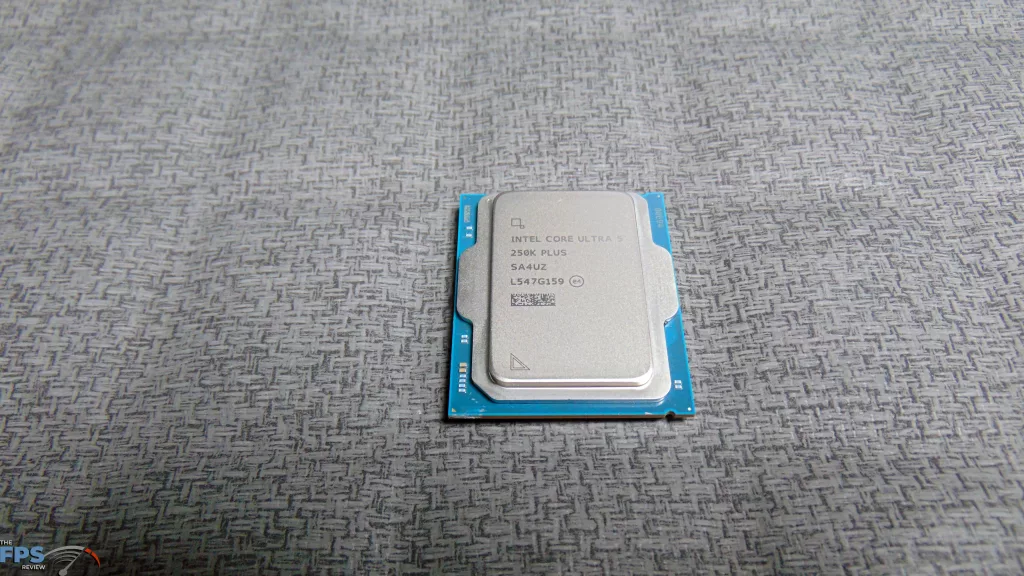
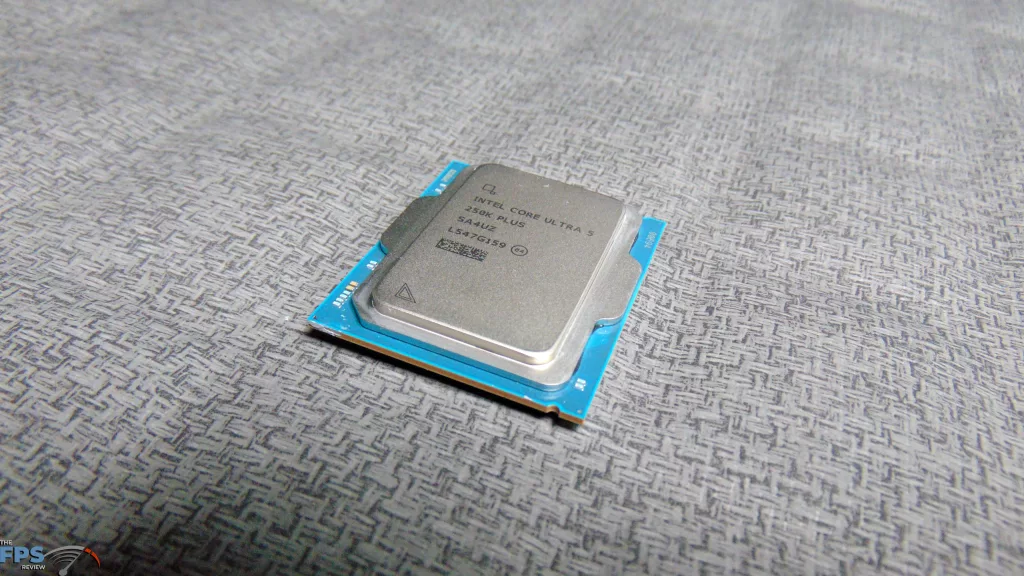
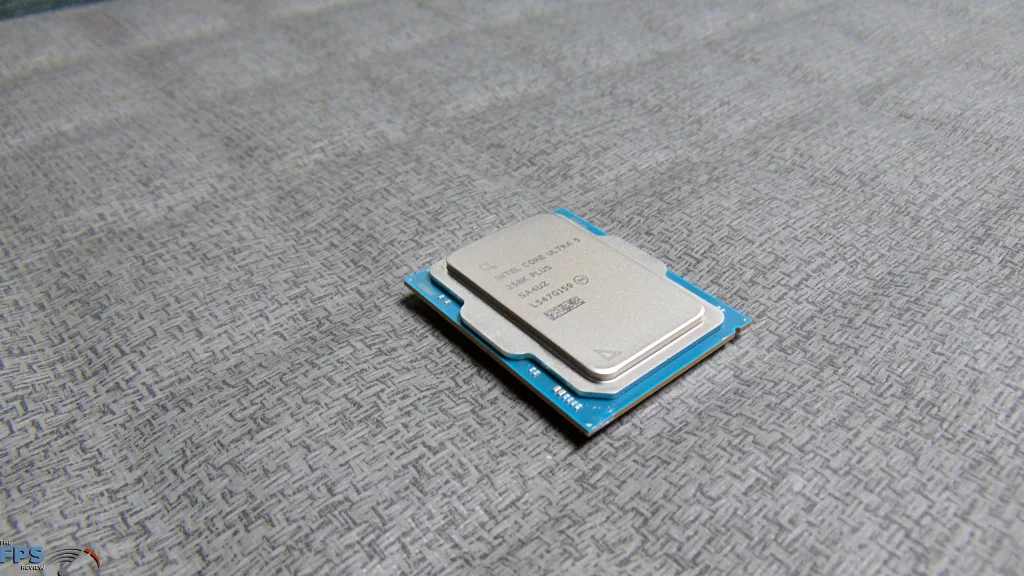
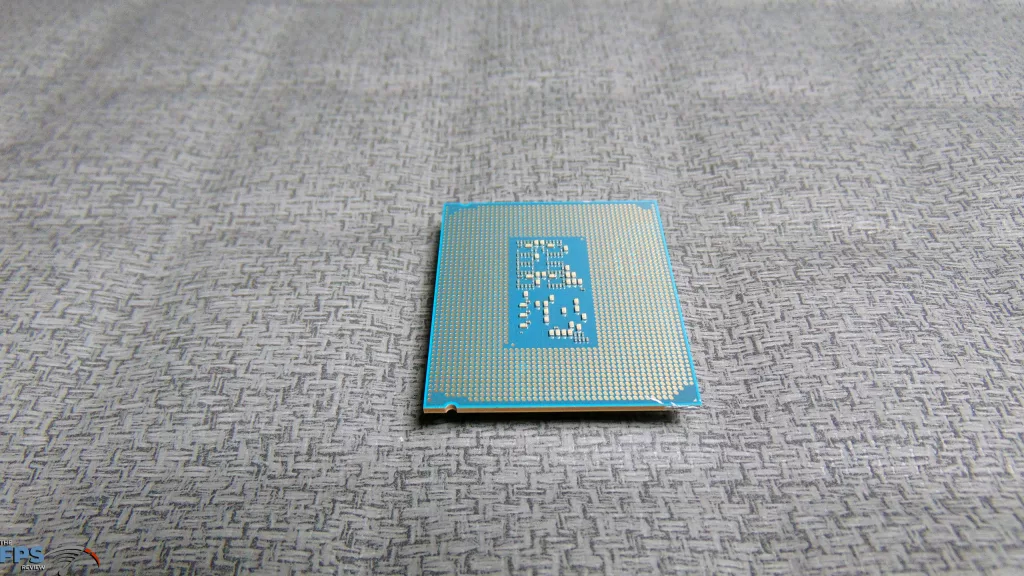
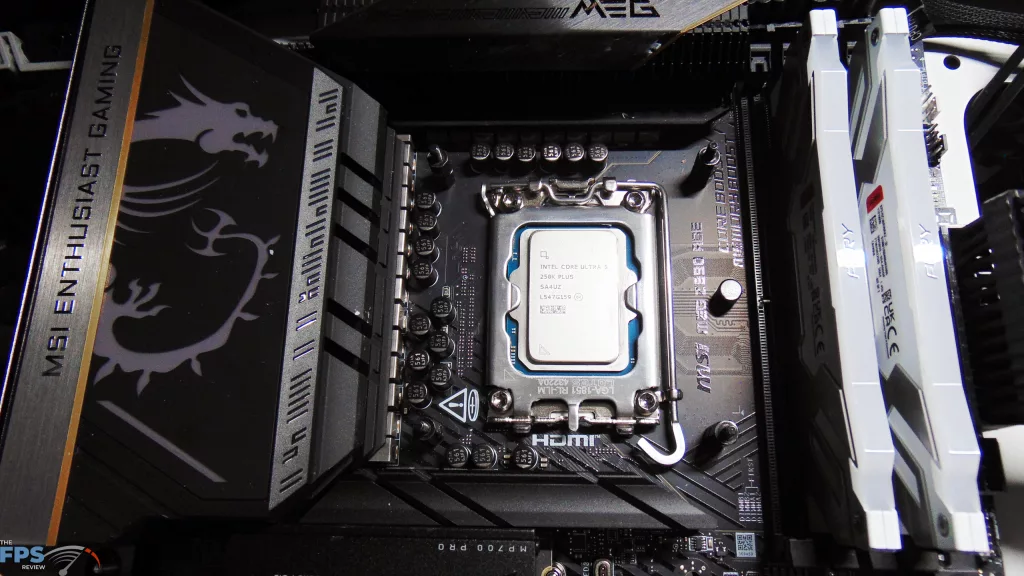
The Intel Core Ultra 5 250K Plus looks like any other “Arrow Lake” LGA1851 CPU, same size, shape, patterns, and pads. Installation went smoothly into our MSI MEG Z890 ACE motherboard.
Kingston Fury Renegade 7600MT/s
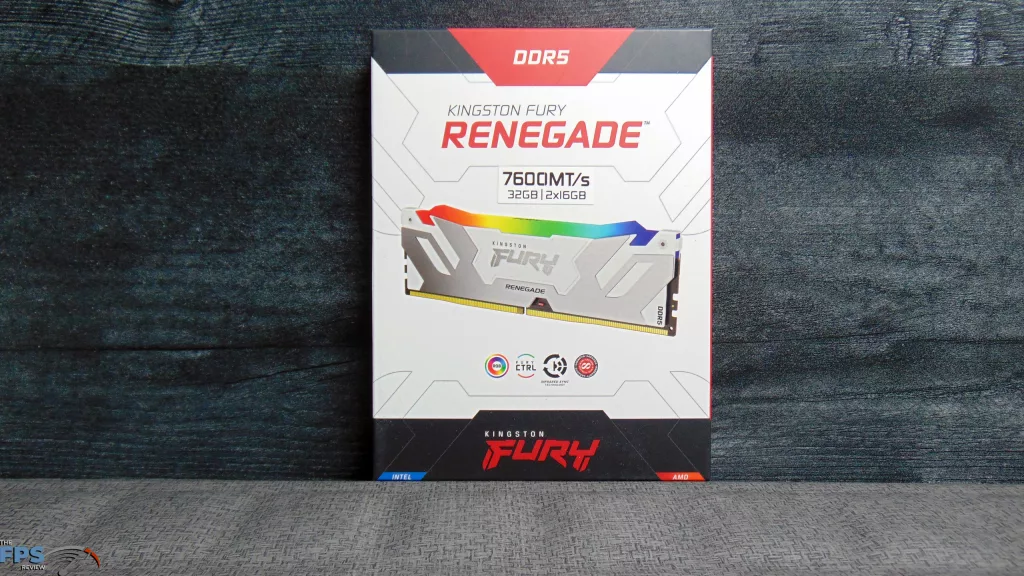
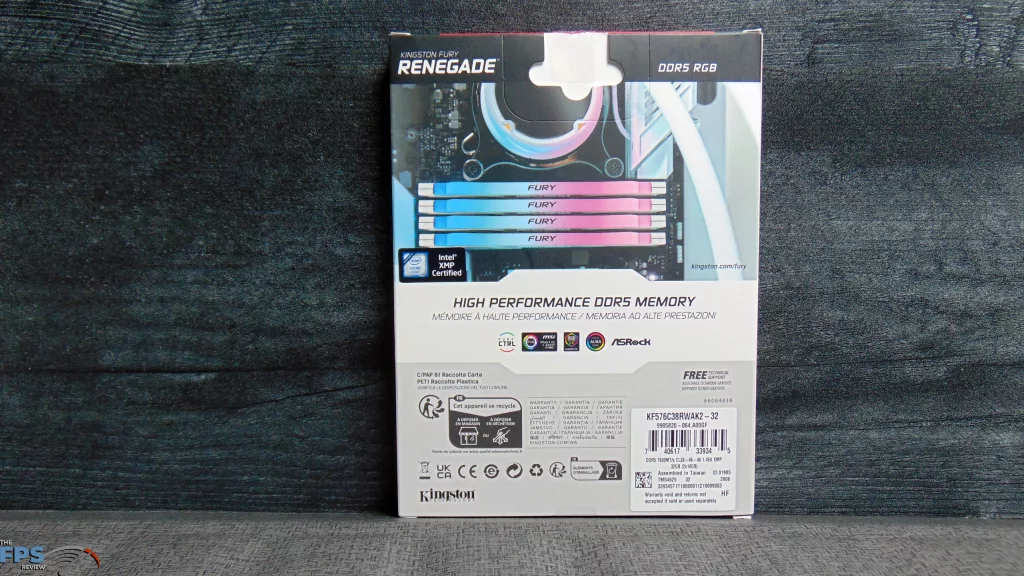
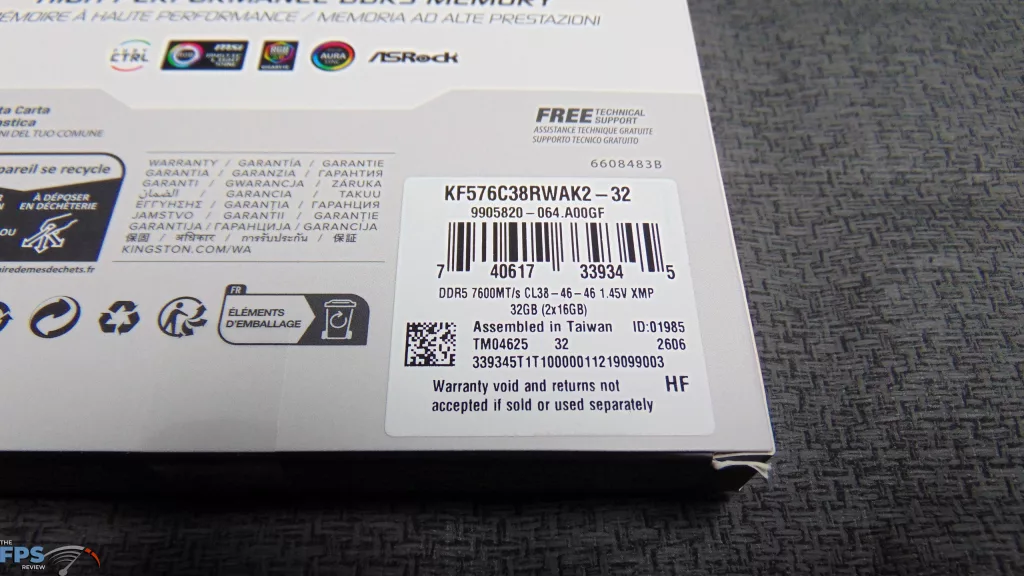
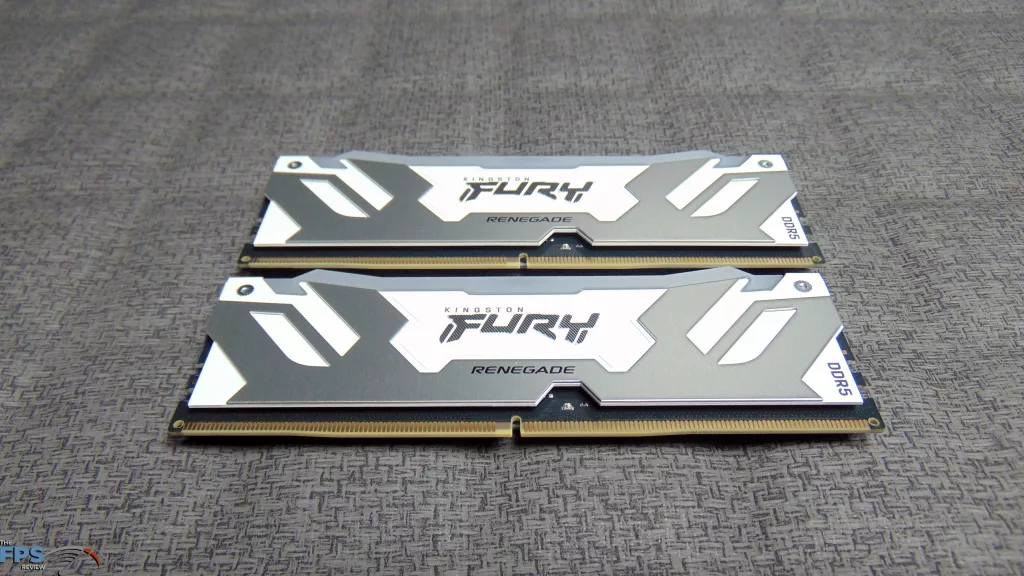
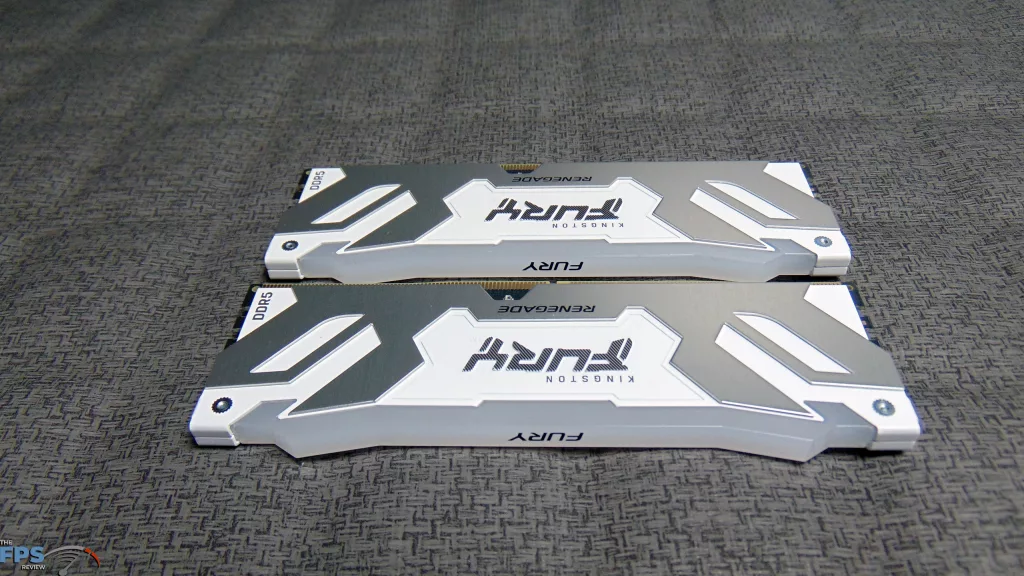
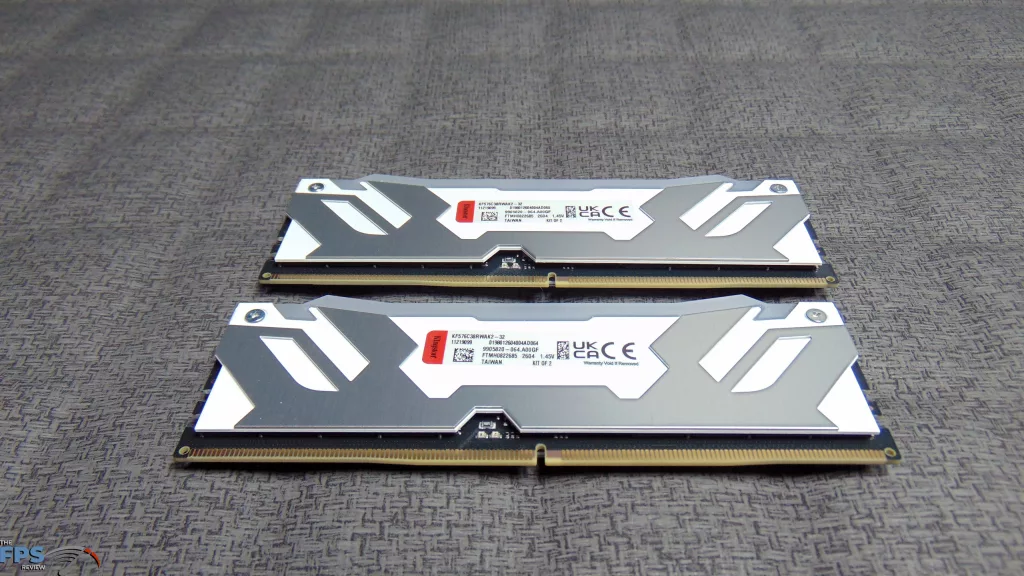
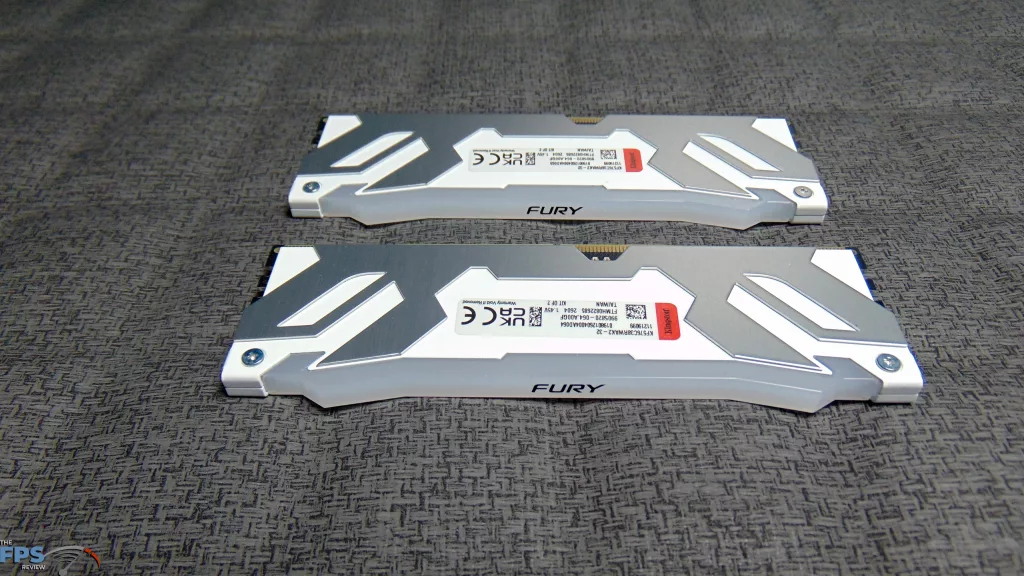
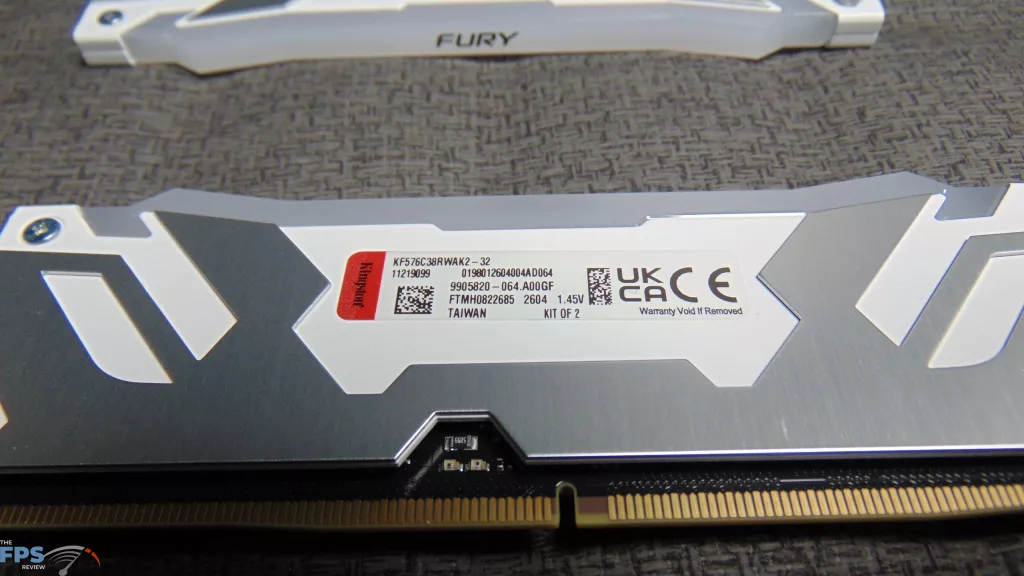
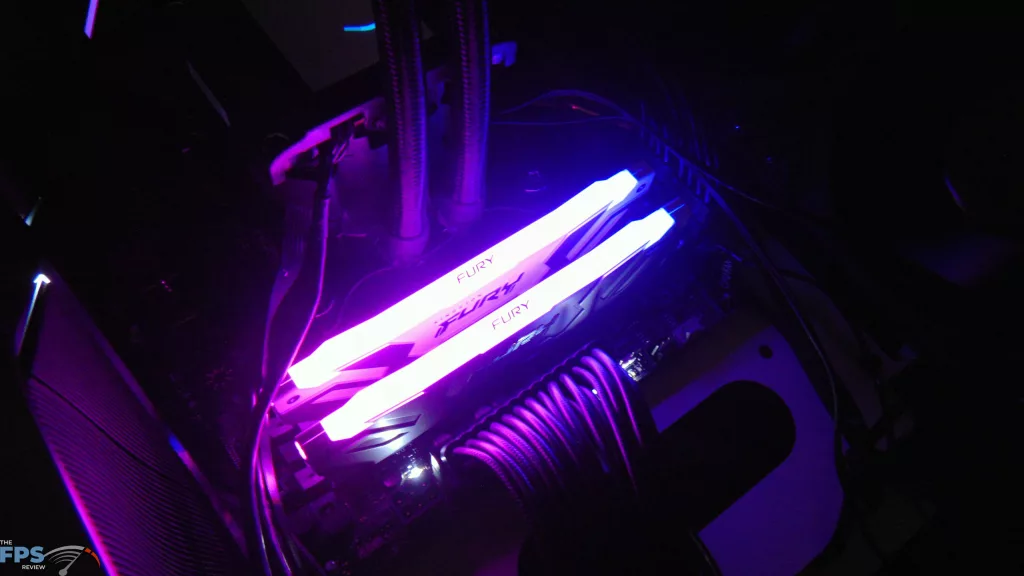
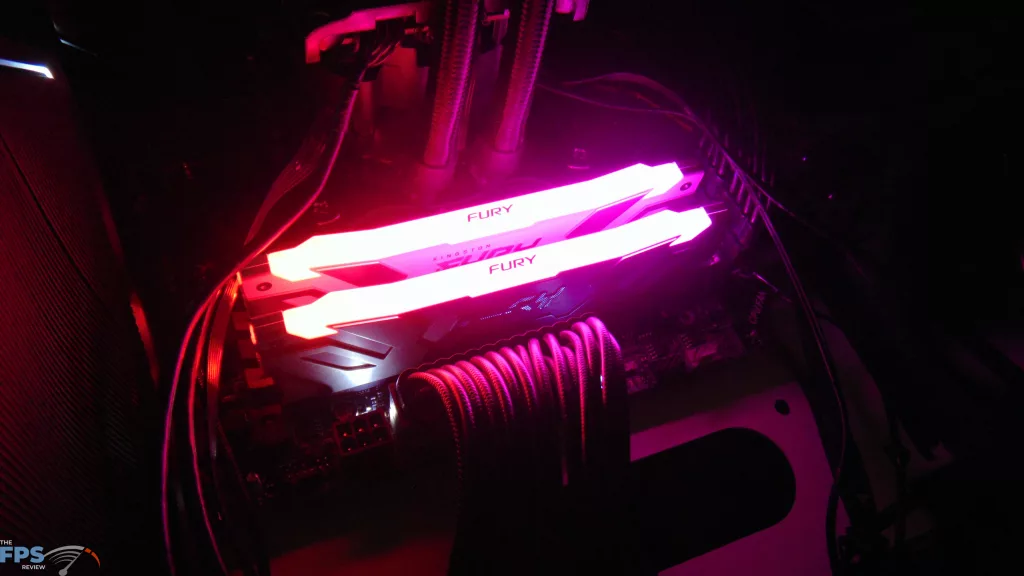
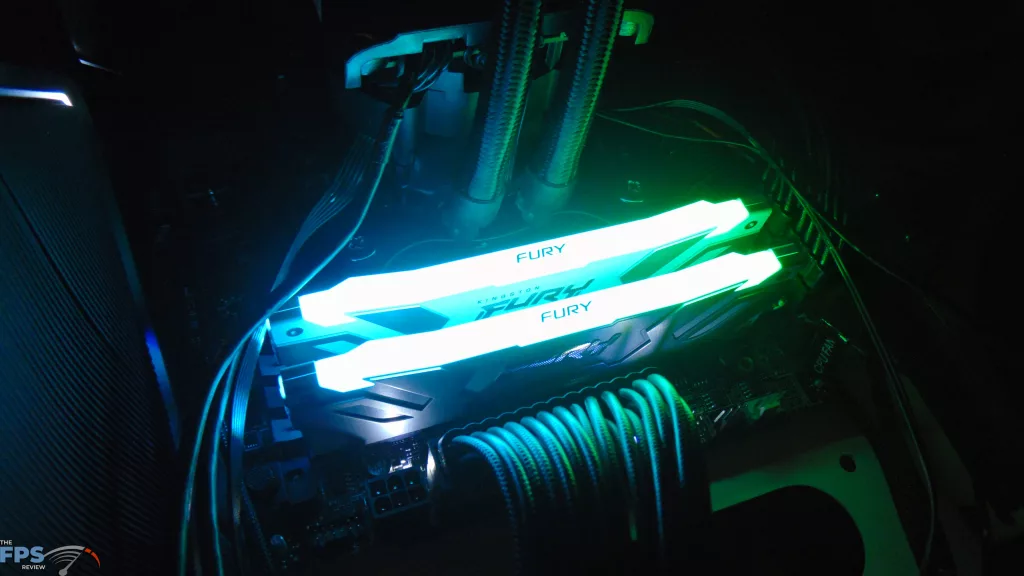
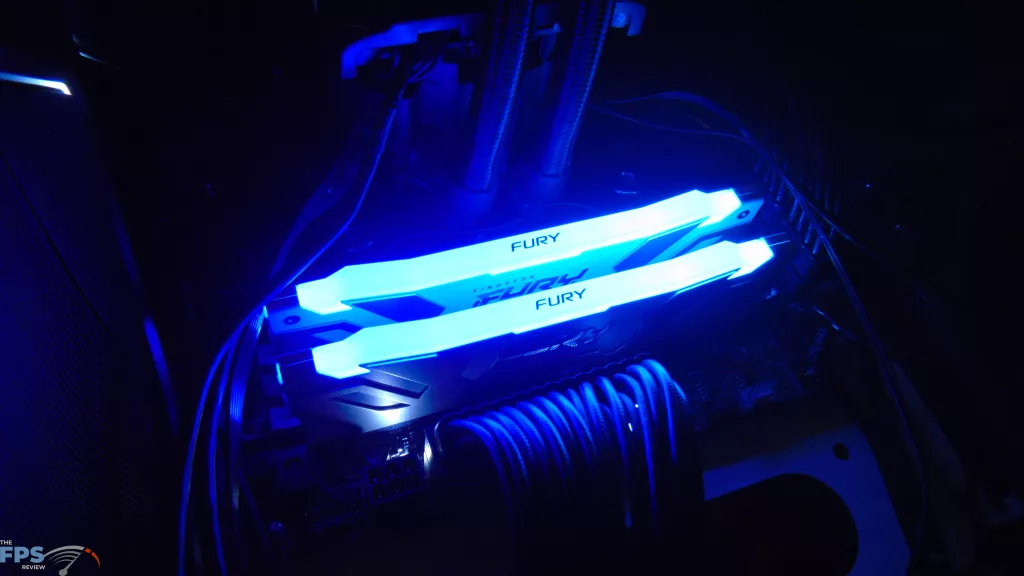
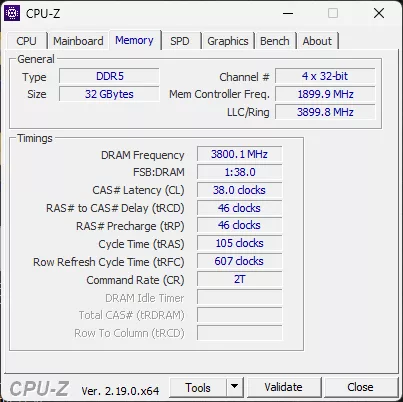
We want to thank MSI for sending over a high-speed Kingston Fury Renegade 7600MT/s (32GB|2x16GB) DDR5 RAM kit (KF576C38RWAK2-32) for testing, so we can push these new CPUs and test them thoroughly! These are rated at XMP 7600MT/s at CL38-46-46. We will be using this RAM kit on both CPUs in this review, so DDR5 speeds are the same at 7600MT/s between them, only the CPU changes.
Discussion
Join Discussion →No replies yet. Be the first to reply on the forum.