
Rendering Performance
Cinebench 2026
We are using the brand new Cinebench 2026 version for our testing, so take note of this newer version.
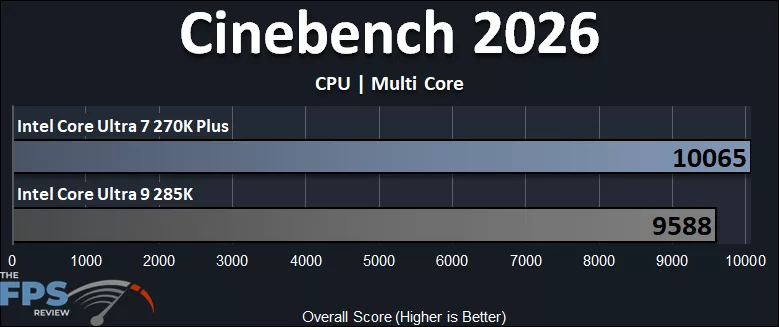
In Cinebench 2026, we saw the largest difference between the CPUs. Here, the Intel Core Ultra 7 270K Plus is 5% faster than the Intel Core Ultra 9 285K! Not slower, but faster! Remember, both CPUs have access to 24-threads, and the 285K can even boost higher technically. However, the advantages of the E-Core boost clocks on the Intel Core Ultra 7 270K Plus, plus the internal die-to-die frequency improvement, pay off in terms of performance in this highly threaded workload.
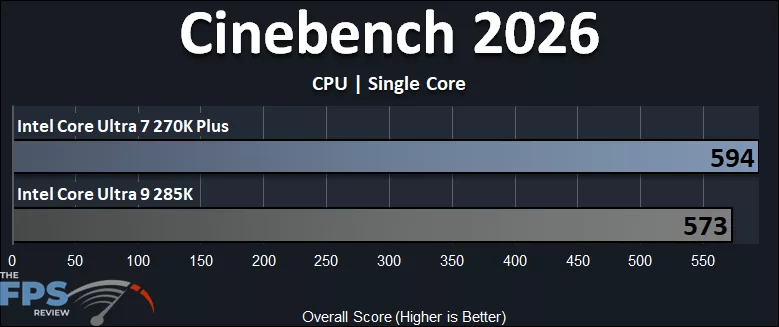
Even in Single-Core performance, in Cinebench 2026, the Intel Core Ultra 7 270K Plus is 4% faster than the Intel Core Ultra 9 285K, which is pretty nice. This is the opposite of what we experienced in 3DMark theoretical testing, so this rendering application seems to benefit from those internal frequency improvements more.
V-Ray 6 Benchmark
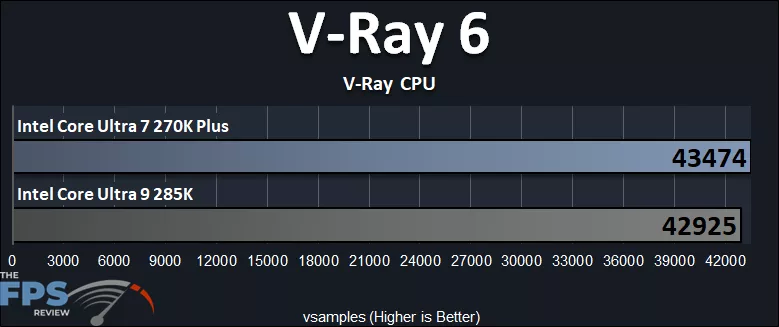
In the V-Ray 6 CPU benchmark, the Intel Core Ultra 7 270K Plus is 1% faster than the Intel Core Ultra 9 285K.
HandBrake
In HandBrake, we transcode a 10-minute video file to the Creator 2160p60 4K H.264 profile preset, rendering on the CPU only. The time in minutes is reported, and lower is better.
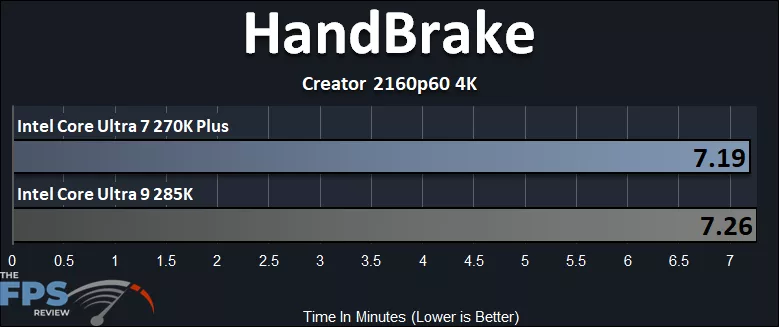
In HandBrake, the Intel Core Ultra 7 270K Plus transcodes this video at 1% less time, or faster, than the Intel Core Ultra 9 285K.
Discussion (1 reply)
Join Discussion →These cpus are an interesting play by Intel to try and claw back users. Good for them!!