
Rendering Performance
In all of our graphs to follow, the bars are arranged from the fastest MT/s speed down, so 8200MT/s is on top, with 4800MT/s on the bottom, and this arrangement is locked in independent of the performance shown; they are not arranged by result, but rather the DDR5 memory speed.
Cinebench 2026
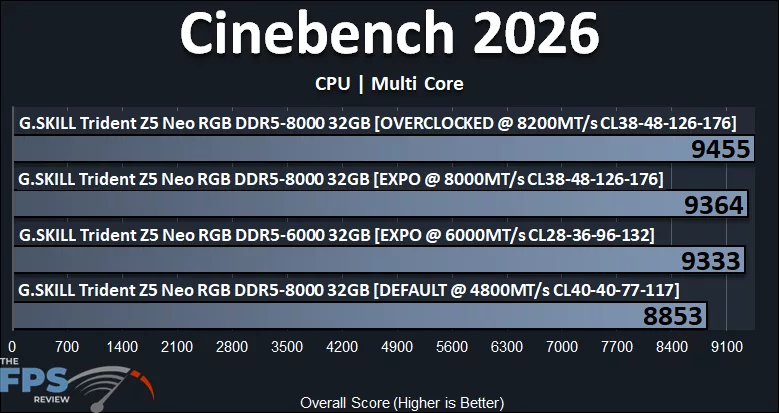
In Cinebench 2026 with the RAM at 4800MT/s, we are getting a score of 8853. It seems that any EXPO profile above that does wonders for Cinebench 2026 performance. Using the 6000MT/s CL28 memory, the performance increases by 5%. We don’t see much improvement beyond that, though 8200MT/s is showing the highest performance, and compared to 4800MT/s is a 7% improvement overall.
Blender Benchmark
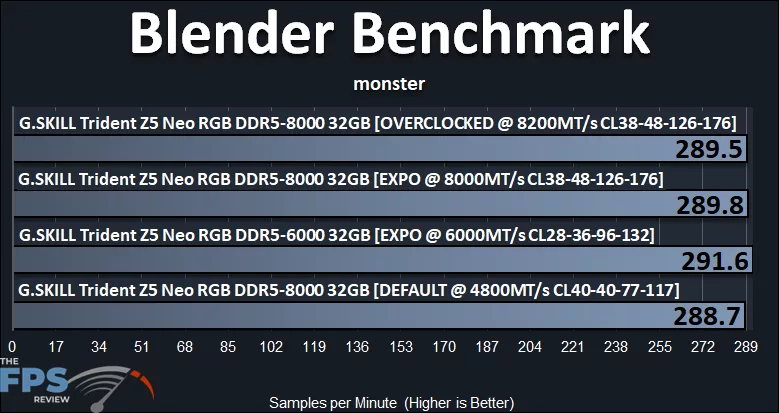
In Blender, we don’t see a lot of movement in the monster benchmark. Overall, the fastest RAM configuration is actually 6000MT/s at CL28, with the technically fastest performance at just 1% faster than 4800MT/s.
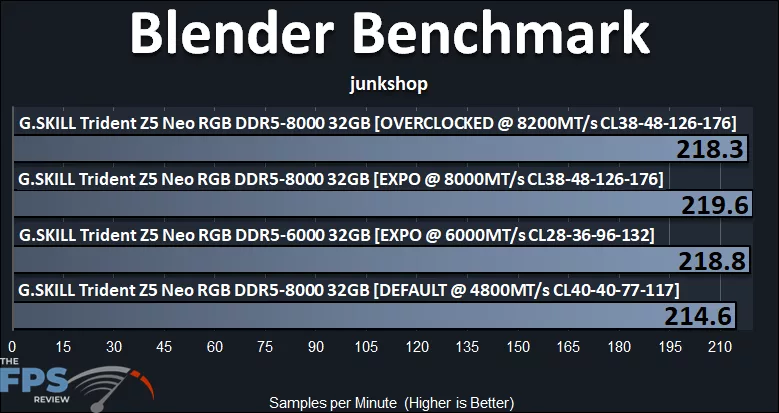
In the junkshop test, though, things are a bit different. There is a clear progression of performance improvement as you go up in frequency. The 6000MT/s CL28 memory is 2% faster than 4800MT/s, but 8000MT/s doesn’t really add a whole lot over that.
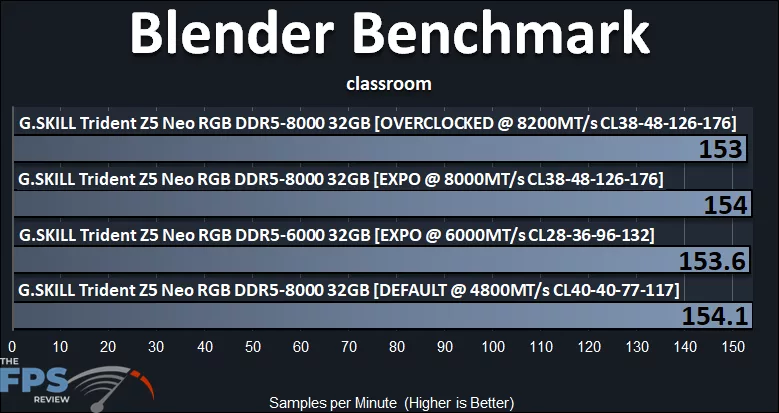
Much is the same with classroom; we don’t see huge differences in this application with RAM speeds.
HandBrake
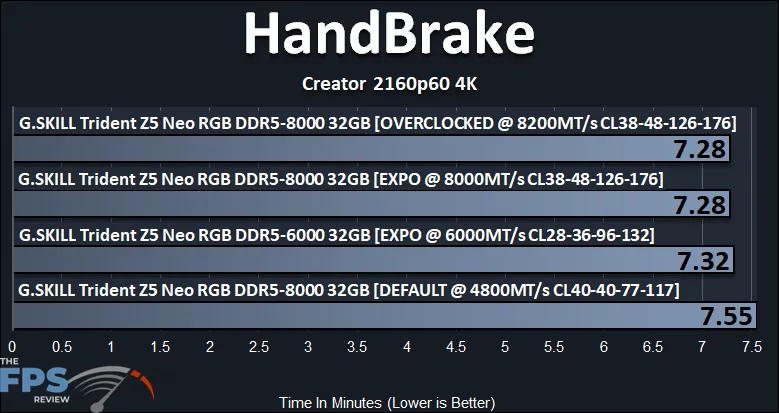
This is really interesting; when transcoding video on the CPU, there is a clear improvement with faster speeds of memory. With the memory at 4800MT/s, it took 7.55 minutes to render. However, even with 6000MT/s CL28, that was reduced down to 7.32 minutes. On long renders, this will make a bigger difference. We even saw a further improvement with DDR5 at 8000MT/s and 8200MT/s at 7.28 minutes to complete.
V-Ray 6 Benchmark
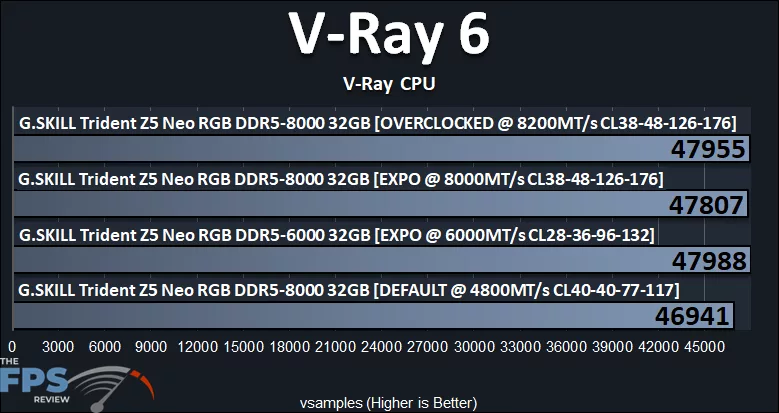
In V-Ray 6, there was a slight improvement of 2% with faster DDR5, but once we got to 6000MT/s CL28, there wasn’t much improvement beyond that.
7-Zip
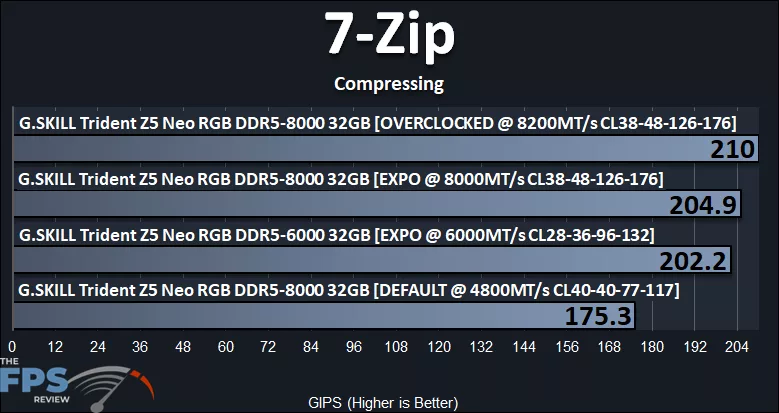
In 7-Zip, there were huge differences with compression based on DDR5 RAM frequency. At 4800MT/s, we were getting 175 GIPS, but increasing to 6000MT/s CL28 increased performance by 15% up to 202 GIPS. We saw further improvement still by using DDR5 8000MT/s with a further 1.3% improvement, but 8200MT/s pushed it even higher with another 2%.
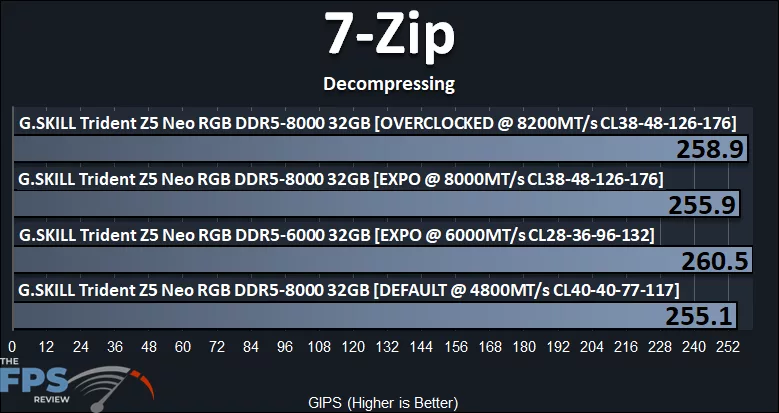
The same, however, is not true for decompression; we do see the 6000MT/s CL28 stand out here at 2% faster.
Discussion (6 replies)
Join Discussion →Only once did you call the ram DDR6 in the conclusion so well done!!
lol - fixed
It's less errors than an AI would make doing that sort of summary! ;)
.........and the memory cost more than the rest of the setup, less the gpu,.....well there's the nvme, too.
I don't see how anyone starting up a build can afford it.
No AI was used in my writing, or at all.
Yea that's the rub... like I have a 64 gig setup before all this went sideways... I built everything in my sig but the GPU (did that this year.) Feel like my system today would be closer to 10k than the 6 I used to build it out. (Thanks to the video card... well 5 because I sold the old video card.)