
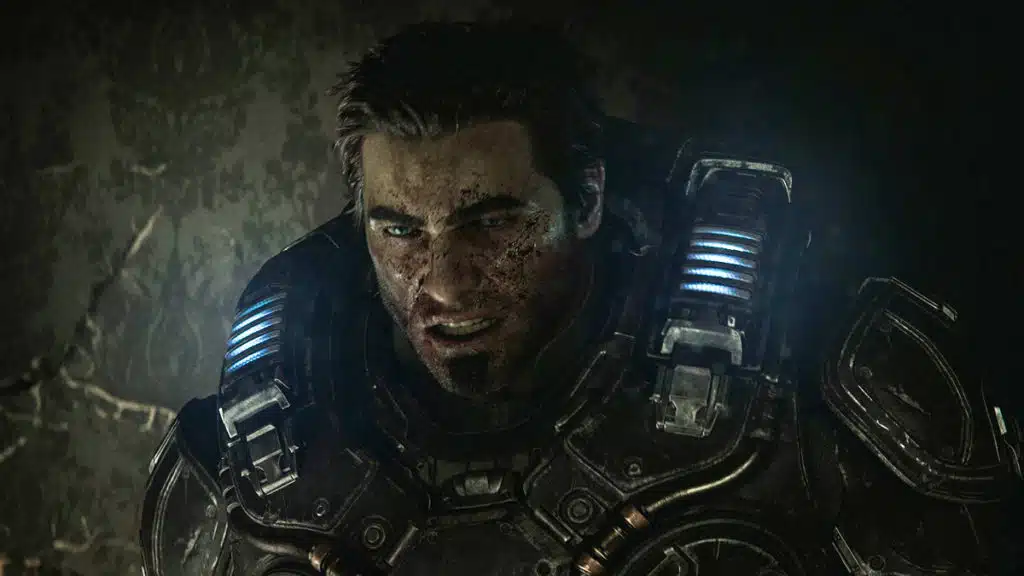
Gears of War: E-Day landed this week and did something we almost never see from Unreal Engine 5: it pinned CPUs and scaled cleanly with core count. That makes it as much a CPU story as a GPU one. Elsewhere, The Witcher 3 Remastered gave benchmarkers some very strange scaling to chew on, and the hardware side ranges from an esports-themed RTX 5070 and an efficient Gen5 SSD to a $400 AIO with a curved AMOLED screen. We also published our standalone Ryzen 7 7700X3D review this week.
Gears of War: E-Day PC Performance
Written reviews:
- Tom’s Hardware: https://www.tomshardware.com/pc-components/cpus/gears-of-war-e-day-is-an-uncharacteristically-cpu-heavy-unreal-engine-5-game-benchmarking-25-cpus-from-intel-and-amd-and-investigating-low-core-mode
- Tom’s Hardware: https://www.tomshardware.com/video-games/pc-gaming/gears-of-war-e-day-pc-graphics-performance-tested-43-gpus-take-us-back-to-the-start-of-an-iconic-saga
- TechPowerUp: https://www.techpowerup.com/review/gears-of-war-e-day-performance-benchmark/
- TechPowerUp: https://www.techpowerup.com/review/gears-of-war-e-day-steam-deck-xbox-ally-x-claw-8-ex-performance-benchmark/
- GameGPU: https://en.gamegpu.com/test-gpu/action-fps-tps/gears-of-war-e-day-benchmarki-videokart-i-protsessorov-na-pk
Video reviews:
- TechPowerUp: https://www.youtube.com/watch?v=7iRU-ns4yJo
Consensus summary: Tom’s Hardware’s 25-CPU sweep found CPU utilization sitting at 80 to 90 percent and real scaling with core count. The Ryzen 7 9800X3D ran 42 percent faster than a Ryzen 5 7600X at 1080p High, and the 12-core Ryzen 9 parts actually beat their 8-core siblings here, while the game’s Low Core Mode lowered performance on every chip tested above dual-core. On the GPU side, Tom’s tested 43 cards and found the RTX 50 series slightly ahead on averages but Radeon RX 9000 cards delivering noticeably better 1% lows. The game is also the first shipping title to use UE5’s MegaLights, and RTX Mega Geometry costs about 10 percent and is locked to 12GB-plus cards. TechPowerUp adds a 35-GPU sweep and separate handheld testing on Steam Deck, Xbox Ally X, and MSI Claw 8 EX.
FPS Review take: This is the rare new release where your CPU choice matters as much as your GPU, and X3D chips sit at the top of the chart, as expected. If you are weighing a budget X3D upgrade, our Ryzen 7 7700X3D vs Ryzen 7 9800X3D comparison is worth a look. We also covered RTX Mega Geometry 2.0 coming to Gears of War: E-Day last week.
ASUS T1 GeForce RTX 5070 OC Edition
Written reviews:
Consensus summary: TweakTown found that this limited-edition card, built with League of Legends champions T1, is its own design rather than a reskin of an existing ASUS RTX 50 board. Its factory overclock and cooling let it comfortably beat a reference RTX 5070. The verdict calls it a fantastic 1440p option bolstered by DLSS 4.5. The listed cons are today’s inflated GPU pricing, the Radeon RX 9070 XT as a compelling alternative, and the RTX 5070’s modest step over the RTX 4070 SUPER.
FPS Review take: This is a collector’s card first, and the build quality backs it up. Still, the value question is the same one we raised in last week’s Weekender about Radeon pricing. For where the RTX 5070 lands against AMD’s mid-range, see our Radeon RX 9070 GRE vs GeForce RTX 5070 performance review.
AMD Ryzen 7 7700X3D
Written reviews:
- The FPS Review: https://www.thefpsreview.com/2026/09/29/amd-ryzen-7-7700x3d-cpu-review/
- HotHardware: https://hothardware.com/reviews/amd-ryzen-7-7700x3d-gaming-cpu-review
Consensus summary: Our standalone review put the 7700X3D against its Zen 4 eight-core siblings and the Zen 5 Ryzen 7 9700X. Results:
- It averaged about 8 percent better gaming performance than the Ryzen 7 7700X, including 1% lows.
- It trailed the 7800X3D by only a few points.
- It beat the 9700X in 8 of 12 games, by 6 percent on average in those titles.
- It drew 43 percent less power than the 7700X.
FPS Review take: Our earlier coverage was head-to-head, first against the Ryzen 7 7800X3D and then against the Ryzen 7 9800X3D. This standalone review places the chip in the full Ryzen 7 stack instead. The $329 MSRP part already sells below list, and for a gaming-first AM5 build it is the value pick.
Budget 1440p QD-OLED Monitor Round-Up (11 Models)
Video reviews:
- Monitors Unboxed: https://www.youtube.com/watch?v=IEy5ulC_-7g
Consensus summary: Monitors Unboxed put 11 budget 27-inch 1440p QD-OLEDs through its full test suite. The field includes models such as the Acer Predator X27U X1, AOC Q27G40ZDF, ASUS ROG Strix XG27AQDMES, Alienware AW2725D and AW2726DM, Gigabyte MO27Q2 and GO27Q24A, and several MSI MAG 27-inch QD-OLEDs. Testing covers panel coating and subpixel layout, SDR and real-scene HDR brightness, HDR mode configurations, calibration accuracy, motion performance, ports, and design, closing with the channel’s best picks across the group.
FPS Review take: When a single outlet can line up 11 QD-OLEDs in the budget tier, the panel tech has well and truly gone mainstream. If you have been waiting for OLED to get cheap enough, this is the round-up to watch before buying.
TeamGroup NV10000 (PCIe 5.0 NVMe SSD)
Written reviews:
- Guru3D: https://www.guru3d.com/review/teamgroup-nv10000-m2-nvme-pcie-50-x4-ssd-review/
- The Overclocking Page: https://theoverclockingpage.com/2026/09/30/review-ssd-teamgroup-nv10000-1tb-um-eficiente-ssd-gen5/?lang=en
- Funky Kit: https://www.funkykit.com/reviews/storage/teamgroup-nv10000-1tb-m-2-pcie-5-0-ssd-review/
Consensus summary: Reviewers agree this DRAM-less Gen5 drive fixes the format’s two biggest complaints, heat and power draw. The Overclocking Page measured a 67°C peak with no heatsink against an 80°C throttle limit, 837 mW at idle, and efficiency well ahead of the other Gen5 drives it has tested. Guru3D’s 2TB review frames it as efficient Gen5 storage at 10 GB/s. Funky Kit’s earlier 1TB review notes the Phison E31T controller and TLC NAND, calls it one of the least expensive Gen5 drives per gigabyte, and gave it a Value award. The Overclocking Page’s one caveat is price, since similar Gen5 drives can be found for less during sales.
FPS Review take: A Gen5 drive that runs cool enough to skip the heatsink is a real win for small form factor builds and laptops. With storage prices where they are, the efficiency argument may matter more than peak speed; storage budgets are something readers clearly feel strongly about, as our story on an industry exec saying gamers compromise on RAM before SSD capacity showed.
MSI MEG CORELIQUID E15 360
Written reviews:
Video reviews:
- KitGuru Tech: https://www.youtube.com/watch?v=0GEeSjfxiyQ
Consensus summary: KitGuru found the E15 consistently near the top of its charts at full speed and noise-normalized to 40 dBA with PBO on. It is not quite chart-topping, and it gets loud with the fans maxed. The 6.67-inch curved AMOLED is the highlight: bright, detailed, and able to double as an extra Windows display. The pogo-pin fan connection ties you to the stock fans if you want a tidy install. The real problem is the nearly $400 price, which buys the screen and features rather than a thermal step up.
FPS Review take: Screen AIOs keep climbing in price faster than they climb the thermal charts. If the display is the point, compare it with the Lian Li Hydroshift LCD 360R we reviewed before spending flagship money.
Thermalright Phantom Spirit 120 SE Black / ARGB
Written reviews:
Consensus summary: Igor’s Lab tested both the Black and ARGB variants, looking at cooling, noise-limited performance, construction, and possible manufacturing tolerances. The two performed virtually identically: roughly 28 K over ambient at 100 W and around 69 K at 200 W, both at 40 dB(A). That is an unusually complete dual-tower package for about 30 to 40 euros.
FPS Review take: Same week, opposite ends of the cooling market. The Phantom Spirit costs a fraction of the E15 above and handles the X3D chips in this Weekender without breaking a sweat. It is still the default answer for anyone who does not need a screen on their pump.
SilverStone FLP03
Written reviews:
- TechPowerUp: https://www.techpowerup.com/review/silverstone-flp03/
- Hardware Asylum: https://www.hardwareasylum.com/reviews/cases/sst_flp03
Consensus summary: TechPowerUp’s fresh review adds full thermal, gaming stress, and noise testing to the picture. Hardware Asylum’s earlier review laid out the basics:
- Support is limited to micro-ATX and Mini-ITX boards.
- It ships with a 180mm intake fan and a 120mm exhaust fan.
- It takes a 360mm radiator up top.
- Its retro dashboard, with factory buttons and fan control, can be removed or moved to make room for front cooling.
FPS Review take: SilverStone has now turned an ’80s throwback that started as an April Fools’ joke into a three-case line, following the FLP01 and the FLP02 retro tower. Beige has never looked this capable.
Pulsar Feinmann F01 Noctua Edition
Written reviews:
Consensus summary: TweakTown found the integrated Noctua fan useful for keeping your palm and fingers cool. It also praised the premium carbon body, the XS-2 sensor with 8K polling, and Pulsar’s web-based Bibimbap software. On the downside, the perforated shell is not entirely comfortable, 73 grams is heavy for a competitive mouse, battery life suffers with the fan maxed at 8K polling, and $180 is a lot. It scored 79 percent.
FPS Review take: A mouse with a fan sounds like a punchline, but it has a real job to do, and it carries the brown and beige Noctua look. For a lighter, more conventional wireless option, see our PowerColor ALPHYN AM10 review.
The Witcher 3 Remastered PC Performance
Written reviews:
- TechSpot: https://www.techspot.com/review/3180-the-witcher-3-remastered-benchmarks/
- DSOGaming: https://www.dsogaming.com/pc-performance-analyses/the-witcher-3-remastered-ray-tracing-path-tracing-benchmarks/
Video reviews:
- Hardware Unboxed: https://www.youtube.com/watch?v=hplfPjlnGMc
Consensus summary: Both outlets describe unusual scaling and a mixed bag on path tracing, which often looks worse than standard ray tracing. TechSpot finds at Medium, the remaster both looks better and runs roughly 45 to 58 percent faster than the original in its comparison. The public Radeon driver was unusable, and AMD cards still hit an apparent 148 to 149 fps ceiling at lower resolutions. High-end GeForce cards hit a path-traced wall around 60 fps at 1080p and 1440p, and 8GB cards collapse with RT enabled. DSOGaming noted HairWorks is broken unless Path Traced Hair is also on. An RTX 5080 can manage 4K path tracing at a 46 fps average with DLSS 4.5 Performance, or 77 to 84 fps with frame generation, which makes CDPR’s official 4K requirements look overly strict.
FPS Review take: It is a free remaster of an 11-year-old game, and it still found a way to embarrass 8GB cards. Make sure you are on the GeForce 617.14 driver we covered, and see our launch coverage for what changed.
noblechairs HERO Black
Written reviews:
- Hardware Asylum: https://www.hardwareasylum.com/reviews/gaming/noblechairs_hero
Video reviews:
KitGuru Tech: https://www.youtube.com/watch?v=Phm9p8ZEkcs
Consensus summary: Hardware Asylum came away very impressed with the build quality: excellent stitching, well-finished hidden hardware, and a 330.7 lb weight rating on the faux leather model tested. The chair suits taller users of about 5’10” and up, and people of higher-than-average weight. The seat base is very flat and very firm, with little lateral support, and adjusting armrest width means breaking out an Allen key. KitGuru Tech’s older video review of the HERO is included for context.
FPS Review take: Chairs are the upgrade most of us put off the longest. The HERO’s firm, flat seat is a love-it-or-hate-it trait shared by plenty of racing-style chairs, including the Secretlab TITAN we reviewed (and might have bought, before it was retired for newer models).
Discussion
Join Discussion →No replies yet. Be the first to reply on the forum.