
Introduction
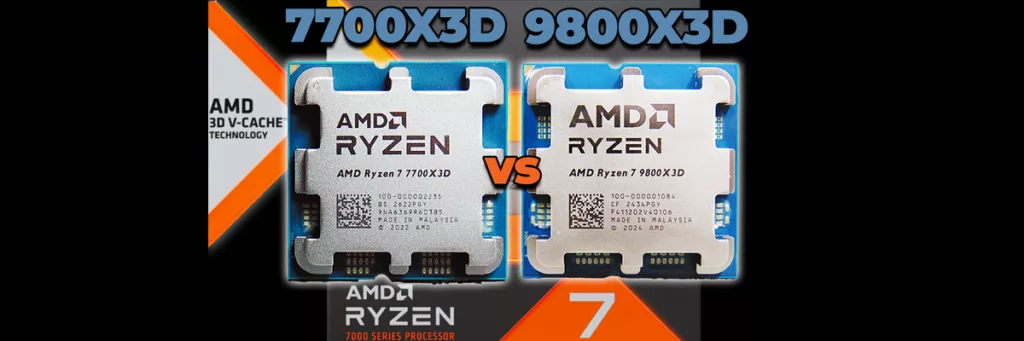
Wouldn’t it be interesting to see what kind of an upgrade the Ryzen 7 9800X3D would be over a Ryzen 7 7700X3D in 2026? We thought so too. With the recent launch of the Ryzen 7 7700X3D in July of 2026, we wanted to know what the gaming performance difference is between this Zen 4 CPU and the Zen 5 Ryzen 9800X3D. In other words, what kind of difference is there really between a Zen 4 and Zen 5 X3D CPU, comparing AMD’s value AM5 X3D CPU with AMD’s most popular AM5 Zen 5 X3D CPU for gaming?
The AMD Ryzen 7 7700X3D was announced at Computex 2026 and then launched in mid-July of 2026. That’s right, AMD has released a new AM5 Zen 4 CPU in 2026, and it is the AMD Ryzen 7 7700X3D, based on AMD’s 3D V-Cache technology. It is based on an 8-core/16-thread configuration, Zen 4 architecture, and 96MB of L3 Cache. It sits just below the AMD Ryzen 7 7800X3D, with lower clock speeds, and competes at an MSRP of $329.
The AMD Ryzen 7 9800X3D was launched back in November of 2024 at an MSRP of $479. The Ryzen 7 9800X3D is also an AM5 8-core/16-thread CPU with 96MB of L3 cache, but is based on the newer Zen 5 architecture of the Ryzen 9000 series CPUs. The Ryzen 7 9800X3D also got an upgrade in terms of how the 3D V-Cache technology is packaged, relying on a new 2nd Gen 3D V-Cache configuration that places the cache underneath the single-CCD, instead of on top. For many reasons, this helps thermals and, in turn, helps the Ryzen 7 9800X3D maintain higher clock speeds, fixing one of the big issues with the first-generation 3D V-Cache.
We have purchased our own retail Ryzen 7 7700X3D so that we can test its gaming performance and see how it compares to other CPUs. In our performance comparison review today, we are going to take the AMD Ryzen 7700X3D and compare it directly to the Ryzen 7 9800X3D to see the actual game performance differences.
This review is primarily focused on game performance, with 12 games tested at 1080p on a GeForce RTX 5090 FE so that we can isolate CPU performance differences and not be bound by GPU performance. All of the games are being tested with real-world, in-game manual benchmark runs, no automatic benchmark modes; we are using actual gameplay. All performance has been tested new and fresh for this review; everything is tested at the time of review, with current BIOS, drivers, game versions, and software.
Though this is a primarily focused gaming performance review, we are also going to include some system benchmarks as well that test multi-core and single-core performance. In this way, you can also gauge how different the CPUs are when it comes to system or rendering usage outside of games. We are also going to look at the CPU Wattage at maximum multi-threaded performance, as well as while gaming. We will also look at temperature as well. Naturally, these are X3D CPUs, though, and meant for the best gaming experience. As stated, we have more comparisons coming, so stay tuned to our site. Don’t miss our AMD Ryzen 7 7700X3D vs Ryzen 7 7800X3D CPU Review as well.



AMD Ryzen 7 7700X3D
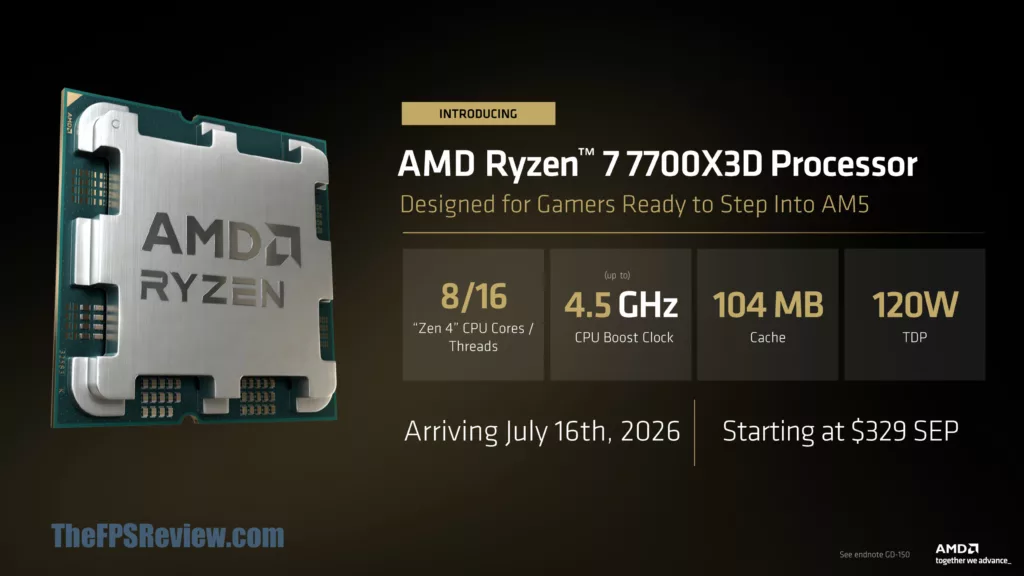
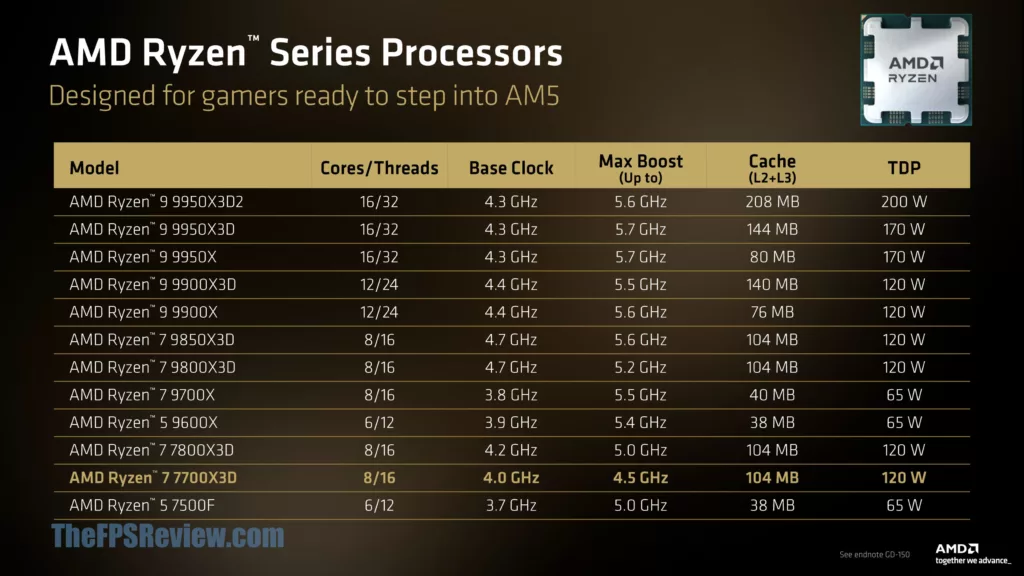
At its heart, the AMD Ryzen 7 7700X3D is based on the Zen 4 architecture, which powers the AMD Ryzen 7000 series of CPUs. The Zen 4 architecture was launched in September 2022 with the AMD Ryzen 9 7950X at the high end. It wasn’t until February of 2023 that AMD debuted its first AM5 X3D CPU, the AMD Ryzen 9 7950X3D. It was then followed up in April with the launch of the AMD Ryzen 7 7800X3D, the 8-core/16-thread variant, which launched at an MSRP of $449. The Ryzen 7 7800X3D has a single CCD, and this is where the extra L3 3D V-Cache lies.
The AMD Ryzen 7 7700X3D sits just below the Ryzen 7 7800X3D and differs from it only in clock speed. The primary difference is that the AMD Ryzen 7 7700X3D has a base frequency of 4GHz and a Turbo Clock Boost frequency of up to 4.5GHz. By comparison, the AMD Ryzen 7 7800X3D has a base frequency of 4.2GHz and a Turbo Clock Boost frequency of up to 5GHz. The Ryzen 7 7700X3D multiplier is 40x, while the Ryzen 7 7800X3D multiplier is 42x. The TDP and PPT are exactly the same for both CPUs: 120W TDP and 162W PPT.
| Ryzen 7 9800X3D | Ryzen 7 7800X3D | Ryzen 7 7700X3D | |
|---|---|---|---|
| Architecture | Zen 5 | Zen 4 | Zen 4 |
| Cores/Threads | 8/16 | 8/16 | 8/16 |
| L3 Cache | 96MB (2nd Gen) | 96MB | 96MB |
| Total Cache | 104MB | 104MB | 104MB |
| Base Clock | 4.7GHz | 4.2GHz | 4.0GHz |
| Turbo Clock | 5.2GHz | 5.0GHz | 4.5GHz |
| TDP | 120W | 120W | 120W |
| MSRP | $479 | $449 | $329 |
The AMD Ryzen 7 9800X3D is an 8-core/16-thread CPU on the AM5 platform based on the newer Zen 5 architecture of the AMD Ryzen 9000 series CPUs. You can read about the Zen 5 architecture here and view our CPU reviews here. Similar to the previous iterations, it contains an additional 64MB of 3D V-Cache, providing a total shared 96MB of L3 cache. The base clock on the Ryzen 7 9800X3D is higher at 4.7GHz compared to the Ryzen 7 7800X3D at 4.2GHz. Also, the boost clocks are now set at 5.2GHz on the Ryzen 7 9800X3D, whereas they were just 5GHz on the Ryzen 7 7800X3D. The TDP remains the same at 120W with a PPT of 162W, but because the frequency will be running higher, the Ryzen 7 9800X3D will actually run closer to its PPT than the Ryzen 7 7800X3D was able to.
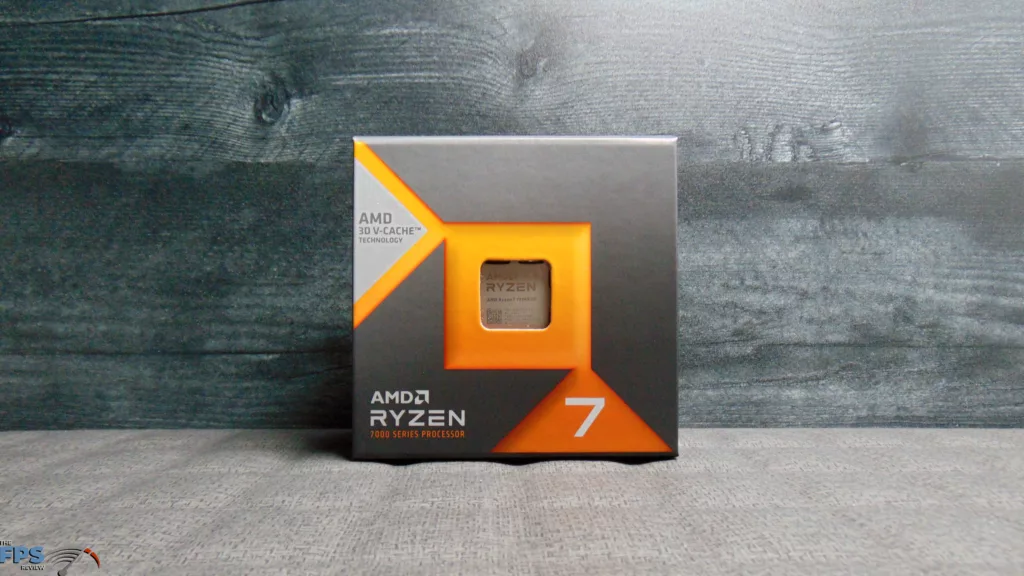
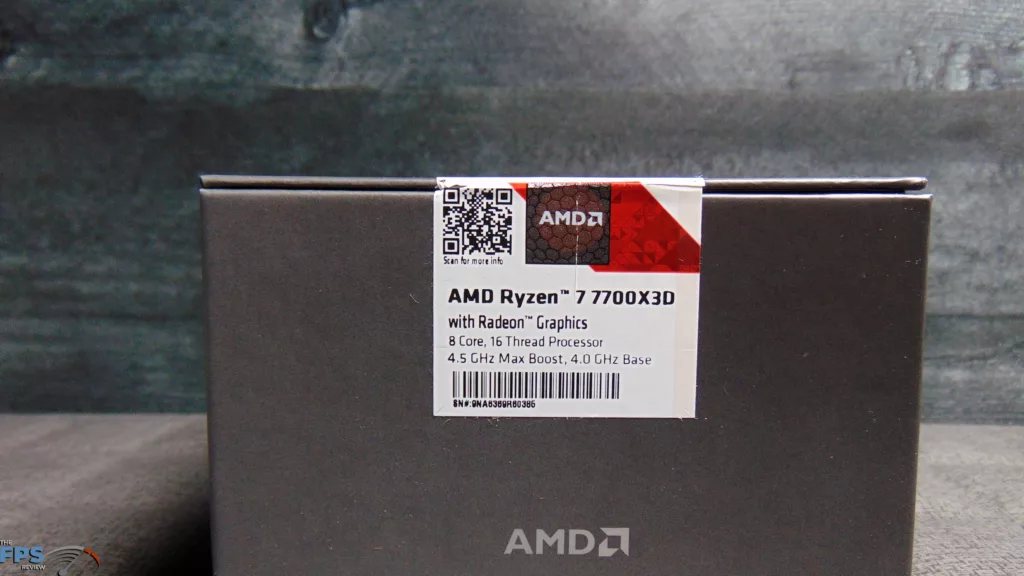
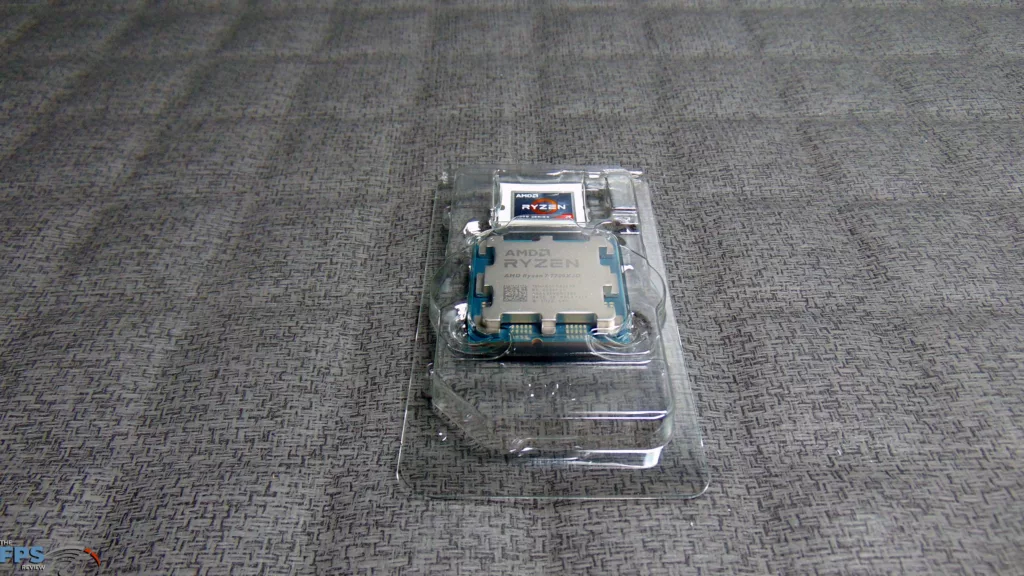
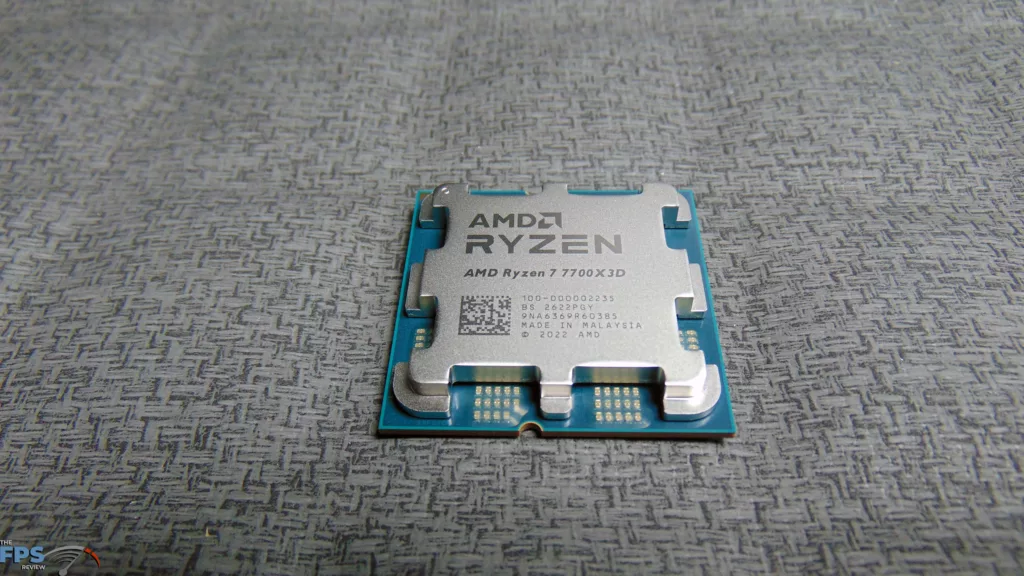
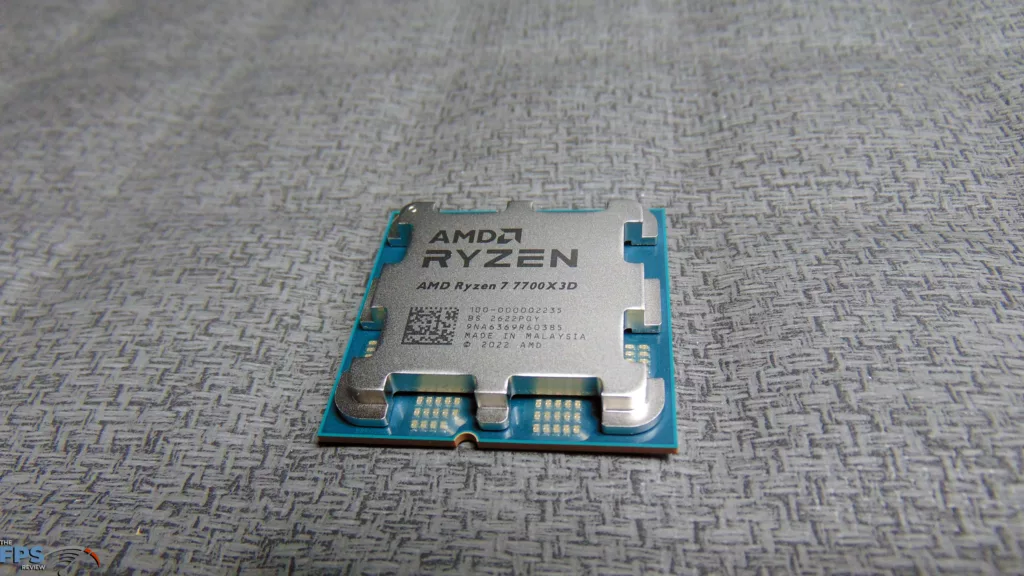
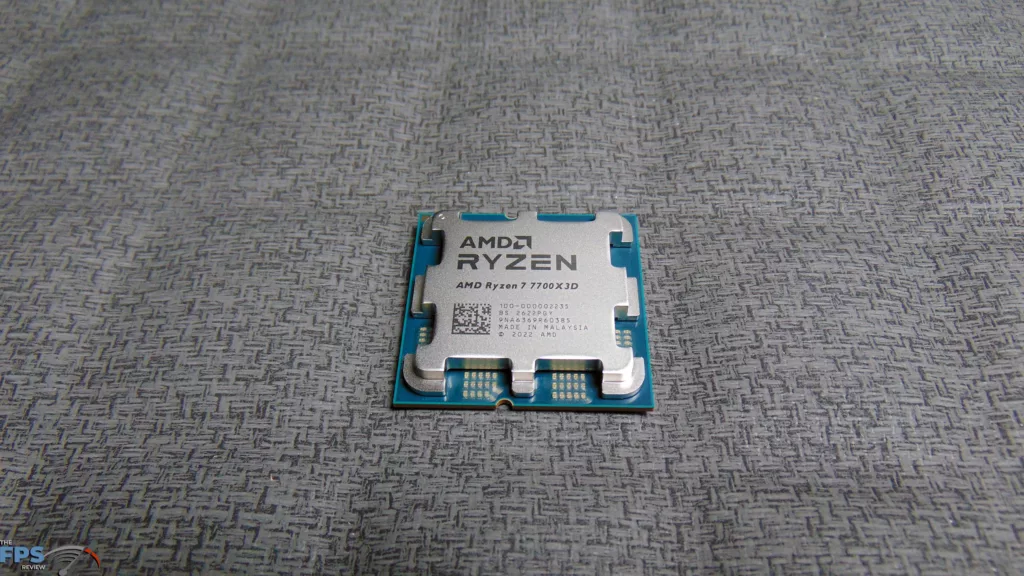
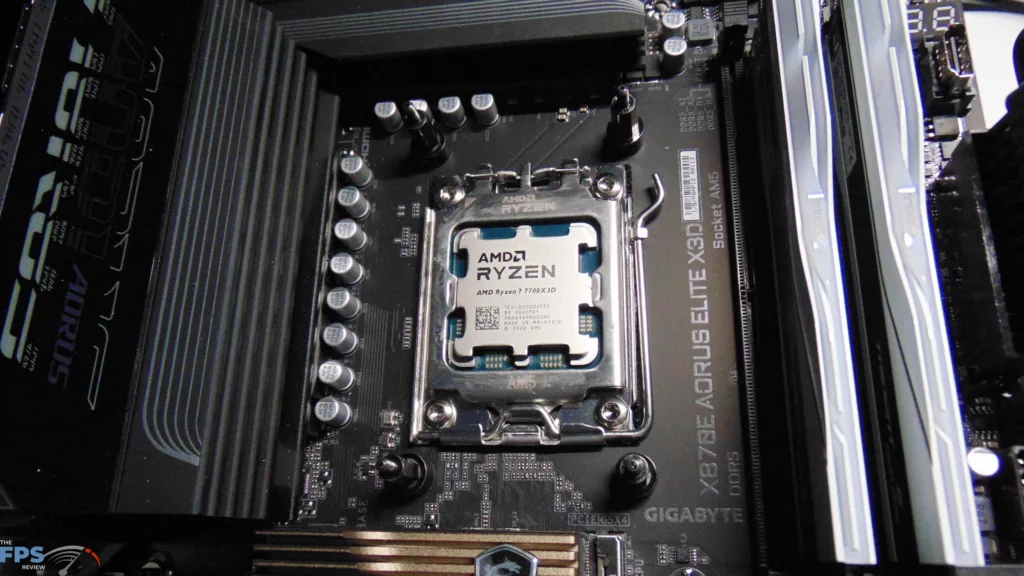
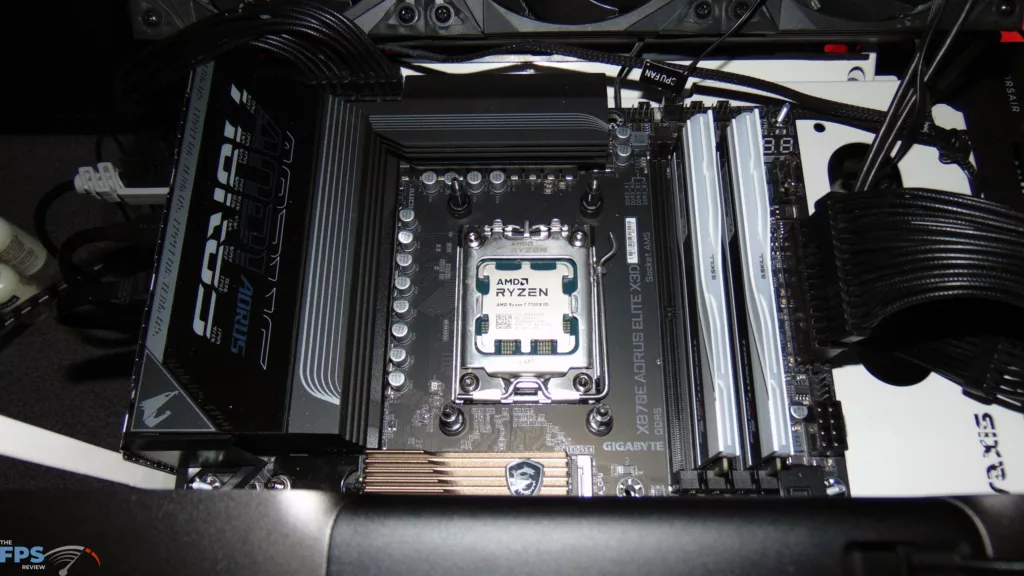
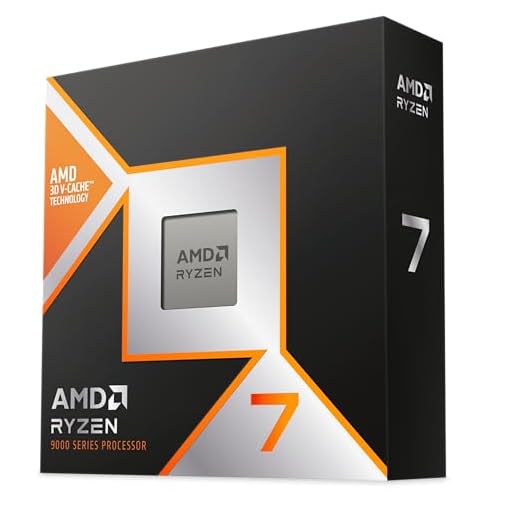
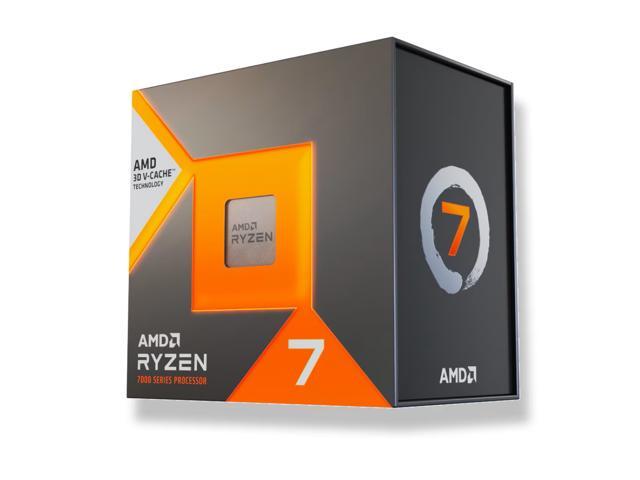
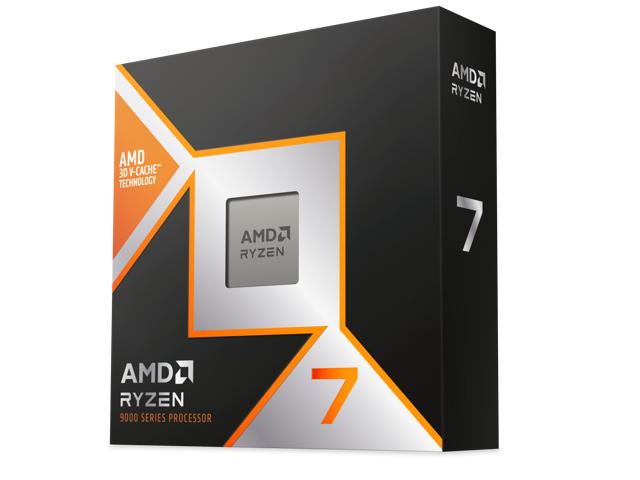
The AMD Ryzen 7 7700X3D comes in a large box, well protected, but no cooling fan is included. Like every other AM5 CPU, it is shaped and looks exactly the same and installed perfectly into our AM5 motherboard with no issues.
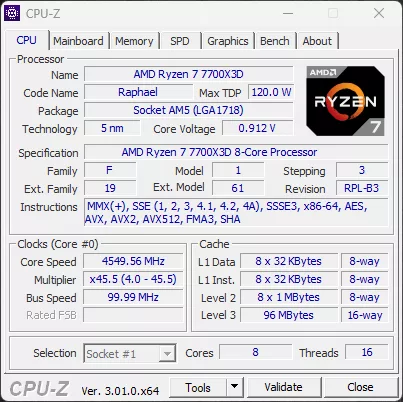
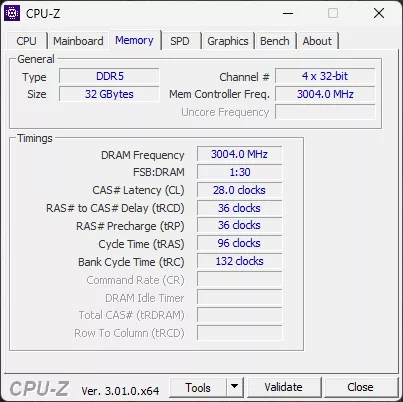
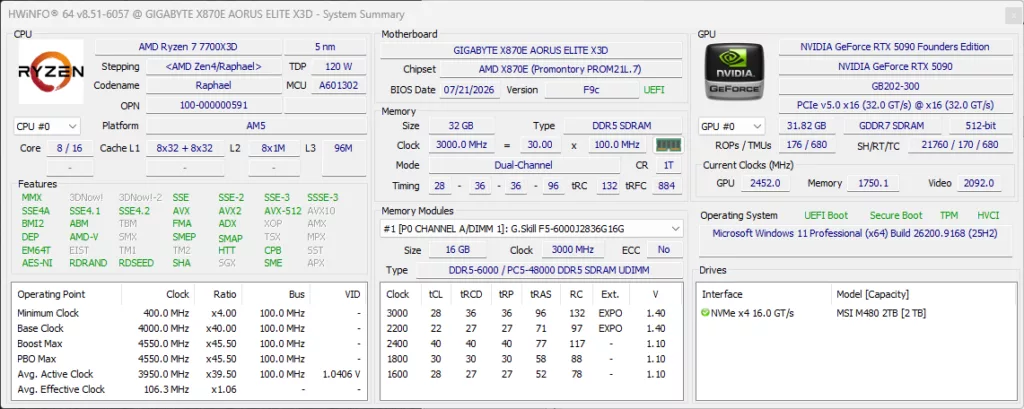
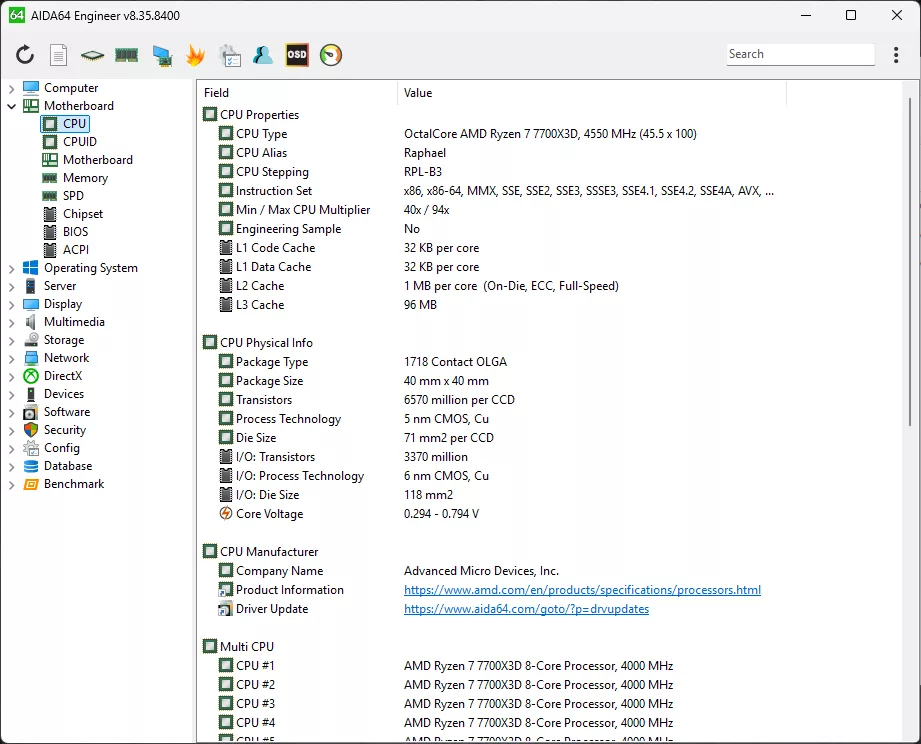
We can see that the AMD Ryzen 7700X3D is based on the Raphael (Zen 4) architecture. The MAX TDP is 120W, and all cores read correctly. We have our DDR5 set to 6000MT/s. The clock speeds are reading up to 4.5GHz for the Boost Max and PBO Max, which is the default on the motherboard.
Discussion (3 replies)
Join Discussion →Seems a big uograde.. but all the other costs make me think.. if i was on the previous Gen I would stick there. Make it a 2 gen leap to feel worth while.
I'm still on Zen3/DDR4 but right now sure as heck isn't the time to jump from that platform.
It is curious this Zen4 is being released now, and I'm actually surprised it's as competitive as it is (with respect to price/performance and all)
Could be yields that couldn't cut it at the 7800X3D spec. But they must have a lot of them to release it as a new SKU. I dunno.
Its a decent config for a budget gamer, or wanting a small, not power hungry, cool running build.