
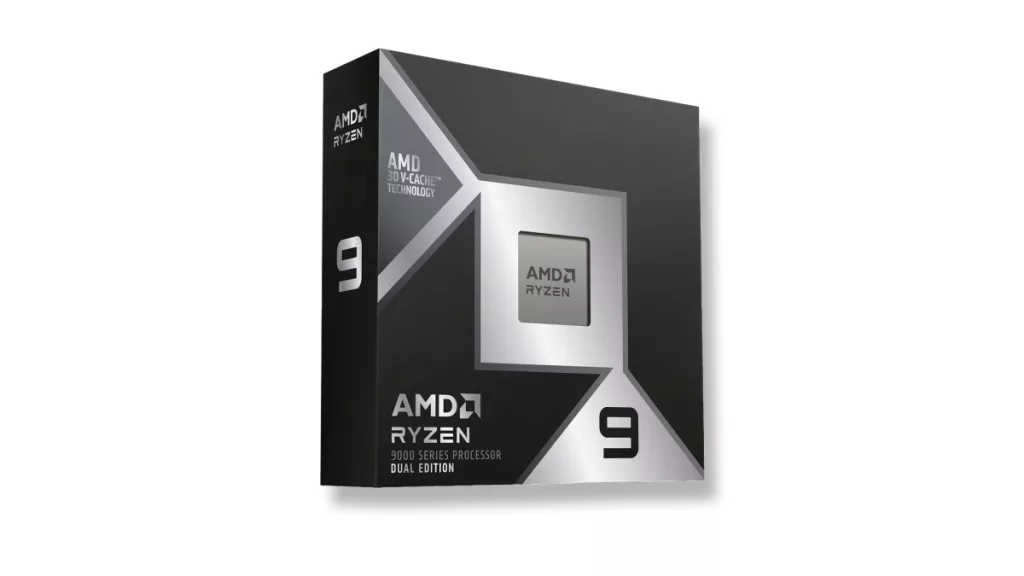
The launch of the AMD Ryzen 9 9950X3D2 Dual Edition was the week’s headline event: the world’s first consumer CPU with 3D V-Cache on both compute dies arrived to widespread coverage, mixed reception on value, and a near-total absence of review samples at sites like the one you’re reading on right now. On the Intel side, we opened and closed out our own three-part series on the Core Ultra 200S Plus platform, and the monitor space had a busy week courtesy of the first G-Sync Pulsar IPS reviews and a pair of well-priced display options landing at TweakTown.
If you haven’t already, make sure to check out our mini-roundup of Hardware Asylum’s series of local AI articles. I’ve gotten to know Dennis pretty well over the past few years from running in to him nonstop at CES, Computex and other events and his content is certainly worth a read.
AMD Ryzen 9 9950X3D2 Dual Edition
Video reviews:
- der8auer – https://www.youtube.com/watch?v=bcUTRJNCah8
- Hardware Unboxed – https://www.youtube.com/watch?v=dN8Z7bCGgjE
- Level1Techs – https://www.youtube.com/watch?v=1PcO2k6vprY
- GamersNexus – https://www.youtube.com/watch?v=RDpBuiu0ql8
Written reviews:
- TechSpot: https://www.techspot.com/review/3114-amd-ryzen-9-9950x3d2/
- Tom’s Hardware: https://www.tomshardware.com/pc-components/cpus/amd-ryzen-9-9950x3d2-review
- The Register: https://www.theregister.com/2026/04/21/amds_ryzen_9_9950x3d2_dual/
- Guru3D: https://www.guru3d.com/review/amd-ryzen-9-9950x3d2-dual-edition-processor-review/
- HotHardware: https://hothardware.com/reviews/amd-ryzen-9-9950x3d2-dual-edition-review
- ServeTheHome: https://www.servethehome.com/amd-ryzen-9-9950x3d2-dual-edition-review-going-a-bit-higher/
- Puget Systems: https://www.pugetsystems.com/labs/articles/amd-ryzen-9-9950x3d2-dual-edition-review/
Consensus summary: The 9950X3D2 is the first CPU to feature dual 3D V-Cache technology, delivering 192 MB of total L3 cache and arriving at a $900 MSRP, close to a 30% premium over the standard 9950X3D’s street price. The verdict across seven written outlets is remarkably consistent: technically impressive, clearly niche. Tom’s Hardware concluded it was never aimed at mass adoption, a halo product with upside in specialized workloads and the distinction of being AMD’s first dual-3D V-Cache design. The Register found gains over the standard 9950X3D in the three-to-nine percent range for heavily threaded workloads, and confirmed no gaming benefit over the much cheaper Ryzen 7 9850X3D. Puget Systems found the 9950X3D2 ahead of the 9950X3D by around 7% in Blender and V-Ray, but still trailing the Core Ultra 7 270K Plus in Cinebench 2026 multi-thread, where the Intel chip held a slight lead. (Ed: I met that der8auer dude at Computex last year and he pronounced his name “Roman”. Hmm.)
FPS Review take: We didn’t get a review sample, but we didn’t get out our jump to conclusions mat like GN did. AMD’s limited sample distribution at launch is a yellow flag, and it’s worth noting that many of the biggest enthusiast-focused outlets were also left out. For most of our readers, the 9800X3D remains the obvious gaming pick at a fraction of the price if you’re aiming for the best gaming performance for the dollar.
The FPS Review — Intel Core Ultra 200S Plus Trio
Written reviews:
- The FPS Review — Intel Core Ultra 7 270K Plus vs Intel Core Ultra 7 265K: https://www.thefpsreview.com/2026/04/20/intel-core-ultra-7-270k-plus-vs-intel-core-ultra-7-265k-cpu-review/
- The FPS Review — Intel Core Ultra 5 250K Plus vs Intel Core Ultra 5 245K: https://www.thefpsreview.com/2026/04/22/intel-core-ultra-5-250k-plus-vs-intel-core-ultra-5-245k-cpu-review/
- The FPS Review (Ed: Enough already) — Intel Core Ultra 7 270K Plus vs Intel Core Ultra 9 285K: https://www.thefpsreview.com/2026/04/24/intel-core-ultra-7-270k-plus-vs-intel-core-ultra-9-285k-cpu-review/
Consensus summary: Our three comparison reviews came in about a month after the March 26 platform launch, so the broader industry conversation on the 200S Plus had already settled by the time our pieces went live. The big picture from the day-one coverage: the 270K Plus was landing on par with or slightly above the Core Ultra 9 285K in gaming, which launched at $589 back in 2024, a genuinely strong value argument at $299. Our series adds head-to-head game benchmark data against the direct predecessors and the 285K, which fills in the practical picture for our readers. The 270K Plus carries 24 total cores (8 P-Cores, 16 E-Cores), DDR5-7200 native support, and the new Intel Binary Optimization Tool, all on existing Z890 boards via BIOS update.
FPS Review take: Our reviews were late to the party on a platform that had its moment in March, but the head-to-head data against the 265K and 285K should be useful for readers making buying decisions now (Ed: Why are we doing a take on our take?). The 270K Plus vs. 285K piece is the most relevant today. Forum members have noted street prices remain well above MSRP, which complicates the value story somewhat.
MSI MPG 272QRF X36 (G-Sync Pulsar 1440p 360Hz Monitor)
Written reviews:
- TweakTown: https://www.tweaktown.com/reviews/11422/msi-mpg-272qrf-x36-nvidia-pulsar-powers-the-peak-of-1440p-esports-gaming-monitors/index.html
- DisplayNinja: https://www.displayninja.com/msi-mpg-272qrf-x36-review/
- Club386: https://www.club386.com/msi-mpg-272qrf-x36-review/
Consensus summary: The MSI MPG 272QRF X36 is a 27-inch 1440p 360Hz Rapid IPS monitor sporting NVIDIA G-Sync Pulsar, priced at $649.99, combining VRR with backlight strobing and adaptive overdrive for what the company calls 4x effective motion clarity improvement. TweakTown and DisplayNinja both found the Pulsar technology genuinely delivers on its motion clarity promise in competitive titles, particularly shooters where target tracking at speed is critical. Club386 landed a more measured take: G-Sync Pulsar successfully pushes LCD motion clarity to new heights, but the price and the fact that affordable OLED monitors offer comparable specs with better color and contrast make it a product primarily for esports enthusiasts who specifically need strobing-plus-VRR. All reviewers noted the 272QRF X36 requires a GeForce GPU and DisplayPort for Pulsar to function.
FPS Review take: G-Sync Pulsar is the most interesting monitor technology we’ve seen since OLED hit the mainstream, and the 272QRF X36 is a good first implementation. The general gaming case as opposed to the competitive gamer case is harder to make at $650 when you can get an OLED for similar money with superior image quality. Readers who are serious about competitive titles, especially CS2 or Valorant at high frame rates, should put this on their short list.
AOC U27G4 (27-inch Dual-Mode 4K / 320Hz Monitor)
Written reviews:
Consensus summary: The AOC U27G4 is a dual-mode gaming monitor offering both 4K fidelity and 320Hz high-refresh esports modes in a single display at an affordable price point, according to TweakTown’s review. The dual-mode design lets users switch between full 4K resolution for immersive gaming and a lower-resolution, higher-refresh mode for competitive play, making it a versatile option for gamers who don’t want to own two monitors. TweakTown’s testing covered a broad range of titles across genres and found the display competent in both modes.
FPS Review take: Dual-mode monitors are a smart concept for a wide audience, and an affordable take on the format is welcome. Worth watching for our readers who want a single-display solution that doesn’t force a choice between resolution and refresh rate. Of course, your author is a proud member of the ultra wide master race and would accept nothing as thin as this.
KOORUI 34E6UC (34-inch 1440p 180Hz Ultrawide Monitor)
Written reviews:
Consensus summary: TweakTown found the KOORUI 34E6UC delivered a strong ultrawide experience in racing and open-world titles that natively support 21:9, with the 180Hz refresh rate providing meaningful headroom for less demanding games to run fast on the curved panel (Ed: What’s a KOORUI?). KOORUI is a budget-oriented brand, and TweakTown’s coverage frames this squarely as an affordable entry into the ultrawide segment rather than a premium pick.
FPS Review take: Budget ultrawides have gotten remarkably good, and a 34-inch 1440p 180Hz option from a newer brand is worth a look for readers who’ve been priced out of the ultrawide market. Not a flagship, but at the right price it’s a compelling entry point.
MSI MPG Ai1600TS PCIe 5 Power Supply
Written reviews:
- FunkyKit: https://www.funkykit.com/reviews/power-supplies/msi-mpg-ai1600ts-pcie5-power-supply-review/
- KitGuru: https://www.kitguru.net/components/power-supplies/zardon/msi-mpg-ai1600ts-titanium-psu-review/
Consensus summary: KitGuru rated it 8.5 and found the Ai1600TS targets the ultra-high-end segment, introducing MSI’s GPU Safeguard+ technology: an onboard MCU that monitors current across individual pins of the 12V-2×6 connector in real time, triggering shutdowns and alerts if imbalance or overcurrent is detected. Both outlets confirmed the 1600W Titanium efficiency rating holds up in testing, and praised the dual 12V-2×6 connector configuration. KitGuru noted pricing is expected to come in around £100-150 less than the existing non-TS MEG Ai1600T, which is a meaningful improvement in value (Ed: Why are they using weigh measures for pricing?).
FPS Review take: GPU Safeguard+ is the headline feature here, and it’s a direct response to the 12V-2×6 connector melt issues we’ve seen with high-end GPUs. For anyone running a flagship card at sustained high loads, a PSU that actively monitors connector current balance is a useful safety feature rather than a marketing gimmick. If pricing lands where KitGuru expects, this is competitive with similar premium 1600W options.
ASRock Phantom Gaming 360 LCD AIO Cooler
Written reviews:
- TechPowerUp: https://www.techpowerup.com/review/asrock-phantom-gaming-360-lcd-aio-liquid-cpu-cooler/
- WCCFTech: https://wccftech.com/review/asrock-phantom-gaming-360-lcd-360mm-aio-liquid-cooler-review-great-cooling-with-vrm-fan-halo-argb-fan-frame/
- Tech4Gamers: https://tech4gamers.com/asrock-phantom-gaming-360-lcd-aio-liquid-cooler-review/
- ThinkComputers: https://thinkcomputers.org/asrock-phantom-gaming-360-lcd-liquid-cpu-cooler-review/
Consensus summary: The Phantom Gaming 360 LCD combines a 3.4-inch full-color IPS LCD pump head with a 360-degree ARGB unified fan frame, a 32mm radiator, and a dedicated 70mm VRM fan built into the water block. ASRock claims VRM temperatures drop by up to 25°C with the dedicated fan active, a claim reviewers found close enough in testing. Thermal performance across all four outlets was found competitive with established 360mm premium AIOs, and the VRM fan was consistently praised as a functional differentiator rather than a marketing feature. Expected street price is around $150 USD.
FPS Review take: ASRock entering the AIO market with a complete, well-tested unit is good for competition. The VRM fan is a smart call given where CPU power demands are heading into the Nova Lake generation. At $150, the value case is strong against similarly featured competitors.
NZXT N7 Z890 (Intel Z890 Motherboard)
Written reviews:
- TechPowerUp: https://www.techpowerup.com/review/nzxt-n7-z890/
- PC Gamer: https://www.pcgamer.com/hardware/motherboards/nzxt-n7-z890-review/
Consensus summary: At $350, the N7 Z890 sits $150 below NZXT’s flagship N9 and shares its clean full-shroud aesthetic in black or white, with overclocking support but no RGB and Wi-Fi 6E rather than Wi-Fi 7. VRM thermals were strong in testing, peaking below 43°C. At $350, competitors like the ASRock Z890 Steel Legend Wi-Fi and Gigabyte Z890 Aorus Elite Wi-Fi 7 Ice offer comparable specs with better feature completeness for less money.
FPS Review take: The NZXT design language has a following, and the N7 Z890 delivers that aesthetic at a more accessible price than the N9. But the competition is tough at this price point. Buy it for the look; don’t expect a performance or value edge.