
Conclusion
We had a few goals with this comparison today. We wanted to see how AMD’s 8-Core “X3D” (3D V-Cache) CPUs scale in performance with new, refreshed, re-tested gaming benchmarks in 2026 using new drivers and games. We also wanted to see if the newer Zen 5 X3D CPU architecture provides any substantial upgrade over the Zen 4 X3D CPU architecture. In addition, we wanted to see if the Ryzen 7 9850X3D’s performance has changed at all now that it is later in the year, compared to the Ryzen 7 9800X3D. The goal was to re-test these CPUs in newer games that weren’t out when we originally reviewed them, and use the latest motherboard BIOS, Windows Updates, AMD Chipset drivers, and, of course, the latest game updates.
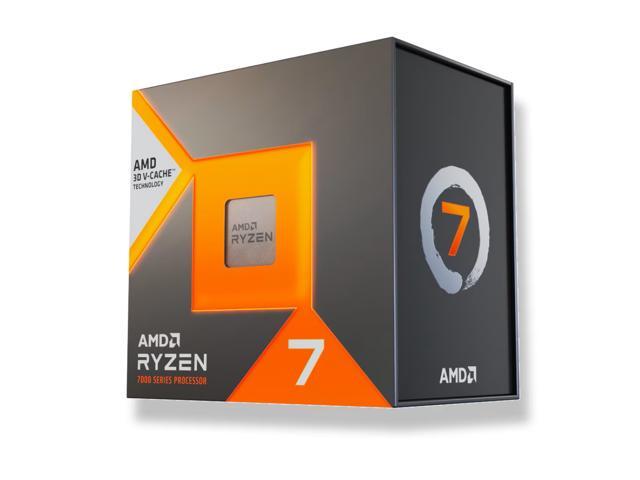
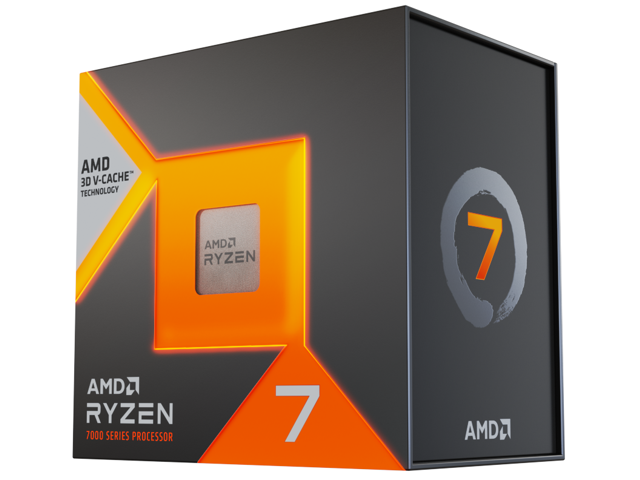
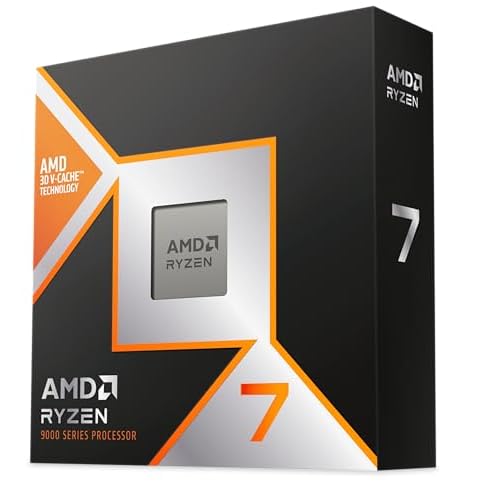
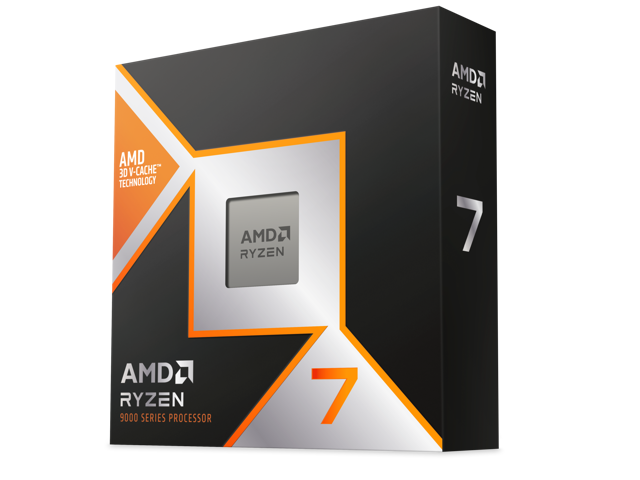
The AMD Ryzen 7 9850X3D is AMD’s latest Zen 5 X3D CPU, and also its fastest 8-Core CPU, released in January of 2026 for $499. Below that is the Ryzen 7 9800X3D, launched in November of 2024 at $479. Both of these CPUs utilize AMD’s newest 2nd Gen 3D V-Cache. In the previous Zen 4 architecture, the Ryzen 7 7800X3D was launched in January of 2023 at $449. Oddly enough, the most recent launch of an X3D CPU is the Zen 4 Ryzen 7 7700X3D in July of 2026 for $329. What these CPUs share in common is that they are 8-Core/16-Thread CPUs and have the same 96MB capacity of L3 AMD 3D V-Cache, just oriented differently.
Final Points
In our evaluation today, we found out a few interesting things. Firstly, starting with synthetic workloads testing multi-core and single-core performance, there is a distinct advantage for the newer Zen 5 X3D CPUs in performance. The Ryzen 7 9800X3D was up to 25% faster than the Ryzen 7 7800X3D in multi-core synthetic testing, despite both having the same core and thread count. We also experienced up to the same 25% faster performance in single-core performance. The difference with the Ryzen 7 9850X3D compared to the Ryzen 7 9800X3D was much smaller, though. There was only a 3%-6% difference in multi-core and single-core performance. If we look at the whole scale, from top to bottom, the Ryzen 7 9850X3D was up to 40% faster than the Ryzen 7 7700X3D, which is impressive.
When it comes to gaming performance, it isn’t as clear-cut as the synthetic testing. A lot of it is dependent on the game, and even the location of testing within the game, as well as the game settings. There were clearly some games where we can see drastic and meaningful results between Zen 5 X3D and Zen 4 X3D, and then there are games where we don’t. Most of the time, the primary advantage was in the 1% Low performance, or the consistency and feel of the game. It was better on Zen 5 X3D over Zen 4 X3D, in a meaningful way, most of the time.
Looking at the average framerate differences, the Ryzen 7 9800X3D was faster than the Ryzen 7 7800X3D, but it did have varying degrees. In Alan Wake 2, it was 7% faster; in Cyberpunk 2077, it was 4% faster; in Doom: The Dark Ages, it was 5% faster; in Hogwarts Legacy, it was 24% faster; and in Stalker 2, it was 5% faster. In the other games, though, it was below 5%. However, what makes up for this is in the 1% Low performance. In Alan Wake 2, it was 28% faster; in Crimson Desert it was 10% faster; in Dying Light: The Beast it was 11% faster; in Hogwarts Legacy it was 15% faster, and in Stalker 2 it was 15% faster. In games like Hogwarts, Stalker 2, Crimson Desert, and even Cyberpunk 2077, the Ryzen 7 9700X3D is very advantageous.
The Ryzen 7 9850X3D didn’t generally offer anything meaningful over the Ryzen 7 9800X3D still, in the latter part of 2026. In Alan Wake 2, the 1% Lows were 5% faster; in Cyberpunk 2077, the 1% Lows were 4% faster. That was about the most we could hope for, 5% at best. I think, though, if we look at the overall spread between the fastest Ryzen 7 9850X3D and the slowest Ryzen 7 7700X3D, in games, we’ll see an actually very large difference.
In Alan Wake 2, the Ryzen 7 9850X3D is 42% faster in the 1% Lows compared to the Ryzen 7 7700X3D. In Crimson Desert, the Ryzen 7 9850X3D is 20% faster. In Cyberpunk 2077, the Ryzen 7 9850X3D is 15% faster. In Dying Light, the Ryzen 7 9850X3D is 15% faster. In Hogwarts Legacy, the Ryzen 7 9850X3D is 27% faster than the Ryzen 7 7700X3D. In Stalker 2, the Ryzen 7 9850X3D is 18% faster in average framerate and 21% faster in 1% Lows. These are all pretty significant, comparing the fastest to the slowest AMD 8-Core X3D CPU across two generations.
Overall, the big takeaway for me is that even though all four of these CPUs share the same 8-Core/16-Thread core count, and the same 96MB of L3 AMD 3D V-Cache capacity, they can still differ in performance up and down the product stack for gaming. You won’t, however, always see this reflected in the average framerate, but rather in the 1% Low performance, frametime, and consistency while playing. The faster Zen 5 X3D CPUs do have a performance advantage in gaming when considering the 1% Low performance and frametime consistency while gaming. Though it does depend on the game at times, a large performance difference can exist in newer games here at the end of 2026.




Discussion
Join Discussion →No replies yet. Be the first to reply on the forum.